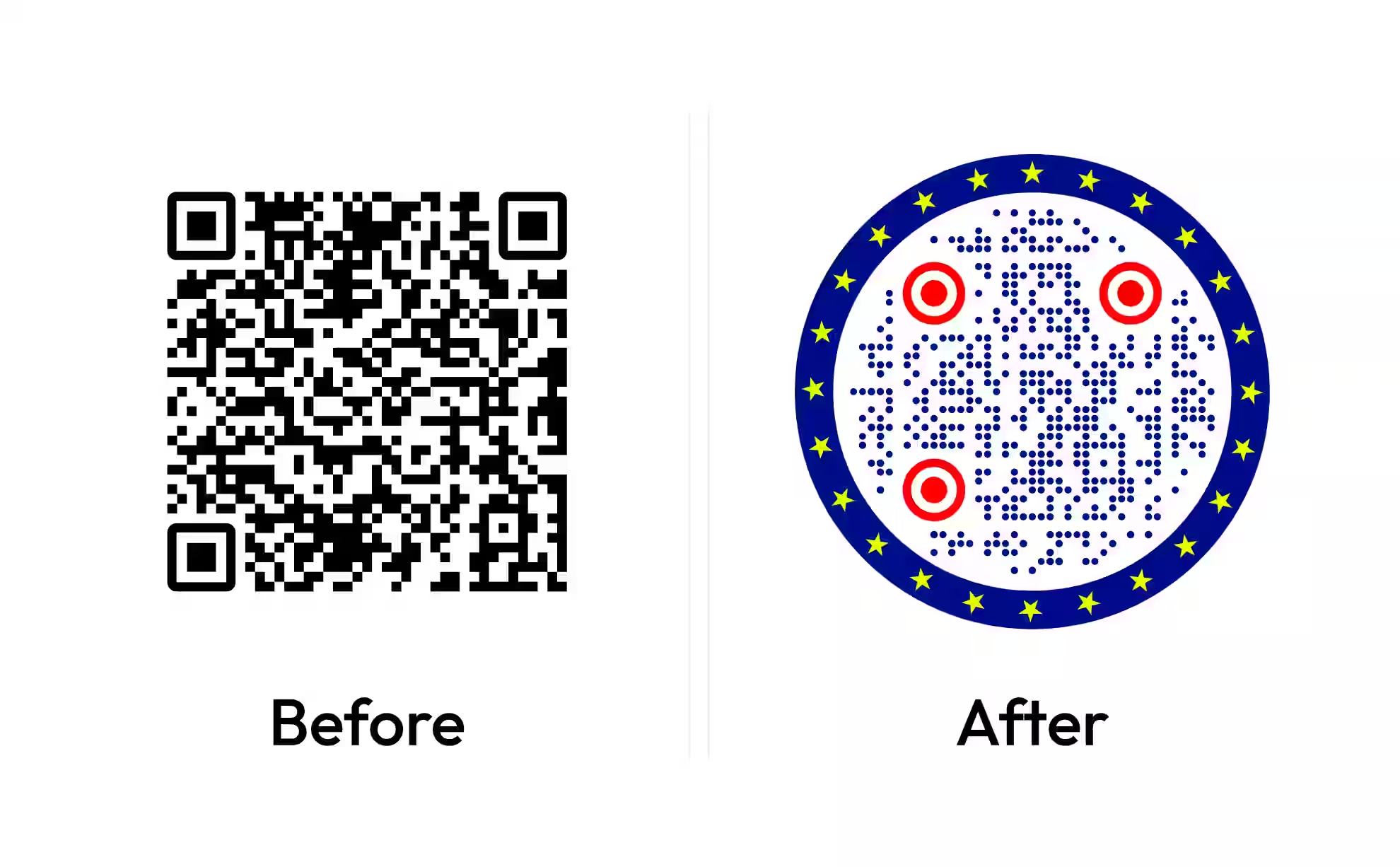
Make a Trustpilot QR Code
Paste your Trustpilot link, style the code, and download it print-ready - so a packaging insert, an invoice, or a counter card opens the review form in one scan.
Opens in Google Maps. Coordinates work too - "37.4224, -122.0841".
The code opens your business's "Write a review" form. Paste the Place ID, or a Google Maps link that carries one.
A UPI link carries no checksum, so a mistyped ID produces a code that scans perfectly and pays somebody else. Paste the ID from your payment app rather than typing it, and send yourself one rupee before printing.
Paste it exactly as copied. KoloQR does not assemble the payload - it encodes the one your bank issued, and checks it before you print it.
SVG, PNG, JPG • Max 2 MB
First month free
then $9/month
Dynamic QR Codes Are Coming
Change your link anytime, even after printing. See who scans, when and where.
- Edit without reprinting
- Scan analytics
- Bulk & custom domains
You're on the List
We'll email you once, when dynamic codes with scan analytics launch.
What Is a Trustpilot QR Code?
A Trustpilot QR code is a QR code that stores the web address of a company's Trustpilot review form or profile, so scanning it opens that page in the phone's browser. The code holds only the address, never the reviews or the TrustScore, so the same printed insert keeps working as both of those change.

/evaluate Writes a Review, /review Reads Them
Trustpilot builds both addresses from your own domain rather than from an id, so the two are easy to tell apart once you know to look:
- trustpilot.com/evaluate/yourdomain.com - opens the review form with the rating stars ready. Around 35 characters, and this is the one for anything printed that asks for a review.
- trustpilot.com/review/yourdomain.com - your public profile: TrustScore, review count, and the reviews themselves. Right for a code that says “see what customers say”, wrong for one that asks for a review.
- An invitation link from Trustpilot Business - carries an order reference, which is what lets Trustpilot mark the resulting review as invited rather than organic. Unique per customer, so it cannot be one printed code.
The domain in the address is your website's domain, not a slug Trustpilot invented, which makes these links unusually short and unusually easy to get wrong in one specific way: if your profile was set up under a different domain from the one you now use, the address that works is the old one. Copy it from your own profile rather than assembling it from your current website address, and scan the proof to confirm it lands on your company and not on a similarly named one.
Invited Reviews and Organic Ones Are Not the Same
A review written after scanning a printed code is an organic review: the customer arrived under their own steam, and Trustpilot has no order to tie the review to. A review written from an invitation link that carries an order reference is recorded differently, because Trustpilot can connect it to a real transaction. Both count towards your TrustScore, and both are legitimate - but they are not interchangeable, and a printed code can only ever produce the first kind, since one piece of artwork cannot carry a different reference for every customer. If verification matters to you, use QR codes for reach and Trustpilot's invitation system for verification, rather than expecting one to do the other's job. Trustpilot's rules apply to both: invitations must be neutral, must go to all customers rather than a selected group, and must never be attached to a discount, a prize draw, or anything else of value.
Generate QR Code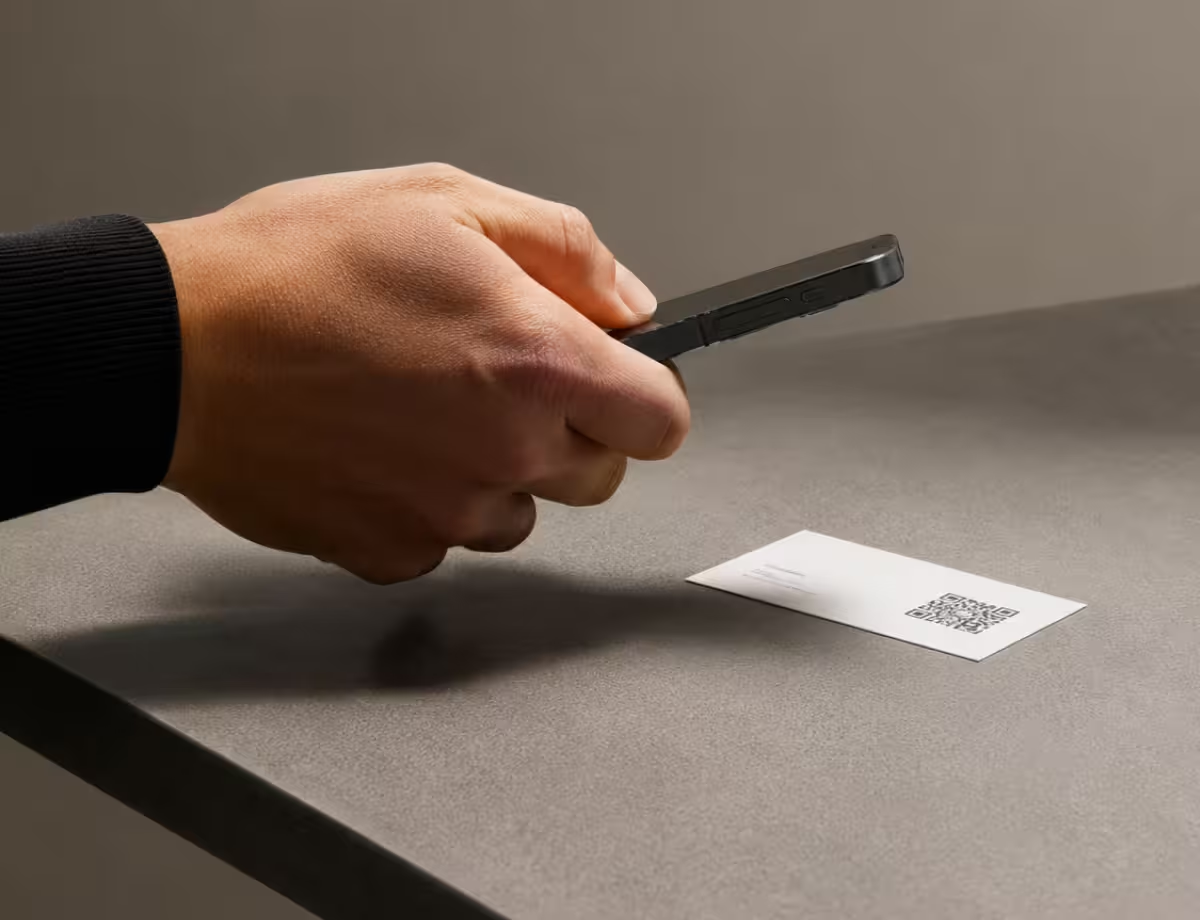
Where Trustpilot QR Codes Are Used
Trustpilot codes suit businesses whose customers are reached on paper after the sale rather than across a counter:
- 1
Open Your Trustpilot Profile
Find your company on Trustpilot and open its page. The address shows the domain your profile is registered under, which may not be your current website domain.
- 2
Take the Evaluate Address
Click the write-a-review button, or replace /review/ with /evaluate/ in your profile address. That opens the rating form rather than the reviews list.
- 3
Paste the Link and Design the Code
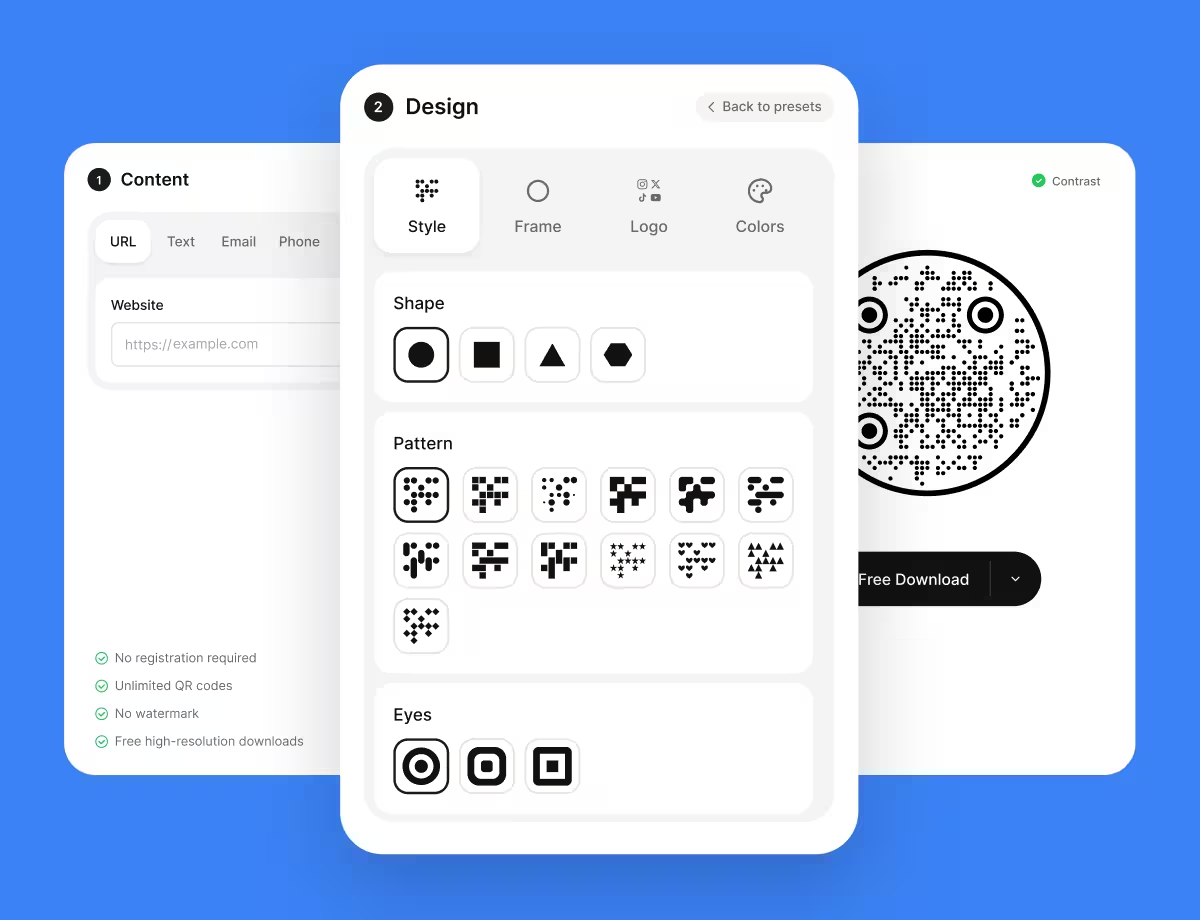
Choose the URL type, paste the link, then pick colours and a shape that match the insert, invoice, or counter card the code will sit on.
- 4
Test Signed Out, Then Export
Scan the proof from a phone that is not signed into Trustpilot, confirm the company name on screen is yours, then export SVG or PDF for print.
Which File Format Should You Download?
KoloQR exports your Trustpilot QR code in three formats. Pick by where it will be seen:
- PNG for email footers, screens, and social posts - anywhere the code appears at one fixed size on a display.
- SVG for packaging inserts, invoices, counter cards, and stickers - anything a printer scales without softening the edges.
- PDF for handing to a print shop, or for dropping into an invoice template at print-ready quality.
A Trustpilot evaluate link is around 35 characters, which is short enough to print small and still scan reliably - roughly 15 to 20 mm on a card, against the 25 to 30 mm a longer review URL from another platform would want at the same reliability. That headroom is worth spending on print quality rather than on size: an insert printed on uncoated stock spreads ink into the gaps between modules, so keep the module shape simple and proof on the real card stock before the run.
Generate QR CodeBest Practices for Trustpilot QR Codes
Trustpilot allows you to invite reviews, and is specific about how. These habits cover the rules and the response rate:
Ask Every Customer the Same Way
Trustpilot forbids selective invitations. One insert in every parcel is compliant; a card handed only to the customers who seemed pleased is not.
Never Attach an Incentive
Discounts, prize draws and free gifts in exchange for reviews breach Trustpilot's guidelines, and reviews obtained that way can be removed along with a flag on your profile.
Use a Neutral Invitation
“How did we do?” rather than “Leave us five stars”. Asking for a specific rating solicits a biased review and is against the rules.
Encode /evaluate for a Request
It opens the rating form directly. Sending a customer to /review makes them read other people's reviews before finding the button, which loses most of them.
Encode /review to Show Off Your Score
On a trade-show card or a proposal, the profile page is the right destination - it lets a prospect verify the score themselves.
Copy the Address From Your Own Profile
The domain in the link is the one your profile was registered under, which is not always your current website domain.
Say How Long It Takes
“One minute” beside the code raises response more than a larger code does. People decline unknown effort rather than small effort.
Protect the Quiet Zone
Four modules of clear margin on every side. On a small insert crowded with logos and legal text this is the first thing squeezed out.
Size It for the Card, Not the Minimum
A short evaluate link scans at 15 to 20 mm on a card, but on uncoated or recycled stock give it more room - absorbent paper eats the gaps between modules.
Use Invitations Where Verification Matters
A printed code produces organic reviews, because one piece of artwork cannot carry a unique order reference. Use Trustpilot's invitation system alongside it, not instead of it.
Why Your Trustpilot QR Code Isn't Working
Trustpilot code failures are almost always the wrong path segment, the wrong domain, or a compliance problem after the fact.
The Scan Opens Your Reviews Instead of the Review Form
- Cause
- The /review/ profile address was encoded rather than the /evaluate/ one. Both are valid pages; only one of them opens the rating stars.
- Fix
- Replace /review/ with /evaluate/ in the link and regenerate. The payload length barely changes.
The Scan Says the Company Was Not Found
- Cause
- The domain in the address is wrong - usually because it was assembled from your current website rather than copied from the profile, which may be registered under an older domain.
- Fix
- Open your Trustpilot profile, copy the address exactly as it appears, and rebuild the code from it.
Customers Say They Have to Create an Account
- Cause
- Trustpilot requires an account to publish a review, though it can be created during the process. This is the platform's design rather than a code fault.
- Fix
- Nothing to change in the code. Print “takes about a minute, Trustpilot account needed” so the step is expected.
Reviews Were Removed and Your Profile Was Flagged
- Cause
- Trustpilot detected incentivised or selectively solicited reviews - for example a card given only to satisfied customers, or an offer attached to the request.
- Fix
- Remove the incentive, give the same invitation to every customer, and follow Trustpilot's process to address the flag.
Your Reviews Are Not Marked as Verified
- Cause
- A printed code produces organic reviews, because it carries no order reference for Trustpilot to tie the review to a transaction.
- Fix
- Expected behaviour, not a fault. Run Trustpilot's invitation flow alongside the printed code where verification matters to you.
The Code on the Insert Scans Badly
- Cause
- Uncoated or recycled card spreads the ink into the white gaps between modules, and a heavily styled code has little tolerance for that.
- Fix
- Print at 20 mm or larger, simplify the module shape, raise the error correction level, and proof on the real stock rather than on office paper.
Still not sure whether the fault is the file or the print? Drop the exported image into the QR code scanner - if it decodes on a desktop and not on paper, the fault entered after the file.
Questions? Answered
A Trustpilot QR code stores the web address of a company's Trustpilot review form or profile. Scanning it opens that page on the phone, so a customer can rate the company without searching for it.
Open your Trustpilot profile, take the evaluate address - trustpilot.com/evaluate/ followed by your domain - and paste it into a QR generator as a URL. Style the code, test it signed out, and export SVG for print.
The /evaluate address opens the review form with the rating stars ready. The /review address opens your public profile, showing your TrustScore and existing reviews. Use /evaluate to ask for a review and /review to show your score.
Yes. Trustpilot permits and expects businesses to invite reviews, provided the invitation is neutral, goes to all customers rather than a chosen few, and offers nothing in exchange. Asking for a particular rating is not allowed.
No. Attaching a discount, prize draw or gift to a review request breaches Trustpilot's guidelines. Reviews collected that way can be removed and the profile flagged, which is publicly visible to anyone reading it.
No. A printed code produces organic reviews, because one piece of artwork cannot carry a unique order reference. Trustpilot's invitation system is what ties a review to a transaction, so use both if verification matters.
The domain your Trustpilot profile is registered under, which is not always your current website. Copy the address from your own profile rather than assembling it, then scan the proof and check the company name on screen.
Yes, though one can be created during the review. It takes about a minute on a phone. Saying so beside the code makes the step expected rather than a reason to abandon the review halfway through.
Where the customer meets you on paper after the sale: a parcel insert, an invoice, a job sheet, a warranty card, or a counter card. Trustpilot suits businesses whose customers never see a shopfront.
About 15 to 20 mm, because an evaluate link is only around 35 characters. On uncoated or recycled stock go larger - absorbent paper spreads ink into the gaps between modules and eats that margin.
Keep Exploring
Pages that pick up where this one leaves off - the same setting, the same kind of code, or the next thing worth deciding.
Google Review QR Code
Open your business's Google review form in one scan, with the stars ready to tap.
Beauty Salons
Rebooking at the chair, per-service aftercare and a portfolio per stylist, with codes that survive acetone, colour and hairspray.
Barbershops
Window bookings, one code per chair for rebooking, reviews and Instagram - with sizes in cm and finishes that survive hairspray and station lights.
Feedback QR Code
Collect private comments from customers while the experience is still in front of them.
Amazon QR Code
Take a scan straight to a product page, a storefront, or a wish list.
Product Packaging
What a code on a carton, pouch, label or bottle has to survive - sizes, finishes that kill a scan, and what the scan should open.
Why KoloQR?
- Create QR codes for websites, menus, Wi-Fi, PDFs, and business cards
- Customize colors, logos, and unique shapes
- Download high-quality PNG and SVG files
- Built for both print and digital