Who Builds KoloQR, and Why
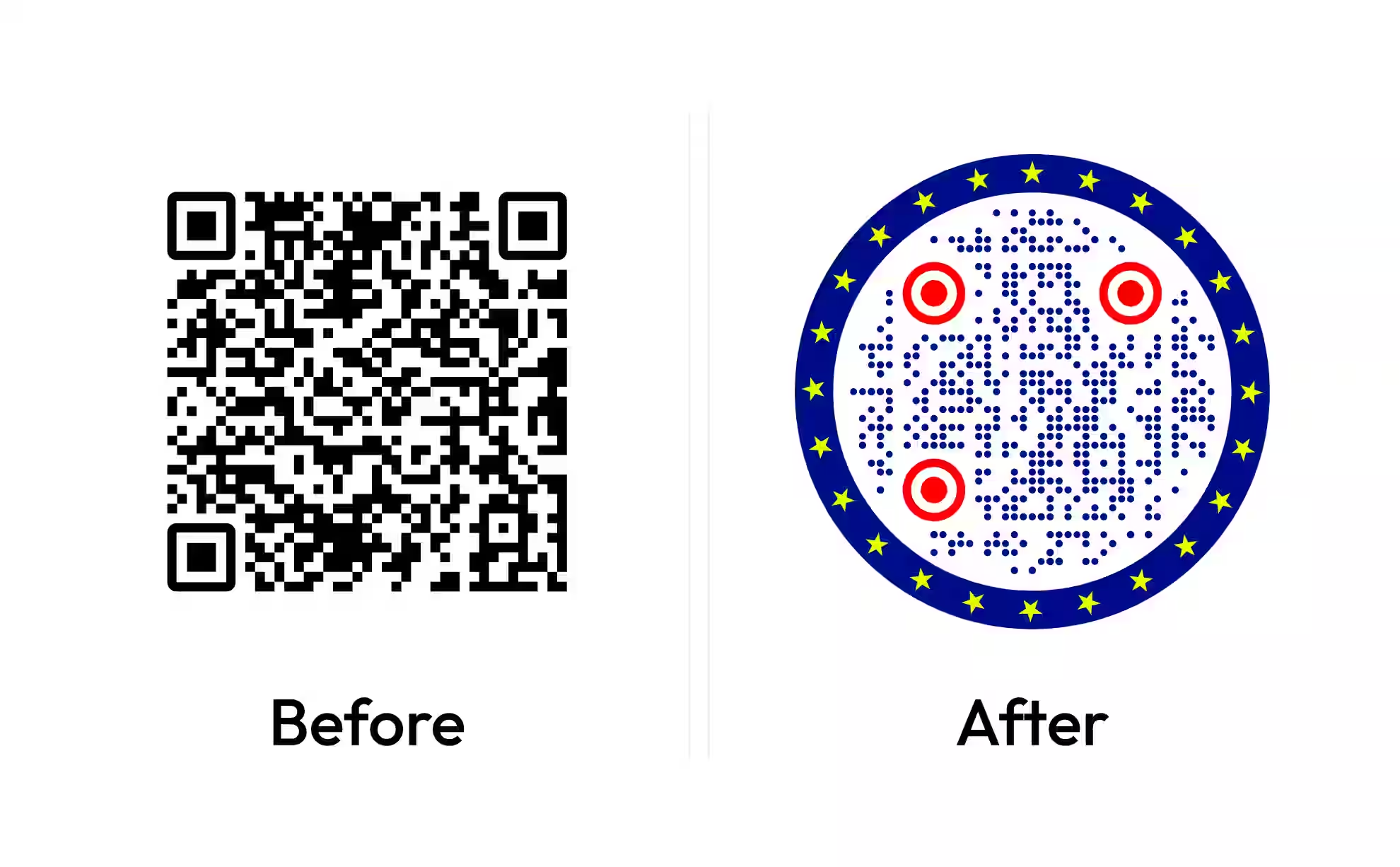
KoloQR is a free QR code generator for static codes in circular, square, triangular, and hexagonal shapes. It is built by one person, and it exists because most QR tools rent you a redirect: the code you printed keeps working only while somebody keeps paying for it.
- Free, no account
- Static codes, no redirect
- MIT-licensed shape library
KoloQR at a Glance
The facts people usually have to dig for before trusting a QR code generator with something they are about to print.
Free, With No Account
Every feature of KoloQR is free. There is no signup, no paid tier, no cap on how many codes you make, and no watermark on what you download.
Static Codes Only
A KoloQR code carries its content inside the symbol, so it resolves with no server in the middle. It also cannot be edited or tracked once it is printed.
Generated in Your Browser
The generator runs on your own device. The URL, Wi-Fi password, or phone number you type into it is never sent to KoloQR.
Four Outer Shapes
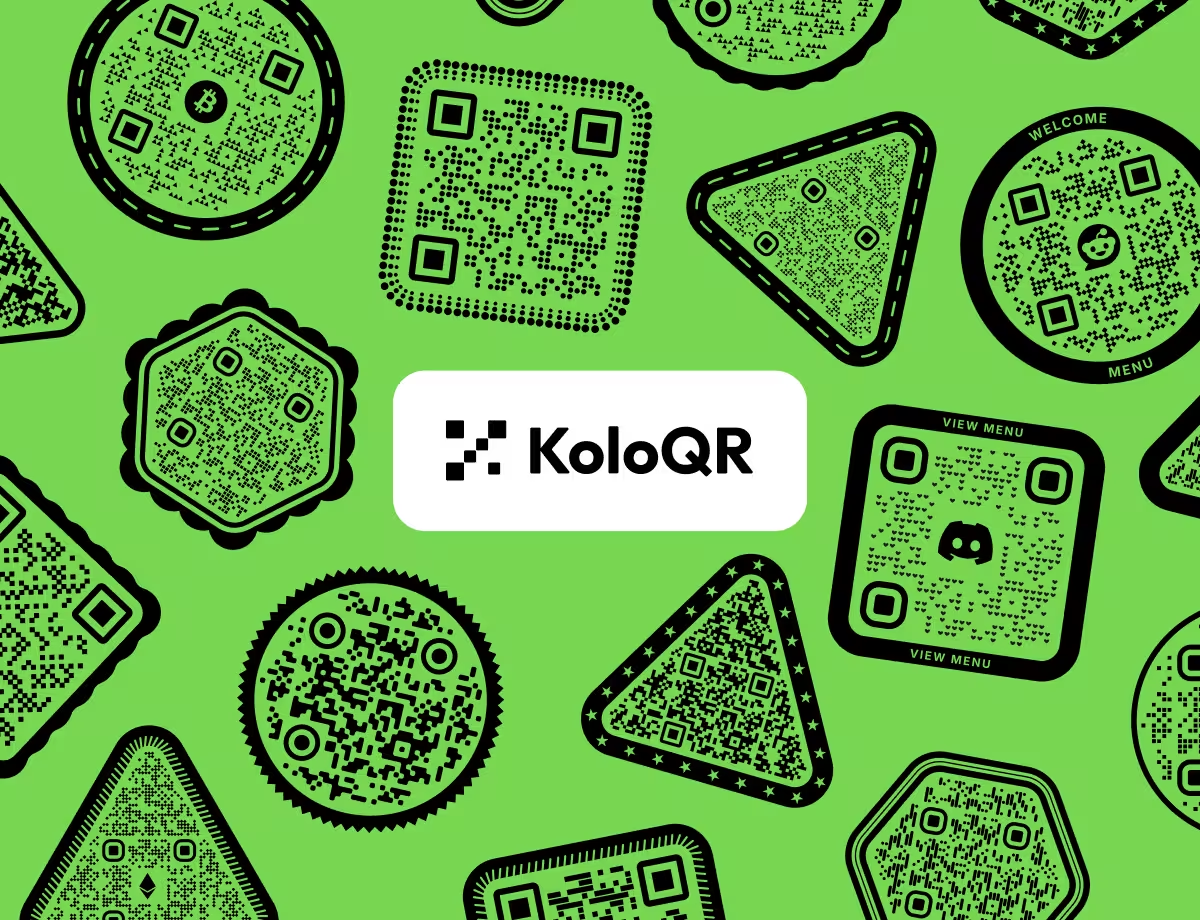
A code can be drawn as a square, a circle, a triangle, or a hexagon, and combined with 13 module patterns, three eye styles, and a set of frames.
Print-Ready Exports
Downloads are PNG, SVG, PDF, and EPS, plus a one-click copy into Figma. SVG, PDF, and EPS are vector, so they scale to any print size without softening.
An MIT-Licensed Shape Library
The library that draws KoloQR's non-square codes is published under the MIT license, so anyone can read it, fork it, or ship it in their own project.
Why KoloQR Exists
Most QR code generators were designed around a business model rather than around the person printing the code. KoloQR takes the other side of that trade.
Most QR Generators Are Older Than the Phones That Scan Them
Search for a QR code generator today and most of the results are interfaces laid out years ago that have barely moved since: one square black code, a colour picker, and a signup wall in front of the download. The assumptions baked into them date from when a QR code was a barcode on a warehouse pallet, not something printed on a menu, a wine label, or a shop window.
- Free until you print - the code costs nothing to make, then the file you actually need is watermarked or behind a plan.
- A trial that expires - dynamic codes stop resolving when the subscription ends, and the printed material dies with them.
- Design as an afterthought - one square shape, a handful of colours, and no way to make the code belong to what surrounds it.
A Static Code Is Something You Own
A static QR code stores its content inside the symbol itself, so nothing has to stay online for it to resolve. A phone reads the URL, the Wi-Fi credentials, or the phone number straight off the paper - there is no account behind it that can lapse and no redirect that can be switched off.
- No expiry date - the code keeps working for as long as the thing it points at does.
- No middleman - the scan goes to your destination, not through somebody else's tracking domain first.
- No scan data - KoloQR never sees a scan, which is also why it cannot offer analytics.
This is a trade, not a free win. A static code cannot be re-pointed after printing and reports no scan counts, so a campaign that needs an editable destination or numbers to report on is better served by a dynamic provider - the comparison pages set out which one does what.
Generate QR Code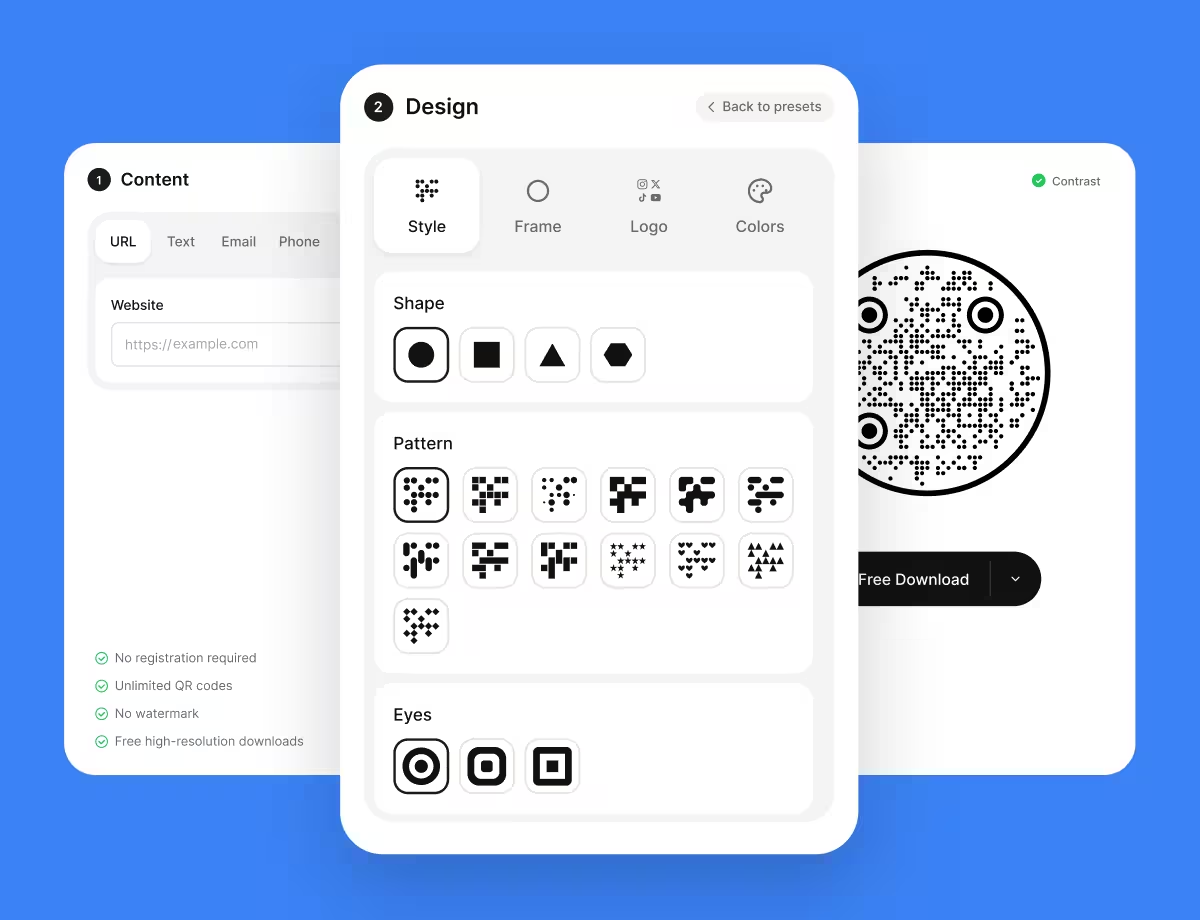
How KoloQR Decides What to Build
Three rules that settle most feature questions before they turn into arguments.
The Data Never Leaves the Device
If a feature would require sending what you encode to a server, it does not get built. That rules out dynamic codes and scan analytics, and it is why the Wi-Fi password you type into KoloQR is never transmitted anywhere.
Design Is Not a Premium Tier
Shape, colour, logo, and frame controls are the product rather than an upsell. A QR code goes on something a person has designed - a menu, a label, a card - and a black square that ignores everything around it is a defect, not a default.
The Hard Part Is Public
The geometry that keeps a non-square QR code scannable is the part most worth checking, so it is the part that is open source. The shape library is on GitHub under the MIT license, with its own tests for scannability.
Who Is Behind KoloQR
KoloQR is built and maintained by Andy Malinovskyi, who published the first public version on June 14, 2026. It is an independent project rather than a product of a larger company: the person who writes the generator is the person who reads support@koloqr.com. He is on X at x.com/malinovskyi.
Working this way has one honest consequence worth stating on a page about trust. KoloQR has no support rota and no service-level agreement, so a reply may take a day or two. What it does have is a direct line: a bug report goes to the person who can fix it, without passing through a ticketing system first.
What Is Open Source, and Under Which License
The open source part of KoloQR is its shape library - the code that draws a QR symbol into a circle, a triangle, or a hexagon and culls the modules falling outside that outline. It is published at github.com/koloqr/qr-code-shapes under the MIT license, which permits commercial use, modification, and redistribution provided the copyright notice travels with the code.
The website around that library is not open source: the editor interface, the logo handling, the PDF and EPS exporters, and the localized pages are closed. Naming the boundary matters more than claiming the label. "Open source" on a product page usually means one component is, and on KoloQR this is which one.
Shaped codes are drawn at error correction level H, the highest the QR standard defines, because culling modules to fit an outline removes redundancy the symbol would otherwise rely on. That is the trade behind a circular QR code: the same data in a denser grid, with the recovery capacity spent on the shape instead of on damage.
How KoloQR Stays Free
KoloQR is free because a static QR code generator costs almost nothing to run. The generator executes in the visitor's browser, so there is no per-code compute to bill for, no redirect service to keep online, and no database of codes to maintain. It is also why there is no paid tier holding features back - there is nothing metered here to sell.
The trade-off runs both ways. Nothing you have already generated depends on KoloQR staying online, because a static code resolves without this site existing at all. But there is no contract behind the site, and an organisation that needs a guaranteed, supported QR service in writing should buy one from a provider that sells it.
What KoloQR Does Not Do
Some of these are missing on purpose and some are simply not built. Both are worth knowing before a design goes to print:
- Dynamic QR codes - a KoloQR code cannot be re-pointed once it is printed. If the destination may change, use a dynamic QR provider instead.
- Scan analytics - KoloQR never sees a scan, so it cannot report scan counts, locations, or devices.
- Accounts and saved codes - nothing is stored on a server, so a code you closed the tab on has to be rebuilt from scratch.
- Bulk generation and a public API - codes are made one at a time in the browser, with no CSV import and no API to call.
How KoloQR Has Changed So Far
KoloQR ships in small dated releases rather than against a roadmap of promises. The public launch on June 14, 2026 covered free generation, PNG and SVG export, custom colours and eye styles, and logo support. A mobile-ready redesign followed on June 24, frames for every shape on June 29, and vector export to EPS and PDF with a one-click copy into Figma on July 1.
A Chrome extension arrived on July 2, 2026, opening the generator from any tab so a code can be made without leaving the page you are on. Four more languages landed on July 20 and Hindi on September 1, so the site now reads in ten. Each release is dated on the changelog, which is the honest version of a roadmap: what exists, when it arrived.
Contact
Questions, bug reports, and corrections go to support@koloqr.com and are read by the person who maintains KoloQR. Anything about the shape library itself is better raised at github.com/koloqr/qr-code-shapes, where the discussion is public and a fix arrives with a version number attached.
Questions? Answered
KoloQR is run by Andy Malinovskyi as an independent project, not by a company or an agency. The first public version shipped on June 14, 2026, and every release since is dated on the changelog. Email sent to support@koloqr.com reaches the person who maintains the generator rather than a support desk.
KoloQR is free with no paid tier: no account, no per-code charge, no watermark, and no export locked behind a plan. It is free because a generator that runs in your browser has almost no running costs. No page here can promise what pricing looks like in five years, but a code you have already downloaded is a file you own outright.
The shape library is - the code that draws QR symbols into circles, triangles, and hexagons, published under the MIT license at github.com/koloqr/qr-code-shapes. The website around it is not: the editor interface, logo handling, and the PDF and EPS exporters are closed. The MIT license lets you use, modify, and redistribute the library commercially.
Because a dynamic code needs a redirect service, and a redirect service is something that can be switched off. A dynamic code points at a short link the provider controls, so when the account lapses every printed code stops working. If you need an editable destination or scan analytics, a dynamic provider is the better tool - the comparison pages say which.
No. The generator runs in your browser, so the URL, Wi-Fi password, phone number, or text you type is never sent to KoloQR and never stored. It is also why KoloQR cannot show you a scan count: nothing sits between the scan and your destination. The privacy policy sets this out in full.
Yes. The QR code files you generate are yours to use for anything, including commercial work, with no attribution and no licence fee. KoloQR adds no watermark and claims no rights over the images you download. The MIT license covers the shape library's source code, which is a separate question from the files the generator produces.
Yes. A Chrome extension released on July 2, 2026 opens the KoloQR generator from any tab, so a code can be made without navigating away from the page you are reading. It runs the same generator in a popup, with the same in-browser behaviour and the same export formats as the site.
Why KoloQR?
- Create QR codes for websites, menus, Wi-Fi, PDFs, and business cards
- Customize colors, logos, and unique shapes
- Download high-quality PNG and SVG files
- Built for both print and digital