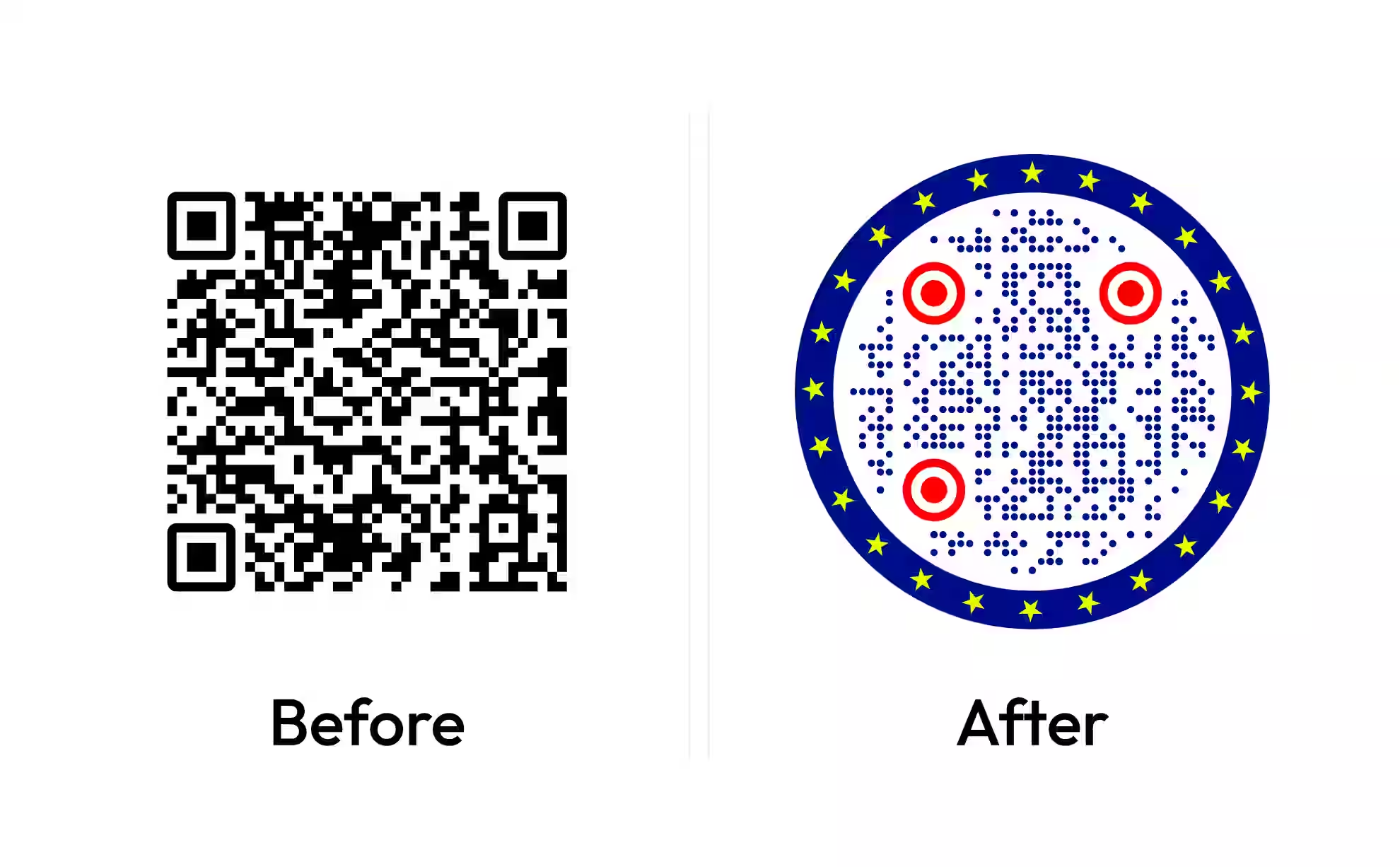
How Do You Add a QR Code to a Flyer?
A flyer has seconds to work and no way to know whether it did. A QR code fixes both: it carries the reader straight to the offer, and it tells you which drop produced the traffic. Make one below, then read on for sizes, placement and the print details that decide whether it scans.
Opens in Google Maps. Coordinates work too - "37.4224, -122.0841".
The code opens your business's "Write a review" form. Paste the Place ID, or a Google Maps link that carries one.
A UPI link carries no checksum, so a mistyped ID produces a code that scans perfectly and pays somebody else. Paste the ID from your payment app rather than typing it, and send yourself one rupee before printing.
Paste it exactly as copied. KoloQR does not assemble the payload - it encodes the one your bank issued, and checks it before you print it.
SVG, PNG, JPG • Max 2 MB
First month free
then $9/month
Dynamic QR Codes Are Coming
Change your link anytime, even after printing. See who scans, when and where.
- Edit without reprinting
- Scan analytics
- Bulk & custom domains
You're on the List
We'll email you once, when dynamic codes with scan analytics launch.
What Size Should a QR Code Be on a Flyer?
Print it at 2 to 3 cm. A flyer is held at 30-40 cm, and the ten-to-one rule - roughly 1 cm of code width per 10 cm of scanning distance - puts 3 cm at the comfortable end. Go no smaller than 2 cm on any flyer that will be handed out rather than posted.
- The Formats, in Millimetres - A5 is 148 x 210 mm, A6 is 105 x 148 mm, DL is 99 x 210 mm. A 3 cm code takes about 4% of an A5 face and around 9% of an A6, which is the real reason small flyers end up with small codes.
- Quiet Zone - four blank modules on every side of the symbol. On a 2 cm code that is about 3 mm with no headline, rule or photograph edge crossing it, and it is separate from the flyer's own 5 mm safety margin.
- Bleed and Safety - 3 mm of bleed, and nothing that matters within 5 mm of the trim. A code sitting tight to the edge on screen is a code with a shaved quiet zone in the box.
- Paper Weight and Coating - 130-170 gsm silk holds a crisp module. On 80-100 gsm uncoated, ink spreads into the fibre and closes the light gaps, so size up to 3 cm rather than trusting 2 cm.
Flyers pinned to a noticeboard are a different problem. If people will scan the flyer while it is on the wall rather than in their hand, size the code for the distance they can actually stand at - a metre back means a 10 cm code, as the minimum size for print guide works through.
Generate QR CodeWhat to Link a Flyer QR Code To
A flyer works when the scan finishes what the paper started. These six destinations do that, and each one is measurable in a way a printed phone number is not.
The Offer Itself
A landing page for the discount, class or event the flyer is about, with the terms and the sign-up on it. Not a homepage: the reader has already agreed to be interested, and a homepage makes them start their search over.
A Booking or Order Form
The table, the appointment, the delivery order. The scan lands on the one form that turns a leaflet into a transaction while the reader is still holding it.
A Menu or Price List
Prices change more often than flyers get reprinted. Linking to a live price list means the paper stays truthful for longer, and no reprint is needed when a number moves.
A Map and Opening Hours
For anything with a door, the scan should be able to answer 'where and when'. A maps link opens navigation in one tap, which a printed address never does.
A Video or Demo
Sixty seconds of showing beats a paragraph of telling, and a flyer has room for neither. Useful for services that are hard to describe and easy to recognise.
A Campaign-Tagged Link
The same landing page with a different tag per drop - one for the letterbox round, one for the market stall. It is the only honest way to learn which distribution earned its cost.
How to Make a QR Code for a Flyer
Five steps from an idea to a file the printer can place, with a tracked link that survives the campaign.
Generate QR Code- 1
Write the Landing Page First
Decide what the scan opens before designing the flyer. A page that repeats the flyer's headline and carries one action converts; a homepage that makes the reader hunt does not.
- 2
Tag the Link Per Drop
Give each distribution its own URL or UTM parameter - example.com/spring?src=market against ?src=letterbox. Both land on the same page, and your analytics then tell you which round of flyers was worth printing.
- 3
Build the Code
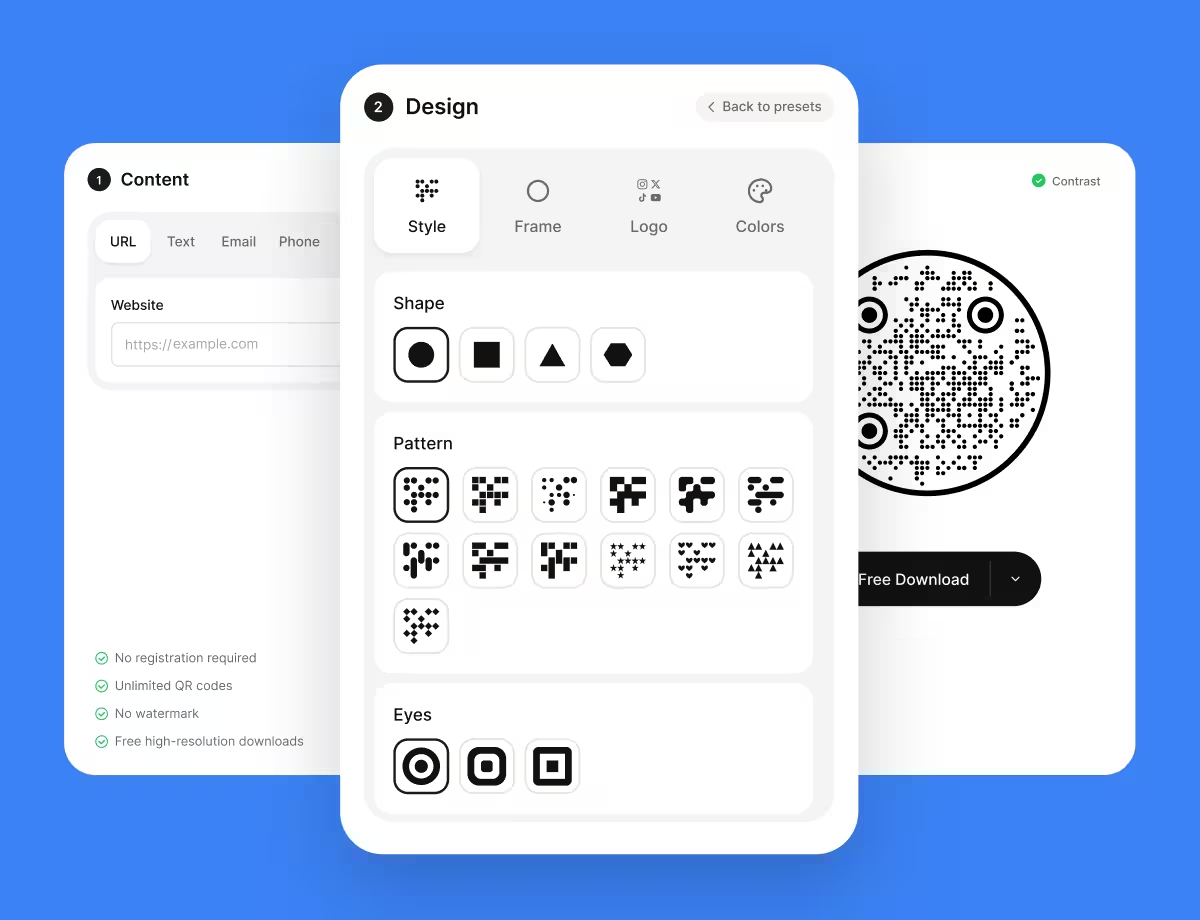
Open the generator above, paste the tagged link, then set the shape, colours and logo so the code belongs on the flyer rather than sitting on it. Keep dark modules on a light background.
- 4
Place It Bottom-Right, With a Line of Text
Bottom-right is where a thumb already is and where headlines are not. Put four or five words beside the code saying what it opens, and keep the quiet zone clear of every other element.
- 5
Proof It on the Real Paper
Print one flyer on the stock you have ordered and scan it at arm's length in room light. Uncoated paper and small codes are the usual pairing that passes on screen and fails in the hand.
The Print Details That Decide a Flyer Scan
Most flyer codes that fail were printed too small on paper that was too absorbent, in a colour that was not dark enough. All three are decisions made in the layout, not at the press, and all three are cheap to fix before the run.
- Vector Into the Layout - place an SVG, PDF or EPS. A PNG dragged into InDesign and stretched to fit is the usual reason modules come off press with soft edges - SVG vs PNG sets out the difference. The export step for a flyer built in Canva is covered in how to create a QR code in Canva.
- Solid Ink, Not a Tint - print the pattern as one solid colour rather than a screened tint. A halftone code at 2 cm loses its module edges to the dot pattern and to registration drift.
- Dark Enough to Read - a mid-grey or pastel code on white looks tasteful and scans badly. Keep a clear light-to-dark difference, and check it before printing rather than after. A soft look comes from a muted ground and rounded modules, as in aesthetic QR codes, not from a pale code.
- Off the Fold - on a folded DL leaflet, keep the code on one panel with its quiet zone intact. A crease through the pattern breaks the modules the camera needs to lock on to.
Flyers are short-lived, so a static code is the right call: it never expires and costs nothing per scan. Point it at a redirect on your own domain anyway - campaigns get extended, and the ability to repoint the same printed code is worth the five minutes it takes to set up.
Generate QR CodeBefore the Flyer Goes to Press
A flyer run is fast, cheap and completely uncorrectable once it is in letterboxes. These checks take ten minutes between them.
Give the Code a Reason
'Scan for 20% off', 'Scan to book a table'. A bare square gets ignored; a square with a promise attached gets scanned. The words matter more than the design of the code.
One Code, One Action
Two codes on an A6 flyer means two small codes and a decision. Pick the single action the flyer exists to produce and let the landing page carry everything else.
Keep It Out of the Corner Bleed
Bottom-right is right; bottom-right at 3 mm from the trim is not. Hold the whole symbol plus its quiet zone inside the 5 mm safety margin.
Print the Link as Text Too
A short readable URL under the code catches the reader with no phone to hand and the one whose camera will not focus. It costs one line of type.
Check the Page on Mobile Data
Every flyer scan is on a phone, often outdoors. Load the landing page on a real handset with Wi-Fi off before signing off the artwork.
Keep the Link Alive After the Campaign
Flyers stay on fridges and pinboards for months. When the offer ends, redirect the URL somewhere useful rather than letting it 404.
Questions? Answered
2 to 3 cm for a flyer held in the hand at 30-40 cm. Use 3 cm on A5 where there is room, and never drop below 2 cm on uncoated paper, where ink spread thickens the modules. A flyer pinned to a wall is a different case: size it for the distance people can actually stand at.
Bottom-right, inside the safety margin, with a line of text beside it saying what it opens. Bottom-right is where a thumb rests and where headlines are not, and it keeps the code clear of the fold on a DL leaflet.
Give each distribution its own tagged URL and read the traffic in your web analytics: example.com/offer?src=market against ?src=letterbox. This counts page visits rather than raw scans, so the number runs slightly low, but the comparison between drops is reliable and it needs no subscription.
Usually not. A static code costs nothing, never expires and cannot be switched off by a lapsed subscription. Point it at a redirect on your own domain and you keep the one thing a dynamic code offers - an editable destination - without renting it. Per-scan analytics is the one case that genuinely needs more.
In order of likelihood: it is under 2 cm, it was printed as a pale tint rather than a solid dark ink, something crosses its quiet zone, or it sits across a fold. Rescan the printed flyer rather than the PDF - the paper is where the difference shows up.
You can, but the front is where the reader is looking during the two seconds a flyer usually gets. A back-page code works on a leaflet people will keep - a menu or a timetable - and works poorly on one that gets glanced at and dropped.
Yes, within contrast limits. Colour and shape do not affect how a code decodes as long as the modules stay clearly darker than their background and the finder patterns are intact. Check the pairing with the contrast checker before it reaches the press.
Nothing, unless you plan for it. Flyers survive on fridge doors for months after a campaign closes, so redirect the URL to something still useful - the current offers page - rather than leaving a 404 that the paper keeps sending people to. A QR code on a poster has the same afterlife, at a larger size. QR codes for Black Friday walks through that redirect for a sale weekend, from early access to the offers that follow.
Keep Exploring
Pages that pick up where this one leaves off - the same setting, the same kind of code, or the next thing worth deciding.
Photographers
Client galleries, print reorders, portfolio links and guest photo uploads, on cards, albums, prints and event signs.
T-Shirts
Chest and back prints - the size woven fabric actually holds, which print method keeps the module edges, and what survives twenty washes.
Event QR Codes
One scan connects guests to tickets, schedules, directions and RSVPs - on invites, posters and signage.
X (Twitter) QR Code
Send people straight to your X profile, a single post, or a one-tap follow prompt.
Google Forms QR Code
Open a survey, sign-up sheet, or feedback form straight from a printed page.
Stickers & Labels
Die-cut stickers, jar labels and thermal roll stock - the sizes that work, and why clear labels and gloss laminate break scans.
Why KoloQR?
- Create QR codes for websites, menus, Wi-Fi, PDFs, and business cards
- Customize colors, logos, and unique shapes
- Download high-quality PNG and SVG files
- Built for both print and digital