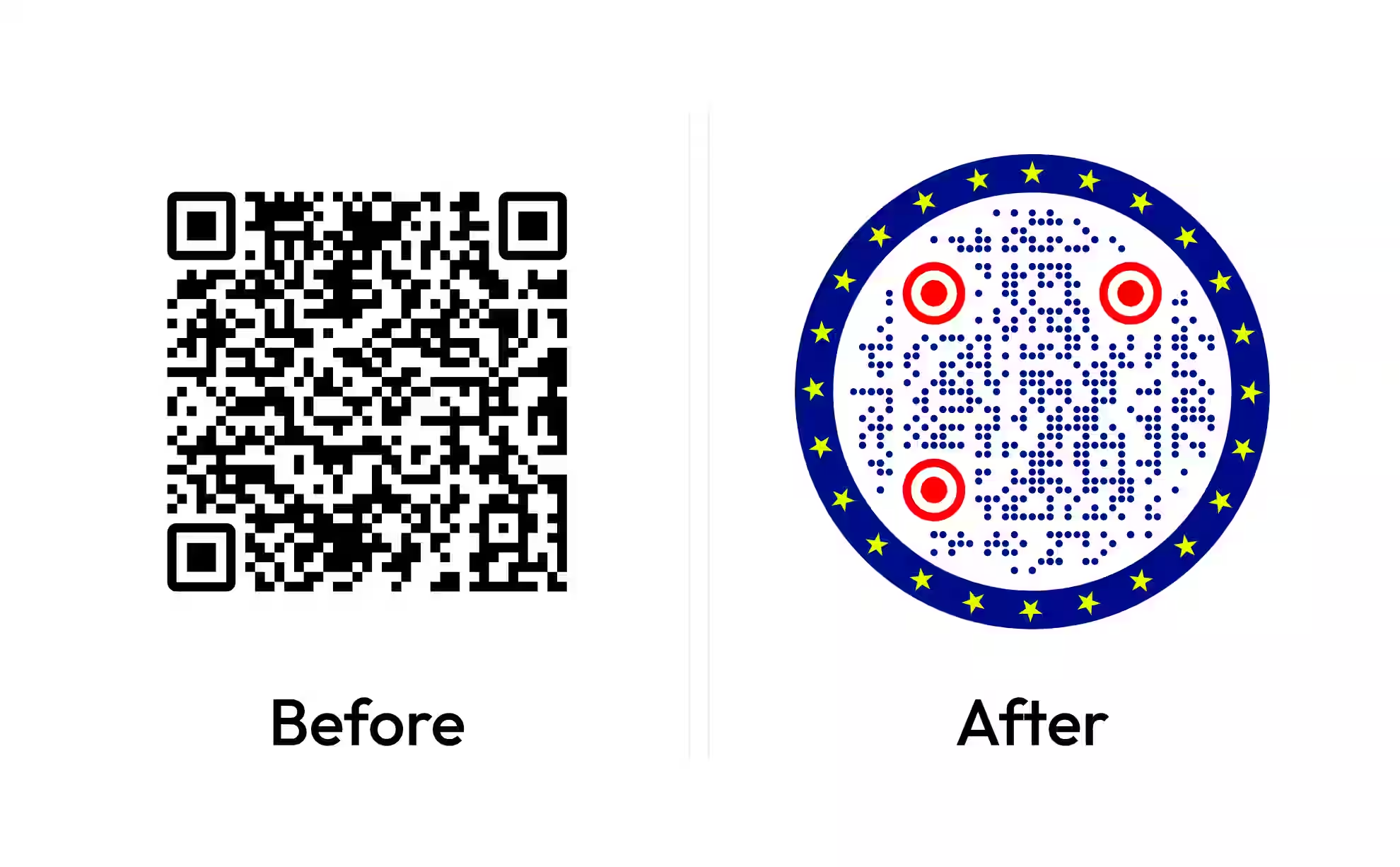
How Do You Put a QR Code on a Sticker or Label?
A sticker is the smallest thing a QR code gets printed on that still has to survive a jar, a shelf and a thumbnail. Make the code below, then read on for the sticker size it needs, what thermal printers do to the pattern, and why clear labels are the one substrate to avoid.
Opens in Google Maps. Coordinates work too - "37.4224, -122.0841".
The code opens your business's "Write a review" form. Paste the Place ID, or a Google Maps link that carries one.
A UPI link carries no checksum, so a mistyped ID produces a code that scans perfectly and pays somebody else. Paste the ID from your payment app rather than typing it, and send yourself one rupee before printing.
Paste it exactly as copied. KoloQR does not assemble the payload - it encodes the one your bank issued, and checks it before you print it.
SVG, PNG, JPG • Max 2 MB
First month free
then $9/month
Dynamic QR Codes Are Coming
Change your link anytime, even after printing. See who scans, when and where.
- Edit without reprinting
- Scan analytics
- Bulk & custom domains
You're on the List
We'll email you once, when dynamic codes with scan analytics launch.
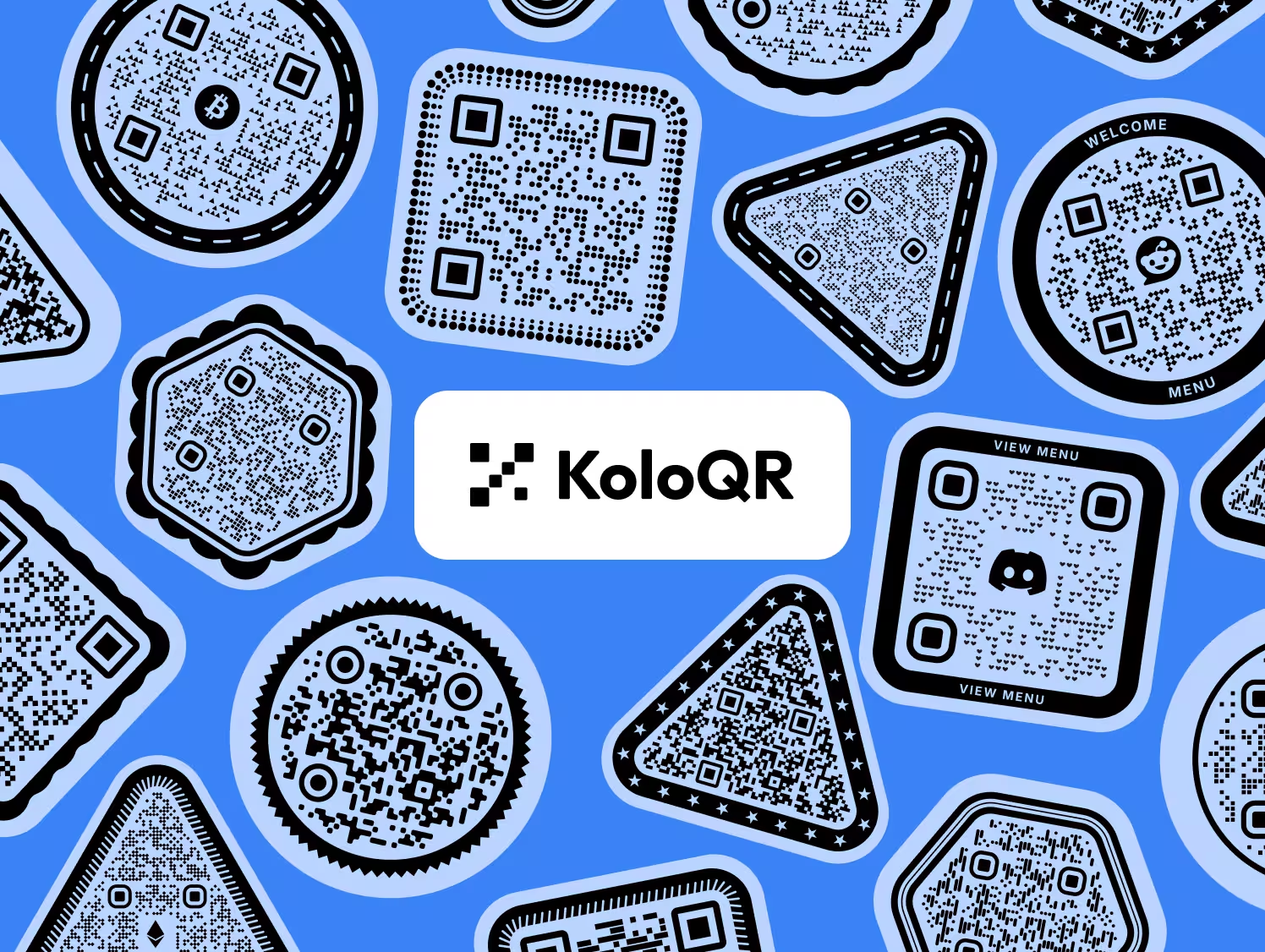
What Size Should a QR Code Sticker Be?
Order stickers at 3 cm or larger. A 2 cm code is the working minimum for a hand-held scan, and it needs four blank modules on every side, so a 3 cm sticker leaves about 4 mm of white margin around a 2 cm pattern. A 2.5 cm sticker forces the code down to about 1.7 cm.
- Sticker Size Minus Quiet Zone Equals Code Size - work backwards from the die. The printable area is the sticker minus a 2 mm die tolerance, and the code is that minus its quiet zone. Design the code last, not first.
- The Sticker Edge Is Not the Quiet Zone - a white margin only counts as quiet zone if it stays white on the product. On a dark jar or a coloured box, the substrate showing past the die cut becomes the background, and the margin disappears - see the quiet zone for what the scanner is actually looking for.
- Thermal Printers Round Everything - a 203 dpi label printer puts down 0.125 mm dots, so every module is a whole number of them: 0.5 mm is four dots, 0.6 mm is not. Design at a module size that divides cleanly, or the printer will round it for you and distort the grid.
- Curved Surfaces Need Slack - on a jar or a bottle, keep the whole symbol within about a third of the visible face. Past that the curvature skews the corner finder patterns enough that a phone stops recognising them.
Small round stickers are the hardest case on this page. A 25 mm circular label has roughly 20 mm of usable width across its middle, which is one 1.5 cm code and no room for a mistake - shorten the URL before shrinking the pattern.
Generate QR CodeWhat to Link a Sticker or Label QR Code To
Stickers go where packaging cannot: on someone else's product, on a jar you filled this morning, on a parcel already in transit. These are the destinations that suit that.
Batch and Best-Before Detail
For small-batch food and cosmetics, a label code can open the batch record - what went in, when it was made, how long it keeps. It puts full traceability on a 3 cm circle that has room for a name and nothing else.
Care and Usage Instructions
Washing, dosing, storing, refilling. The instructions that never fit on a jar and get thrown away with the box, kept at a URL that can be corrected after the labels are printed.
A Reorder Link
Straight to the product page for the thing that has just run out, scanned off the empty jar. Refill and subscription businesses live on this, and it costs one code on a label you were printing anyway.
Asset and Equipment Records
An inventory sticker on a laptop, a tool or a service panel that opens the maintenance log or the manual. Whoever is standing in front of the thing gets its history without knowing which system holds it.
Shipping and Returns
A label on the parcel that opens tracking, the returns form, or the assembly video. The customer is holding the box at the exact moment those three questions arrive.
An Event or Table Sticker
Stuck to a table, a stall or a laptop lid: menu, price list, playlist, socials. Stickers are the cheapest way to put a scan somewhere you do not own and cannot print on.
How to Make a QR Code Sticker
Five steps from a link to a die-cut file, with the two checks that catch the failures particular to labels.
Generate QR Code- 1
Measure the Sticker, Not the Code
Start from the die size you are ordering and subtract the quiet zone and the cutting tolerance. That number is how big the code can be, and it is usually smaller than the one in your head.
- 2
Shorten the Link
Fewer characters means fewer modules, and on a 2 cm code every module saved is real width. A short path on your own domain buys more margin than any other single decision here.
- 3
Build the Code
Open the generator above, paste the link, and keep the pattern dark on a solid light background rather than on the sticker material itself. Add the logo only if the code stays comfortably above 2 cm.
- 4
Give It a Printed Background
Print a white panel behind the code rather than relying on the label stock. That is what keeps the quiet zone white on a brown kraft label, a clear film or a coloured jar.
- 5
Stick One On and Scan It
Apply a proof sticker to the actual jar, at the actual curvature, under the light it will live in, and scan it. Flat on a desk is not the test; on the product is.
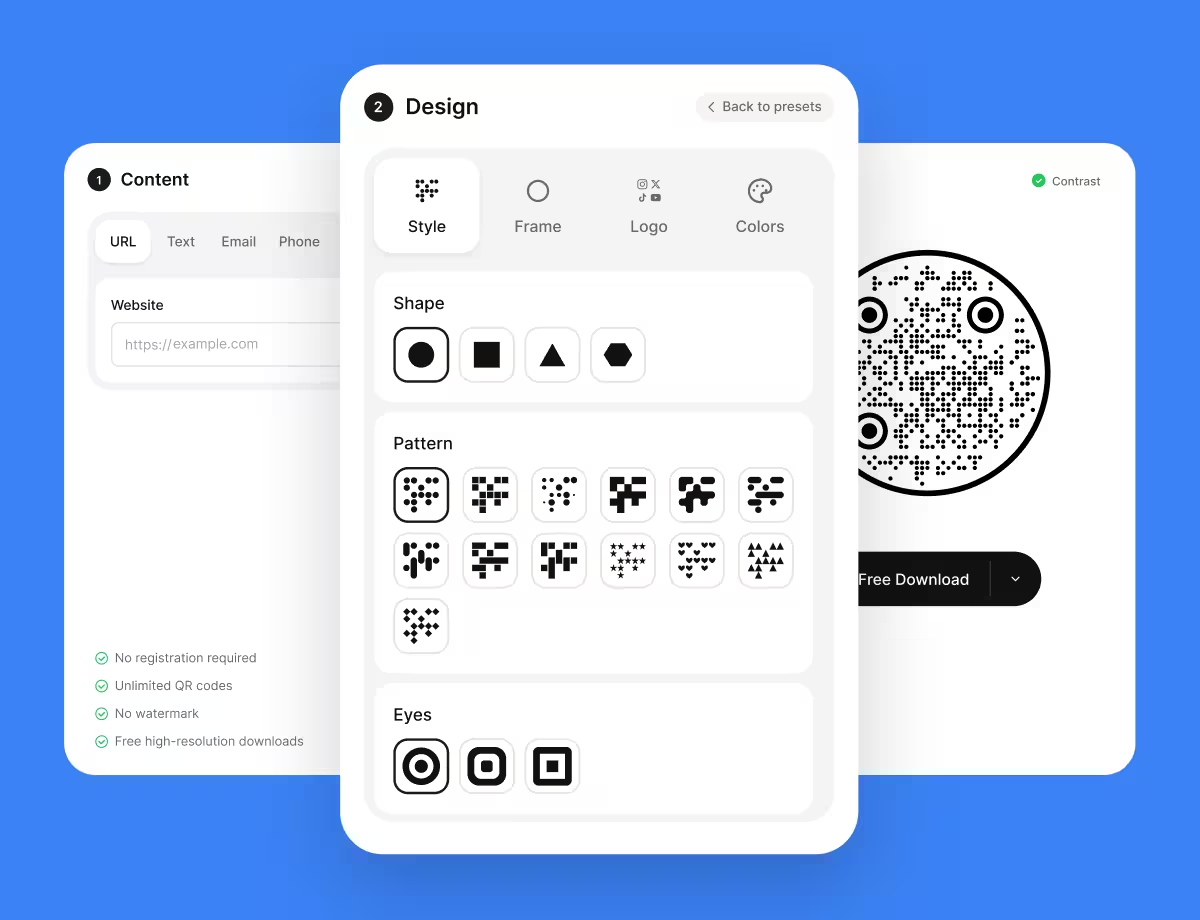
Substrates and Finishes That Break Label Codes
Three label choices account for most scanning failures: clear film, gloss laminate and metallic stock. Clear film lets the product's own colour become the code's background, while gloss and metallic reflect the phone's light back into the lens, so the camera sees a bright rectangle instead of a pattern.
- Clear Labels Need a White Patch - transparent film has no background of its own. Print an opaque white block under the code, or the amber glass behind it becomes the light half of the pattern.
- Matte Laminate, Not Gloss - laminate protects a label from oil and water and is worth having. Ask for matte, or for a matte panel over the code area on an otherwise glossy label - see matte vs gloss printing.
- Kraft and Recycled Stock Darken the White - brown paper labels reduce the contrast between modules and background before the ink is even dry. Print the code inside a white panel rather than directly on the kraft.
- Direct Thermal Fades - direct thermal labels darken in heat and fade in sunlight, which is fine for a parcel in transit and wrong for a jar on a shelf. Use thermal transfer or conventional print for anything that has to scan in six months.
One more thing worth knowing before ordering: variable-data label printing can put a different code on every sticker, which is what per-unit authenticity and batch tracking need. It costs more per roll and requires a service that can answer for each code, so use it deliberately rather than by default. For a short run on office label sheets, Word's mail merge can put a different QR code on every label from a spreadsheet.
Generate QR CodeBefore You Order the Roll
Labels are ordered in thousands and applied by hand or machine within a day. These checks belong before the file is sent, not after the roll arrives.
Order 3 cm or Bigger
A 3 cm sticker holds a 2 cm code with its quiet zone intact. Anything smaller forces a compromise, and the compromise is always made on the part the camera needs.
Print a White Panel Behind the Code
It costs nothing on a printed label and it makes the code independent of what it is stuck to. This is the single fix that covers kraft, clear film and dark packaging at once.
Keep It Off the Seam
On a bottle or a jar, the label's overlap and the container's seam both deform the pattern. Position the code on the flattest part of the front face.
Check the Die Tolerance
Die cutting moves by a millimetre or two across a roll. Keep the whole symbol and its margin at least 2 mm inside the cut line so no sticker in the batch loses a corner.
Scan a Proof on the Product
Apply one to the real jar, under shop lighting, and scan with an iPhone and an Android. A curve, a laminate and a dim aisle are three variables that a flat proof on a desk hides.
Keep the Destination Editable
Labels outlive campaigns. Point the code at a URL on your own domain so the batch page, the manual or the reorder link can move without the roll becoming waste.
Questions? Answered
About 3 cm for a reliable hand-held scan, which fits a 2 cm code plus its four-module quiet zone. You can go to 25 mm with a short URL, high contrast and good print, but the failure rate climbs in poor light. Shorten the link before shrinking the sticker. Halloween QR codes puts treat-bag stickers right at that 25 mm limit, next to nine seasonal palettes with their contrast measured.
Only with an opaque white panel printed behind the pattern. Clear film has no background of its own, so whatever the label is stuck to becomes the light half of the code - and an amber bottle or a brown box removes the contrast the scanner needs entirely.
Yes, if the code stays on a shallow part of the curve. Keep the whole symbol inside about a third of the visible face, so the corner finder patterns stay square enough for a camera to lock on. Test on the real container - a curve that looks gentle can still defeat a small code.
Yes, as long as the module size fits the printer's dot grid. A 203 dpi printer lays down 0.125 mm dots, so keep modules at a clean multiple - 0.5 mm is four dots. Sizes that fall between dots get rounded and the grid distorts, which is what usually causes patchy scanning off roll stock.
Matte. A gloss laminate mirrors the phone's own light straight back into the lens, and a code under a spotlight reads as a bright blank. If the product needs a glossy label, ask the printer for a matte panel over the code area alone.
As long as the print and the destination last. Direct thermal labels fade in heat and sunlight within months; thermal transfer and conventional print hold for years. The code itself never expires, because a static pattern carries the link inside it - see QR codes on product packaging for the longer-lived version of the same problem.
Yes, with variable-data printing, which is how per-unit authenticity and batch tracking work. It costs more per roll and needs a service that can answer for every code. A single static code repeated across the run is the right default for everything else.
Three usual causes: the curve of the jar, the laminate that went on after your test, and the shop lighting reflecting off it. Retest by applying a real sticker to a real container under the light it will live in, rather than scanning the artwork on a screen.
Keep Exploring
Pages that pick up where this one leaves off - the same setting, the same kind of code, or the next thing worth deciding.
Beauty Salons
Rebooking at the chair, per-service aftercare and a portfolio per stylist, with codes that survive acetone, colour and hairspray.
Marketing Agencies
Produce campaign codes for client print runs: sized per placement, exported as vector, and pointed at a redirect the client keeps.
Amazon QR Code
Take a scan straight to a product page, a storefront, or a wish list.
Shopify QR Code
Open a product, a collection, or a pre-filled basket in a single scan.
Product Packaging
What a code on a carton, pouch, label or bottle has to survive - sizes, finishes that kill a scan, and what the scan should open.
Posters
A3 to A0 - how big the code has to be for the distance people can actually stand at, and how high off the floor it belongs.
Why KoloQR?
- Create QR codes for websites, menus, Wi-Fi, PDFs, and business cards
- Customize colors, logos, and unique shapes
- Download high-quality PNG and SVG files
- Built for both print and digital