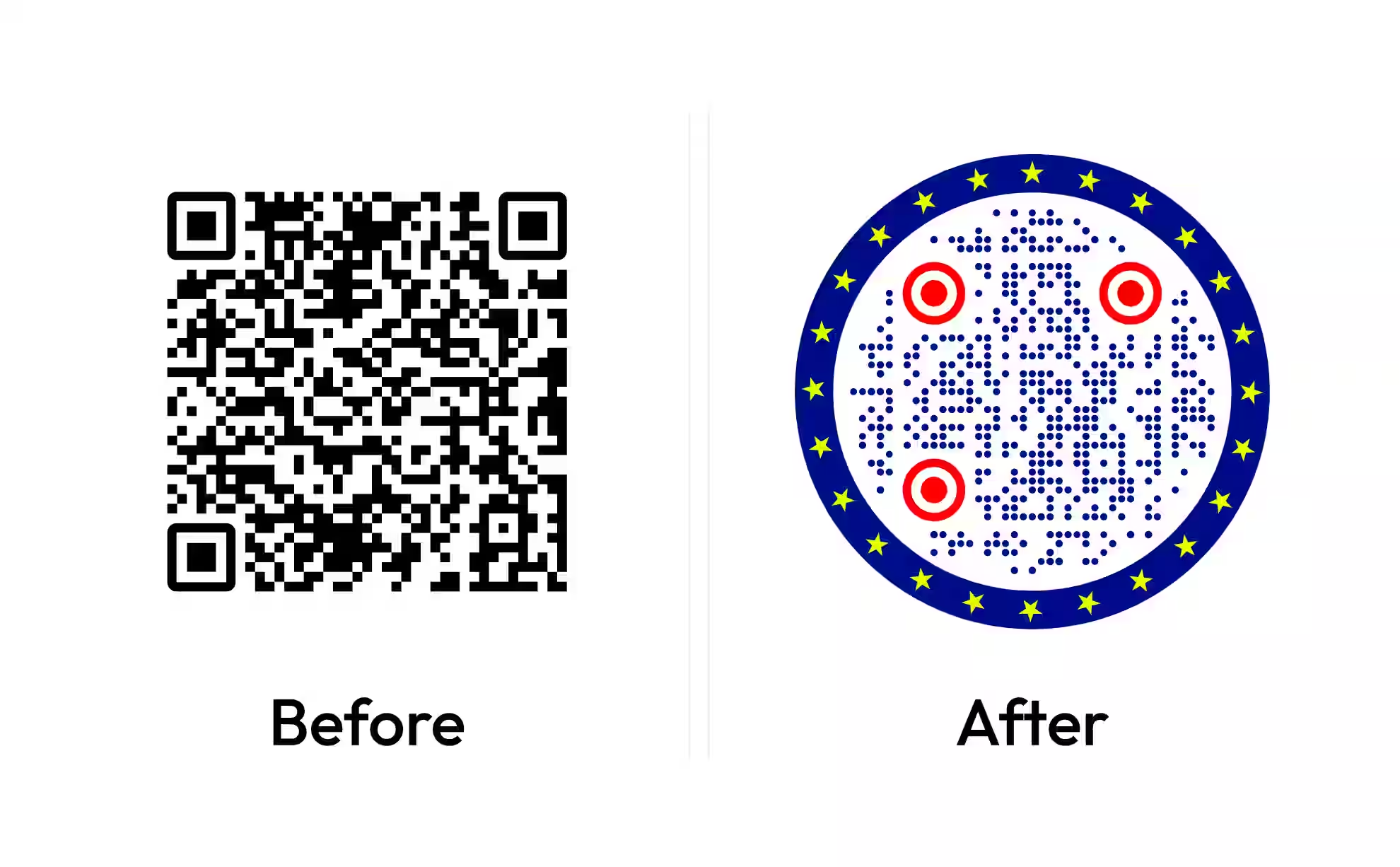
Make a QR Code for an Amazon Product or Store
Paste the product or storefront link, style the code to match your packaging, and download it print-ready - with a URL short enough to print small.
Opens in Google Maps. Coordinates work too - "37.4224, -122.0841".
The code opens your business's "Write a review" form. Paste the Place ID, or a Google Maps link that carries one.
A UPI link carries no checksum, so a mistyped ID produces a code that scans perfectly and pays somebody else. Paste the ID from your payment app rather than typing it, and send yourself one rupee before printing.
Paste it exactly as copied. KoloQR does not assemble the payload - it encodes the one your bank issued, and checks it before you print it.
SVG, PNG, JPG • Max 2 MB
First month free
then $9/month
Dynamic QR Codes Are Coming
Change your link anytime, even after printing. See who scans, when and where.
- Edit without reprinting
- Scan analytics
- Bulk & custom domains
You're on the List
We'll email you once, when dynamic codes with scan analytics launch.
What Is an Amazon QR Code?
An Amazon QR code is a QR code that stores an amazon.com address - a product page, a seller storefront, a wish list, or a registry. Scanning it opens that page in the phone's browser, or in the Amazon app if it is installed and set to handle Amazon links. The address is all the code holds; price, stock and reviews come from Amazon at the moment of the scan.
Shorten the URL Before You Encode It
The address Amazon puts in your browser bar is not the address to print:
- amazon.com/dp/B0XXXXXXXX - the canonical product form. The ten-character ASIN is the product; everything else in a long Amazon URL is decoration. Around 25 characters in total.
- amazon.com/Product-Title-Words-Here/dp/B0XXXXXXXX/ref=sr_1_3?keywords=... - what copying from the address bar gives you. The title slug and the ref and keyword parameters can push it past 150 characters.
- amazon.com/shops/yourbrand - a storefront, which stays valid across your whole catalogue and does not die when one ASIN is retired.
Length is not a style preference here. A payload of around 25 characters encodes into a small symbol with large modules that survives a 15 mm print on a box; a 150-character payload needs a much larger symbol, so at the same printed size every module shrinks and the scan gets harder in exactly the conditions packaging offers - matte board, curved surfaces, indoor light. Cut the URL back to /dp/ASIN and test it before assuming it redirects the same way.
Which Country's Amazon Does the Scan Open?
An Amazon QR code encodes one marketplace domain, and that decision is printed permanently. A code holding amazon.com opens the United States store for everyone who scans it, including the buyer standing in a shop in Berlin who would have bought from amazon.de. Amazon may offer them a redirect, but it may also show a product that does not ship to their address, in a currency they do not use. There is no single URL that resolves to a reader's own marketplace. If the print run stays in one country, encode that country's domain - amazon.co.uk, amazon.de, amazon.co.jp. If it crosses borders, encode a page on your own domain that sends the visitor to the right marketplace, and keep the printed code pointed at that instead.
Generate QR Code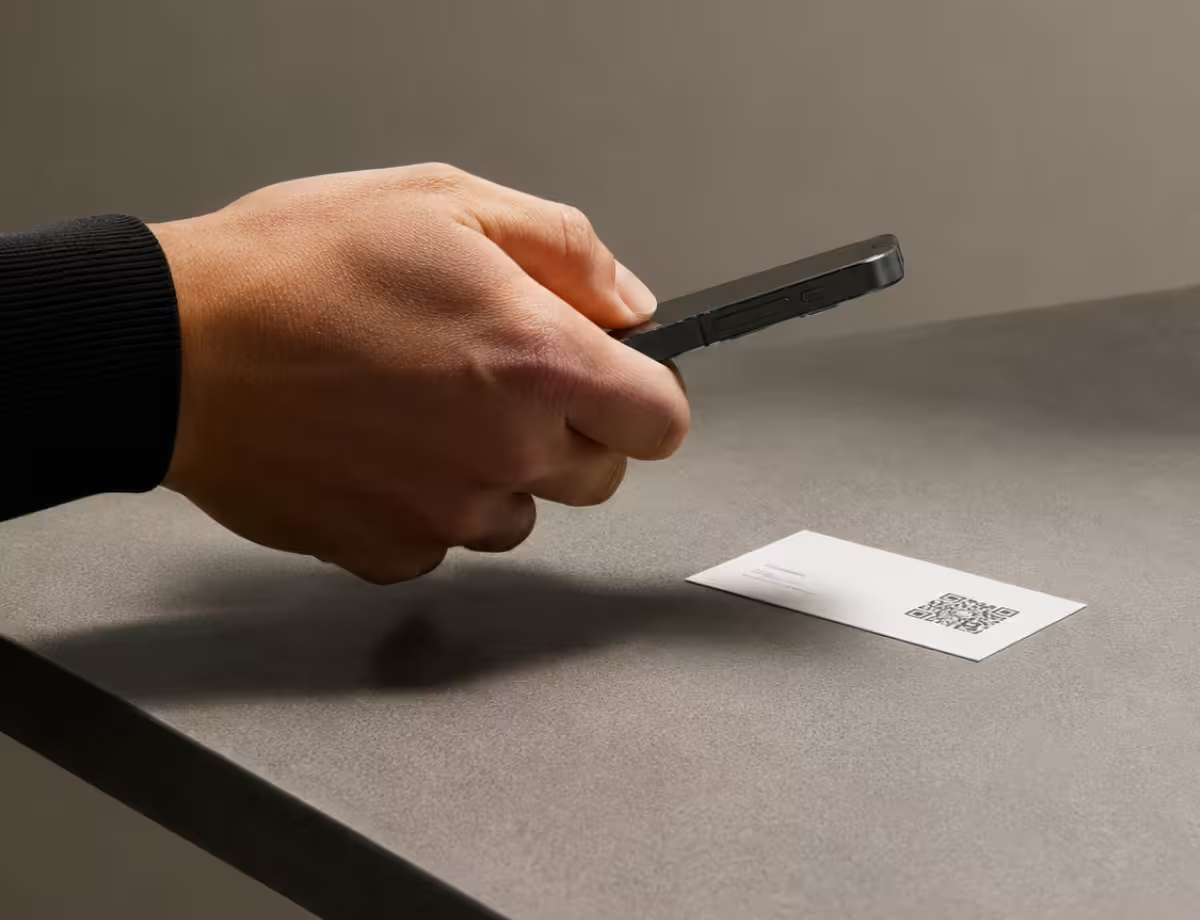
Where Amazon QR Codes Are Used
Most of these codes are printed by sellers rather than by shoppers, and they cluster around the moment the product is physically in someone's hands:
- 1
Find the ASIN and Build the Short URL
The ASIN is the ten-character code in the product URL after /dp/, and it is also listed in the product details section. Rebuild the address as amazon.<domain>/dp/ASIN.
- 2
Pick the Right Marketplace Domain
Encode the domain your buyers actually shop on. For a print run that crosses borders, point the code at your own page and route from there.
- 3
Paste the Link and Design the Code
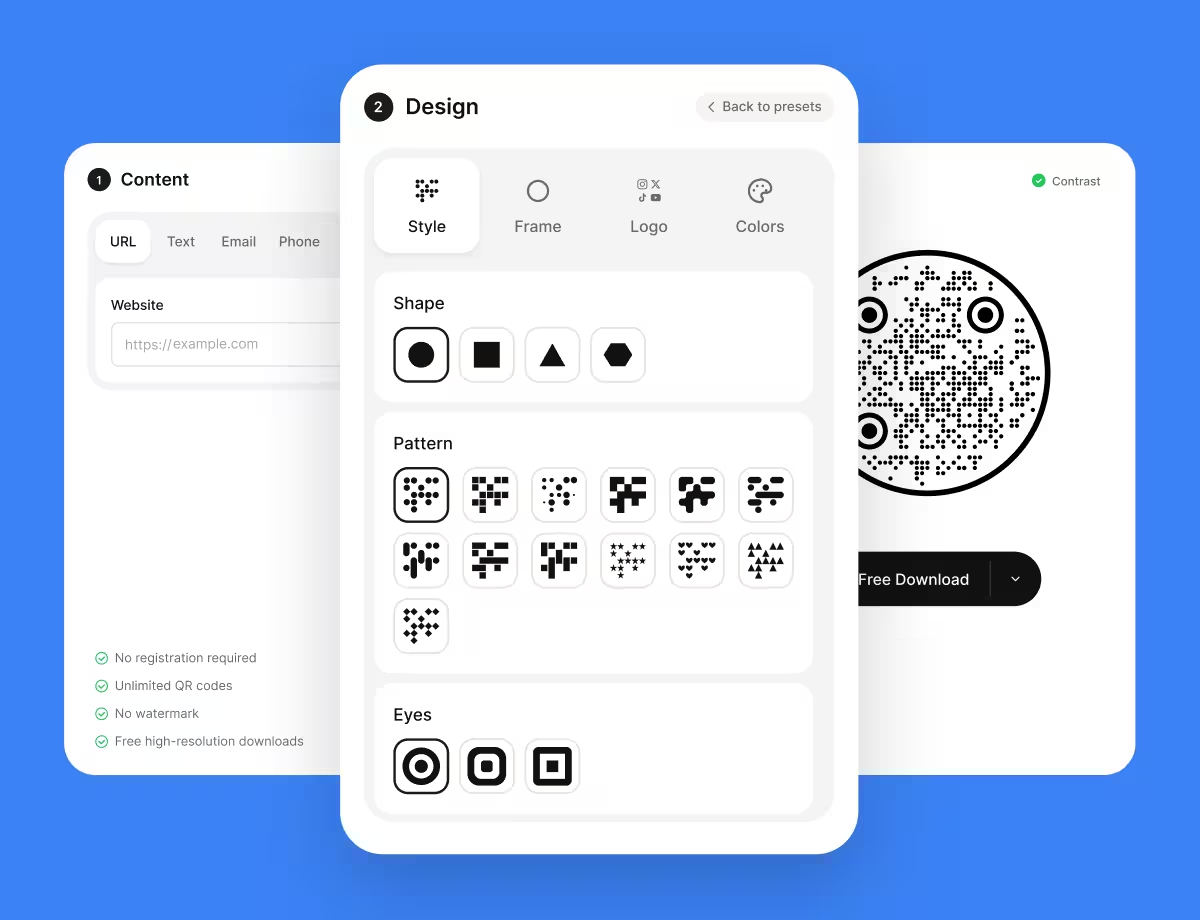
Choose the URL type, paste the address, then style the code to sit inside your packaging artwork rather than beside it.
- 4
Test and Export
Scan it from a phone with the Amazon app installed and one without, confirm it lands on the right listing, then export SVG or PDF for print.
Which File Format Should You Download?
KoloQR exports your Amazon QR code in three formats. Pick by where it will be seen:
- PNG for listing images, email newsletters, and slides, where the code appears at one fixed size.
- SVG for cartons, labels, leaflets, and shelf talkers - anything a printer scales without softening the edges.
- PDF for handing to a packaging printer at print-ready quality, alongside the rest of the artwork.
Packaging is the hardest surface on this page. Ink spreads on uncoated board, varnish adds glare, and a code on a curved bottle is being read off a distorted plane. Vector export plus a short /dp/ASIN payload is what buys back the margin for all three - and a printed proof scanned under shop lighting is the only test that counts.
Generate QR CodeBest Practices for Amazon QR Codes
Two of these are about the pattern. The rest are about the fact that Amazon owns the page on the other side of it.
Encode /dp/ASIN and Nothing Else
The ten-character ASIN identifies the product. Dropping the title slug and the ref parameters can cut the payload by more than a hundred characters.
Print the Marketplace You Sell On
A .com code shows the US store to a reader in Europe. Match the domain to where the printed material will actually be read.
Prefer a Storefront for Long-Lived Packaging
An ASIN can be retired, merged, or suppressed. A storefront URL outlives an individual listing, which matters on a carton printed in runs of ten thousand.
Check What a Package Insert Is Allowed to Say
Amazon's seller policies restrict inserts: asking for a positive review, offering anything in exchange for one, or using the insert to divert the buyer away from Amazon can all put a selling account at risk. Read the current guidelines before the artwork goes to print.
Be Careful With Affiliate Tags in Print
Amazon's Associates terms limit where tagged links may be used, and printed material is not an ordinary approved channel. Check the operating agreement before encoding a tag rather than after.
Say What the Scan Opens
“Scan to reorder” or “scan for the full manual” is a reason to lift a phone. A bare code on a box is scanned by almost nobody.
Keep the Modules Dark on Light Board
Phone cameras expect dark on light. On packaging, an inverted code plus a matte varnish is the combination that fails under shop lighting.
Protect the Quiet Zone
Four modules of clear margin on every side, and further from the fold, the seam and the die line than a layout usually wants to allow.
Size It for the Distance
Roughly a tenth of the reading distance: about 2 cm on a box held in the hand, about 10 cm on a shelf talker read from a metre.
Scan the Printed Proof, Not the Screen
Ink spread, varnish and curvature all happen at the printer. A code that reads perfectly in the artwork can fail on the first carton off the line.
Why Your Amazon QR Code Isn't Working
An Amazon code rarely fails as a pattern. It fails by landing the reader on the wrong page, in the wrong country, or on a listing that no longer exists.
The Scan Opens a Dog Page or a Search Result
- Cause
- The listing was removed, suppressed, or merged into another ASIN, or the URL carried session parameters that expired. The code still resolves; Amazon no longer has that page.
- Fix
- Reprint against a storefront or a category page, which outlive a single ASIN. For packaging, encode a redirect on your own domain so the destination can be repointed without a reprint.
Readers Land on the Wrong Country's Store
- Cause
- The code encodes one marketplace domain. Amazon may offer a switch, but the page shown first is the one that was printed.
- Fix
- Print per-market artwork with the local domain, or point the code at a page on your own domain that sends each visitor to their marketplace.
The Code Won't Scan on the Carton
- Cause
- Usually a long address-bar URL printed small, made worse by ink spread on uncoated board or glare from varnish.
- Fix
- Rebuild the URL as /dp/ASIN, regenerate from the SVG, keep four modules of quiet zone, and scan a printed proof under the lighting the box will actually sit in.
The Scan Opens the Browser Instead of the Amazon App
- Cause
- The app is not installed, or the phone has not been set to open Amazon links in it. Both are the reader's settings, not something the code controls.
- Fix
- Treat the browser as the real destination and test there. The mobile web listing is fully functional, so nothing needs to change - but design the surrounding copy for a browser, not for the app.
Still not sure whether the fault is the file or the print? Drop the exported image into the QR code scanner - if it decodes on a desktop and not on paper, the fault entered after the file.
Questions? Answered
An Amazon QR code stores an amazon.com address - a product page, storefront, wish list, or registry. Scanning it opens that page in the browser, or in the Amazon app if the phone is set to handle Amazon links.
Rebuild it as amazon.<domain>/dp/ASIN, using the ten-character ASIN from the product URL or the product details. That is around 25 characters, against 150 or more for the full address-bar URL.
An ASIN is the ten-character identifier Amazon gives every product, shown in the product URL after /dp/ and in the product details. It is all a product URL actually needs.
The one your readers shop on. A code holding amazon.com opens the US store for everyone, so print amazon.co.uk, amazon.de, or the local equivalent when the material stays in one country.
Yes, and it is the most common use. Check Amazon's current seller guidelines first: inserts and packaging may not ask for positive reviews, offer incentives for them, or divert the buyer away from Amazon.
Check Amazon's Associates operating agreement before you do. It limits where tagged links may be used, and print is not an ordinary approved channel - so this is a terms question rather than a technical one.
A price, title, or image change makes no difference - the code holds only the address. A retired, suppressed, or merged ASIN does break it, which is why long-lived packaging is safer pointed at a storefront.
About 15 to 20 mm with a /dp/ASIN payload on coated board. Uncoated stock, varnish, and curved surfaces all argue for more, and a printed proof is the only honest test.
No. The link opens in any mobile browser, where the listing is fully functional. If the app is installed and set to handle Amazon links, the phone may open it instead.
Not from a static code, and Amazon does not report scan counts. Encode a redirect on your own domain if you need to compare one print run against another; the redirect is where the counting happens.
Keep Exploring
Pages that pick up where this one leaves off - the same setting, the same kind of code, or the next thing worth deciding.
Beauty Salons
Rebooking at the chair, per-service aftercare and a portfolio per stylist, with codes that survive acetone, colour and hairspray.
Marketing Agencies
Produce campaign codes for client print runs: sized per placement, exported as vector, and pointed at a redirect the client keeps.
Shopify QR Code
Open a product, a collection, or a pre-filled basket in a single scan.
Coupon QR Code
Put a discount on paper and let one scan apply it at the checkout.
Product Packaging
What a code on a carton, pouch, label or bottle has to survive - sizes, finishes that kill a scan, and what the scan should open.
Etsy QR Code
Send a scan to your Etsy shop or to a single listing, from a tag or a stall sign.
Why KoloQR?
- Create QR codes for websites, menus, Wi-Fi, PDFs, and business cards
- Customize colors, logos, and unique shapes
- Download high-quality PNG and SVG files
- Built for both print and digital