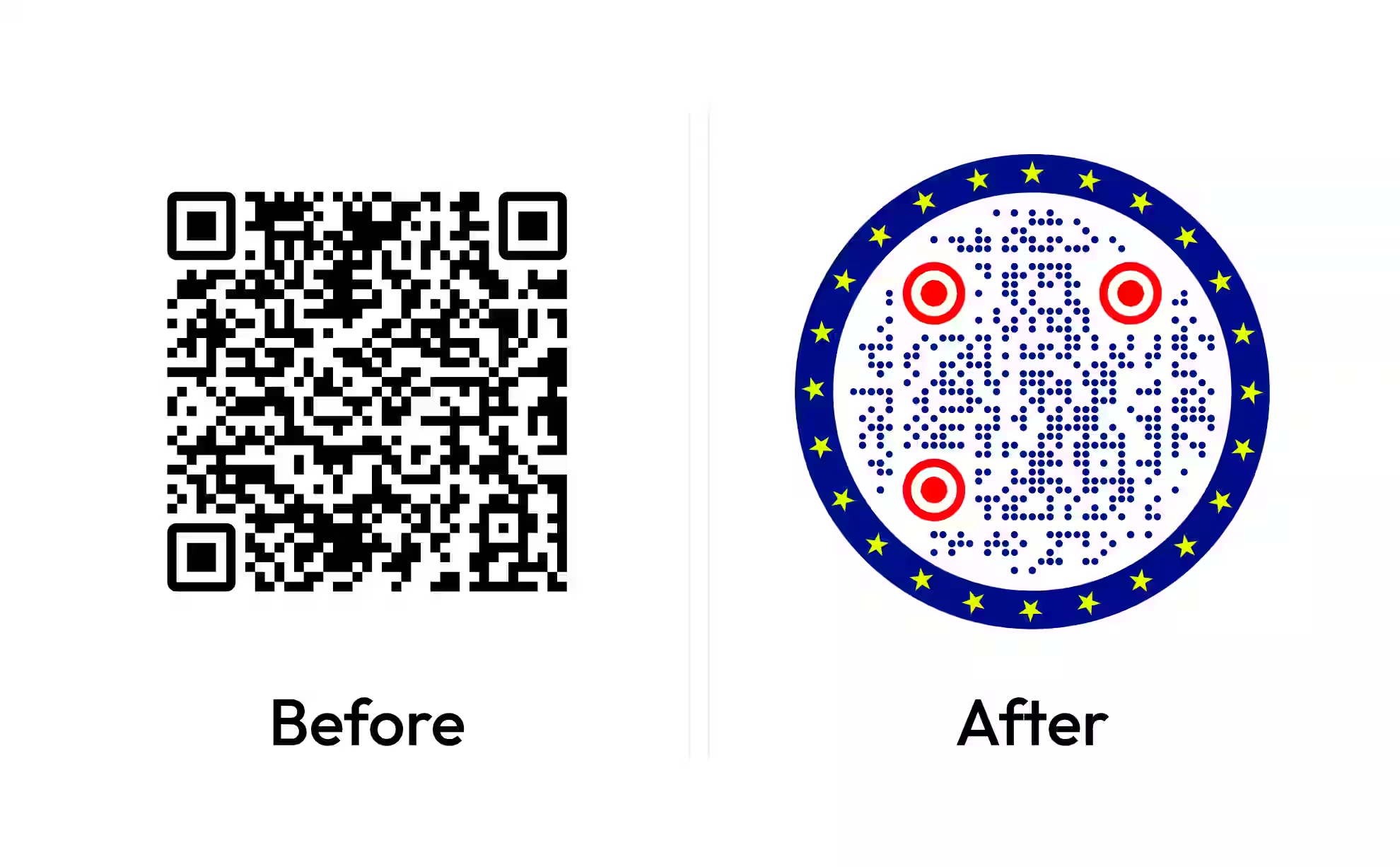
Make a QR Code for a Shopify Store
Paste your store, product, or cart link, style the code, and download it print-ready - so packaging, a market stall, or a magazine page sells without anyone typing an address.
Opens in Google Maps. Coordinates work too - "37.4224, -122.0841".
The code opens your business's "Write a review" form. Paste the Place ID, or a Google Maps link that carries one.
A UPI link carries no checksum, so a mistyped ID produces a code that scans perfectly and pays somebody else. Paste the ID from your payment app rather than typing it, and send yourself one rupee before printing.
Paste it exactly as copied. KoloQR does not assemble the payload - it encodes the one your bank issued, and checks it before you print it.
SVG, PNG, JPG • Max 2 MB
First month free
then $9/month
Dynamic QR Codes Are Coming
Change your link anytime, even after printing. See who scans, when and where.
- Edit without reprinting
- Scan analytics
- Bulk & custom domains
You're on the List
We'll email you once, when dynamic codes with scan analytics launch.
What Is a Shopify QR Code?
A Shopify QR code is a QR code that stores the web address of a page in a Shopify store - a product, a collection, or a pre-filled cart - so scanning it opens that page in the phone's browser. The code holds the address only, so prices, stock and photos all stay live and none of them is fixed at the moment of printing.
Four Shopify Links Worth Encoding
Every Shopify store shares the same URL structure, which means these work on any store without an app or a plugin:
- /products/product-handle - one product page, with its photos, description and reviews. The right default for anything a customer has not seen before.
- /collections/collection-handle - a collection page. Right when the printed piece is about a range rather than one item, such as a code on a catalogue spread.
- /cart/variantId:quantity - adds that variant to the basket and goes straight to it. A cart permalink can carry several items: /cart/123:1,456:2 puts both in.
- ?discount=SPRING20 - appended to any of the above, applies the discount code and carries it through to checkout, so the reader sees the reduced price without typing anything.
The variant id in a cart permalink is the long number you can read off the product's variant in the admin, or from the ?variant= parameter in the address bar after selecting an option on the product page. Combining the last two gives a single scan that fills a basket and applies an offer - /cart/123:1?discount=SPRING20 - which is the closest a static QR code gets to a one-tap purchase, and it needs nothing installed on either side.
When to Skip the Product Page, and When Not To
A cart permalink is the right choice when the reader already knows what they are buying: a reorder card in a parcel, a table sign at a market stall, a code on the shelf edge beside the physical product. It is the wrong choice for cold traffic, because it skips the photos, the description, the size guide and the reviews - everything that persuades somebody who has not yet decided. Put a product link on the magazine page and a cart link on the packaging insert, not the other way round. There is one more practical difference: a cart permalink is a live stock check, so a customer scanning a sold-out variant lands on a basket that cannot be completed, while a product page at least shows them the alternatives. Test the printed proof through to the payment step, on a phone that has never visited your store, before the run.
Generate QR Code
Where Shopify QR Codes Are Used
Shopify codes are strongest where a physical object and an online basket are in the same room:
- 1
Open the Page You Want the Scan to Land On
A product, a collection, or your storefront. Copy the address from the browser bar and delete anything after a question mark that you did not add yourself.
- 2
Build a Cart or Discount Link if You Need One
For add-to-basket, use yourstore.com/cart/ followed by the variant id, a colon and the quantity. Append ?discount= and your code to apply an offer.
- 3
Paste the Link and Design the Code
Choose the URL type, paste the link, then pick a shape and colours that match the label, insert, or stall sign the code will sit on.
- 4
Test a Real Purchase, Then Export
Scan the proof on a phone that has never visited your store, reach the payment step, confirm the price and any discount, then export SVG or PDF for print.
Which File Format Should You Download?
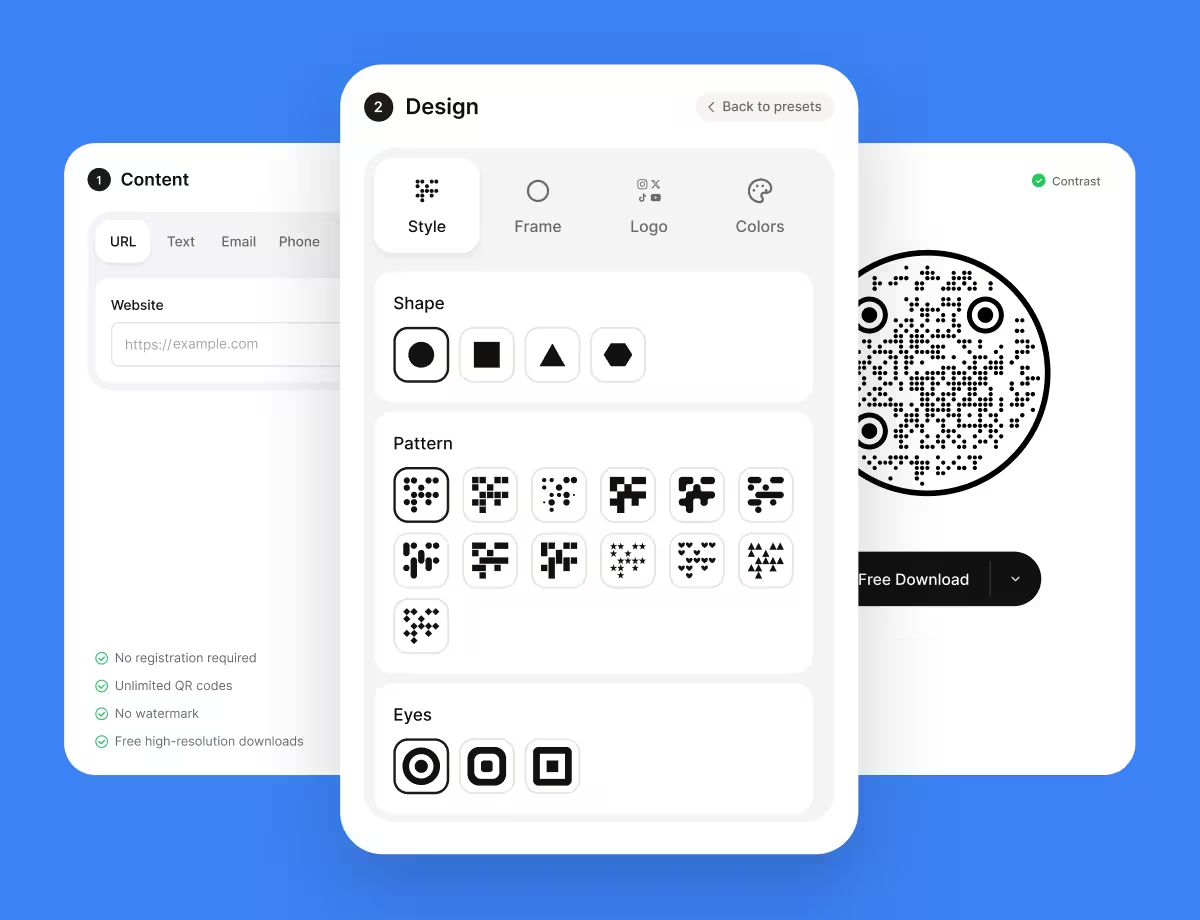
KoloQR exports your Shopify QR code in three formats. Pick by where it will be seen:
- PNG for product photos, social posts, and email - anywhere the code appears at one fixed size on a screen.
- SVG for labels, packaging, shelf talkers, and stall signage - anything a printer scales without softening the edges.
- PDF for handing to a print shop, or for a catalogue page produced at print-ready quality.
Product labels are where the payload length shows. A tidy product link on a custom domain runs around 45 characters and prints comfortably at 15 to 20 mm; a cart permalink with a 14-digit variant id and a discount parameter can pass 70, which wants noticeably more room for the same reliability. If a label is too small for the link you need, put the cart permalink behind a short redirect on your own domain and encode that instead - the scan behaves identically and the symbol is far less dense.
Generate QR CodeBest Practices for Shopify QR Codes
Shopify codes fail on handles, stock and checkout far more often than on scanning. These habits address all three:
Keep the Redirect When You Rename a Product
Changing a product's title can change its handle, and the old URL then 404s. Shopify offers to create a redirect at that moment - accept it, or every printed code dies.
Use a Product Link for Cold Traffic
Photos, description, sizing and reviews are what convert a stranger. A cart permalink skips all of them, which suits a reorder and ruins a first sale.
Use a Cart Permalink for People Who Already Decided
Reorder cards, shelf edges beside the real product, and event tables. The scan puts the item in the basket and goes straight there.
Apply Discounts in the Link, Not in Small Print
?discount=CODE carries the offer to the checkout, so the customer sees the reduced total rather than being asked to remember a word.
Print the Expiry of Any Offer
The code cannot show one, and an expired discount fails silently at the checkout after the customer has already committed to buying.
Point at the Variant, Not Just the Product
A code on a specific colour or size should open that variant, with ?variant= in the address, so the customer is not asked a question the label already answered.
Use Your Own Domain
A custom domain is shorter than a myshopify.com address, so it produces a less dense code, and it survives a change of platform in a way the Shopify subdomain does not.
Protect the Quiet Zone
Four modules of clear margin on every side. On a care label crowded with washing symbols this is the first thing squeezed out.
Size It for the Payload
About 15 to 20 mm for a short product link, more for a cart permalink with a discount attached, and roughly a tenth of the reading distance on a stall sign.
Test Through to Payment on a Clean Phone
Your own device has a session, a saved address and possibly a staff discount. A phone that has never seen your store is the only honest test.
Why Your Shopify QR Code Isn't Working
Handles, variant ids and discount rules cause nearly every Shopify code failure. All three are fixed in the store rather than in the generator.
The Scan Opens a 404 Page
- Cause
- The product handle changed - usually because the title was edited - and no redirect was created from the old address to the new one.
- Fix
- Add a URL redirect in the store's navigation settings from the old path to the new one. That revives every printed code without a reprint.
The Cart Link Adds Nothing
- Cause
- The number in the permalink is the product id rather than the variant id, or the variant has been deleted. A cart permalink needs the variant.
- Fix
- Select the option on the product page and read the variant id from the ?variant= parameter in the address bar, then rebuild the permalink from it.
The Discount Doesn't Apply
- Cause
- The discount is expired, limited to a product the basket does not contain, below its minimum spend, or the ?discount= parameter was dropped by a shortener.
- Fix
- Check the discount's conditions in the admin, encode the full link without a shortener in the chain, and verify by scanning rather than clicking.
The Scan Lands on a Basket That Can't Be Completed
- Cause
- The variant is out of stock. A cart permalink is a live stock check, so the customer meets the problem after committing rather than before.
- Fix
- Point the code at the product page instead, where a sold-out variant still shows alternatives, or keep cart codes for products you always hold.
The Printed Code Scans Slowly or Only Up Close
- Cause
- A cart permalink with a long variant id and a discount parameter is a much longer payload than a plain product link.
- Fix
- Put the link behind a short redirect on your own domain and encode that, or print the code larger with a simpler module shape.
The Code Worked in Testing and Not in the Shop
- Cause
- Your own phone carried a session, a saved address, or a staff discount, so it saw prices and a checkout no customer sees.
- Fix
- Test in a private browser window on a device that has never visited the store, and take the test all the way to the payment step.
Still not sure whether the fault is the file or the print? Drop the exported image into the QR code scanner - if it decodes on a desktop and not on paper, the fault entered after the file.
Questions? Answered
A Shopify QR code stores the web address of a page in a Shopify store - a product, a collection, or a pre-filled cart. Scanning it opens that page on the phone, with live prices and stock, because only the address is inside the code.
Open the product page, copy its address, and paste it into a QR generator as a URL. Style the code, scan the proof on a phone that has never visited your store, and export SVG for print or PNG for screens.
Yes. Encode a cart permalink - yourstore.com/cart/ followed by the variant id, a colon and the quantity - and the scan puts that item in the basket and opens it. Several items can be combined with commas.
Yes. Append ?discount= and your code to any store link, including a cart permalink, and Shopify applies it through to checkout. The customer sees the reduced total instead of being asked to remember a word.
Select the option on the product page and read the ?variant= number in the address bar, or open the variant in the admin and take the number at the end of its URL. It is the number a cart permalink needs.
Because the product handle changed, usually as a side effect of editing the title, and the old address no longer exists. Add a URL redirect from the old path to the new one and every printed code starts working again.
A product page for anyone who has not decided yet, because it carries the photos, description and reviews. A cart permalink for reorders, shelf edges and event tables, where the customer already knows exactly what they want.
No. Product links, collection links, cart permalinks and discount parameters are all built into every Shopify store, so any QR generator that encodes a URL will do. Apps only add scan analytics and bulk generation.
Your custom domain. It is shorter, so the code is less dense, it looks legitimate when a phone previews the link, and it survives a change of platform in a way the myshopify.com subdomain does not.
Yes. The code holds an address, not a price, so every scan shows whatever the store charges today. What you cannot change is a price printed in words next to the code, which is why offers should carry an expiry date. For a sale weekend, QR codes for Black Friday shows how a short redirect on your own domain moves the same printed code from the deal to your regular range once the sale ends.
Keep Exploring
Pages that pick up where this one leaves off - the same setting, the same kind of code, or the next thing worth deciding.
Beauty Salons
Rebooking at the chair, per-service aftercare and a portfolio per stylist, with codes that survive acetone, colour and hairspray.
Marketing Agencies
Produce campaign codes for client print runs: sized per placement, exported as vector, and pointed at a redirect the client keeps.
Amazon QR Code
Take a scan straight to a product page, a storefront, or a wish list.
Coupon QR Code
Put a discount on paper and let one scan apply it at the checkout.
Product Packaging
What a code on a carton, pouch, label or bottle has to survive - sizes, finishes that kill a scan, and what the scan should open.
eBay QR Code
Open a listing, a store, or a seller's other items in one scan.
Why KoloQR?
- Create QR codes for websites, menus, Wi-Fi, PDFs, and business cards
- Customize colors, logos, and unique shapes
- Download high-quality PNG and SVG files
- Built for both print and digital