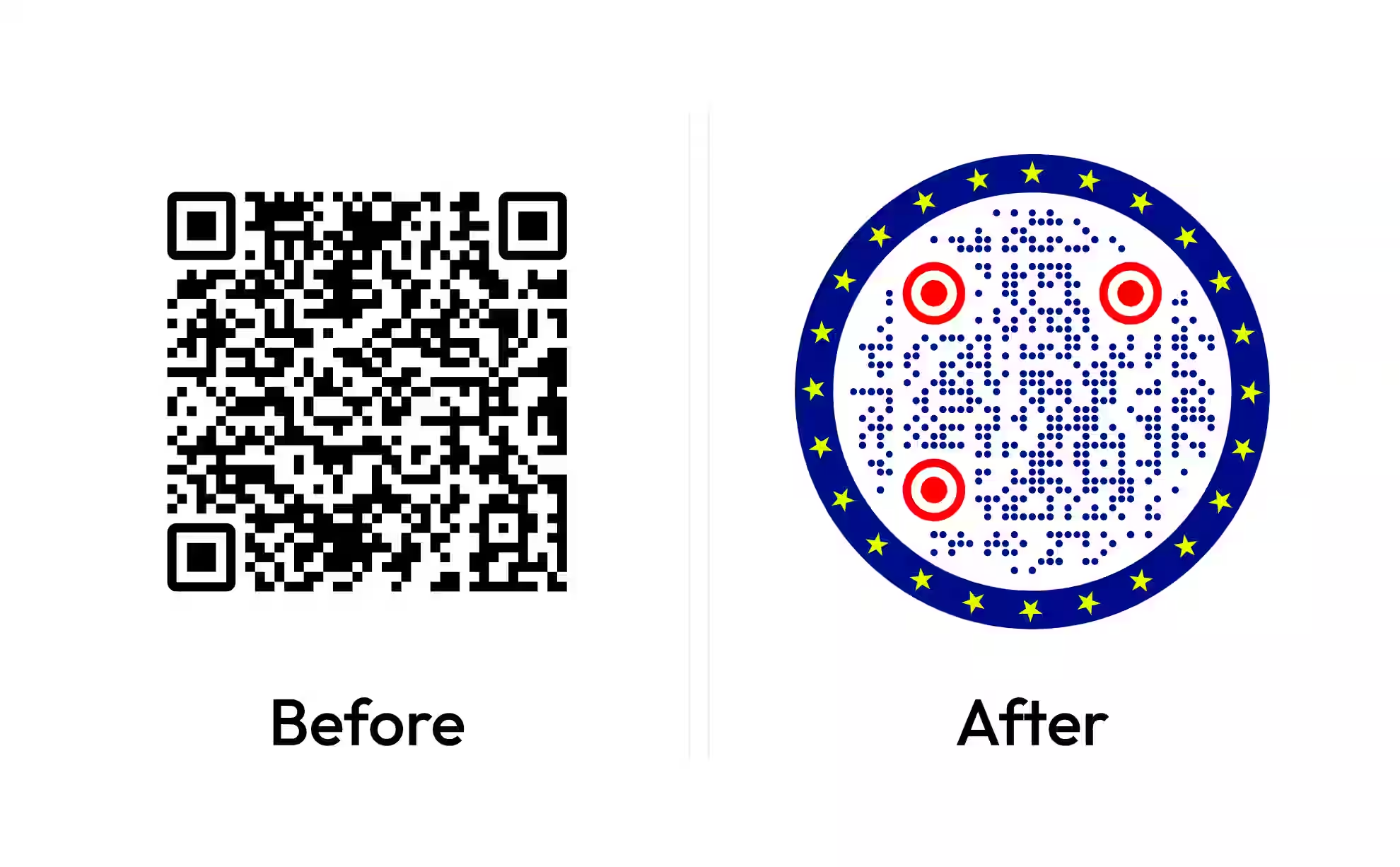
Make a QR Code for eBay
Paste your eBay link, style the code, and download it print-ready - so a parcel insert, a market stall, or a shop card opens the listing without anyone typing an item number.
Opens in Google Maps. Coordinates work too - "37.4224, -122.0841".
The code opens your business's "Write a review" form. Paste the Place ID, or a Google Maps link that carries one.
A UPI link carries no checksum, so a mistyped ID produces a code that scans perfectly and pays somebody else. Paste the ID from your payment app rather than typing it, and send yourself one rupee before printing.
Paste it exactly as copied. KoloQR does not assemble the payload - it encodes the one your bank issued, and checks it before you print it.
SVG, PNG, JPG • Max 2 MB
First month free
then $9/month
Dynamic QR Codes Are Coming
Change your link anytime, even after printing. See who scans, when and where.
- Edit without reprinting
- Scan analytics
- Bulk & custom domains
You're on the List
We'll email you once, when dynamic codes with scan analytics launch.
What Is an eBay QR Code?
An eBay QR code is a QR code that stores the web address of an eBay listing, store, or seller page, so scanning it opens that page in the phone's browser or in the eBay app. The listing lives on eBay and only the address is inside the code, so price changes, bids and stock all stay live after the code is printed.
Strip the Link Down to the Item Number
eBay identifies every listing with a 12-digit item number, and everything else in the address is tracking. Removing it makes the code dramatically less dense:
- ebay.com/itm/123456789012 - the clean listing address, around 25 characters. This is what to encode, and it is as short as a marketplace link gets.
- The address from the share button - the same listing with tracking parameters attached, often past 150 characters. It works, and it triples the module count for nothing.
- ebay.com/str/yourstorename - your eBay Store front. The right choice for anything printed in quantity, because it outlives every individual listing.
- ebay.com/usr/yourusername - your seller page and other items. A good fallback for sellers without a Store subscription.
Use the country domain your buyers are on. An ebay.com link opens for a UK or German buyer and lands them in the US site's context, with its own postage and currency; ebay.co.uk and ebay.de give the same listing in a form they can act on. The item number is the same across sites, so the only thing that changes is the domain in front of it - which means one listing can have a different printed code per market without any extra work.
Printed Codes and Listings That End
An eBay listing is temporary in a way a product page is not, and that decides what a printed code should point at. An auction ends, and after it does the item number still resolves but shows a closed listing rather than something to buy. A fixed-price listing set to Good 'Til Cancelled renews itself and keeps its item number, so a code printed against it can last years. But relisting through Sell Similar creates a new listing with a new item number, which silently breaks every code already printed - and Sell Similar is how most sellers relist. So print item-number codes only for listings you intend to renew rather than recreate, and for anything going out in quantity - business cards, parcel inserts, stall signage - print the store or seller address instead, which survives every listing you will ever run.
Generate QR Code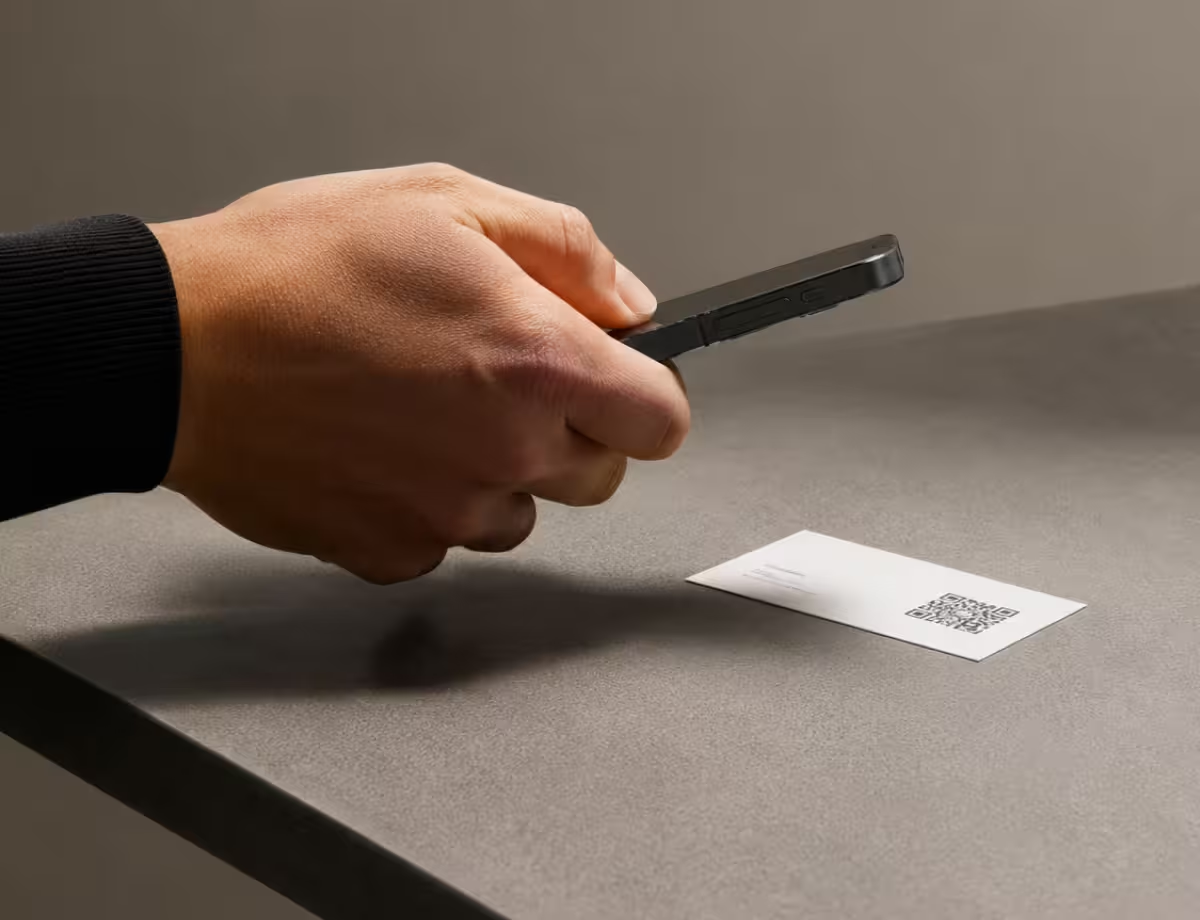
Where eBay QR Codes Are Used
eBay codes work wherever a physical item, or the person selling it, is in front of the buyer:
- 1
Open the Listing and Take the Item Number
The 12-digit number is shown on the listing page and sits after /itm/ in the address. Build a clean link from it rather than copying the share URL.
- 2
Choose the Right Country Domain
Use ebay.co.uk, ebay.de or whichever site your buyers are on. The item number is the same everywhere; only the domain in front of it changes.
- 3
Paste the Link and Design the Code
Choose the URL type, paste the link, then pick a shape and colours that match the insert, stall sign, or card the code will sit on.
- 4
Test on a Clean Phone, Then Export
Scan the proof on a phone that is not signed into your seller account, check the listing and the postage shown, then export SVG or PDF for print.
Which File Format Should You Download?
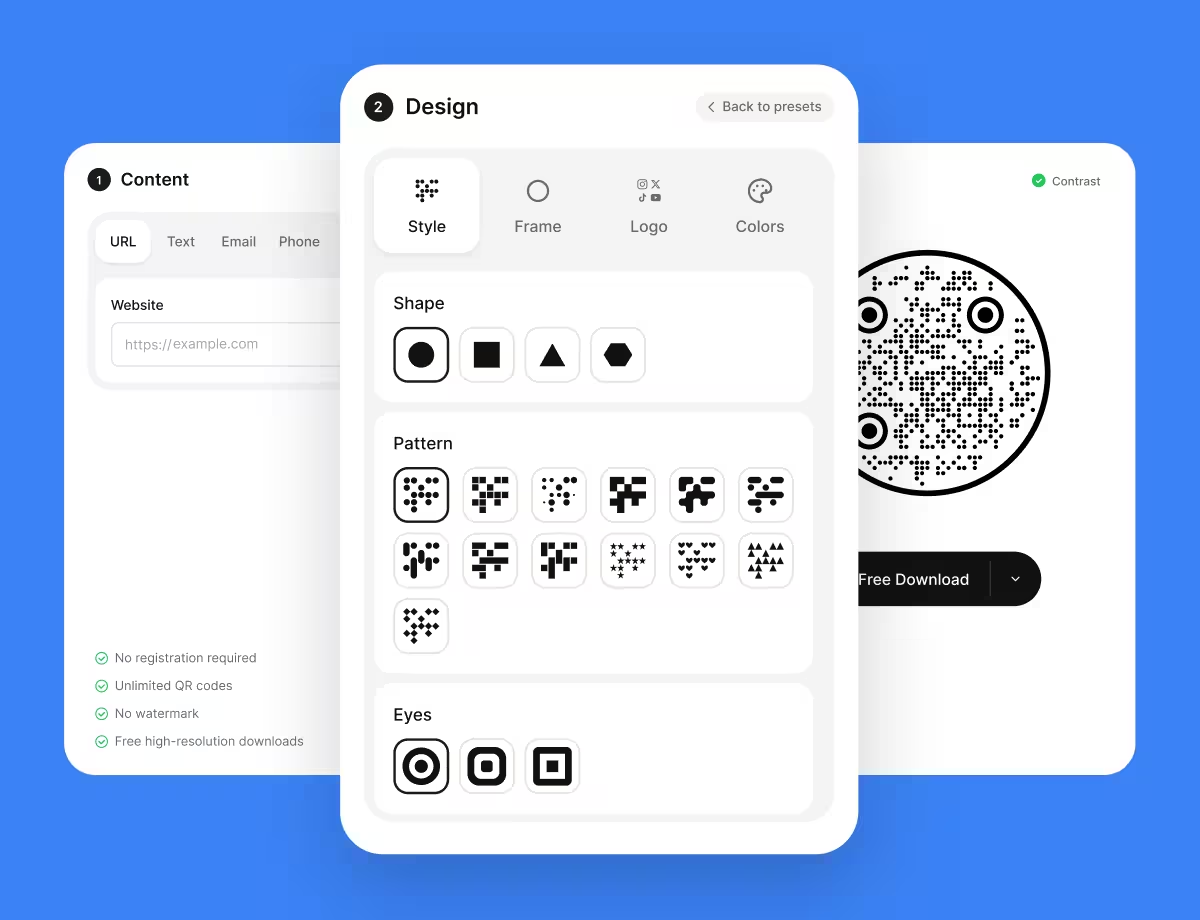
KoloQR exports your eBay QR code in three formats. Pick by where it will be seen:
- PNG for listing photos, social posts, and email signatures - anywhere the code appears at one fixed size on a screen.
- SVG for parcel inserts, stall signage, shelf labels, and window cards - anything a printer scales without softening the edges.
- PDF for handing to a print shop, or for a card produced at print-ready quality.
A clean item link at around 25 characters is short enough to print at 15 mm and still scan reliably, which is unusual for a marketplace URL and worth protecting. The share-button address for the same listing can run past 150 characters and needs a considerably bigger square for the same reliability, so the single highest-value edit you can make to an eBay code is deleting everything after the item number. Measure the payload, not the brand, when you decide the printed size.
Generate QR CodeBest Practices for eBay QR Codes
eBay codes are cheap to make and easy to orphan. These habits keep them short, correct and alive:
Encode the Bare Item Number Link
ebay plus /itm/ plus the twelve digits. Everything the share button adds is tracking, and it can triple the length of the payload.
Print Store Codes, Not Item Codes, in Quantity
A store or seller address outlives every listing. Item numbers are the right choice only for a single object in front of the buyer.
Relist Rather Than Sell Similar
Good 'Til Cancelled renewal keeps the item number and the printed code. Sell Similar creates a new number and silently orphans every code.
Match the Country Site to the Buyer
The same item number works on every eBay domain. Printing the local one gives buyers their own currency, postage and returns terms.
Don't Print a Code for an Auction That Ends
A printed code outlives a seven-day auction by years. Point print at a store, and save item codes for listings you keep running.
Say What the Code Opens
“Buy it on eBay - full listing and photos” beside the code. A bare square on a stall table asks a stranger to trust an unknown destination.
Protect the Quiet Zone
Four modules of clear margin on every side. On a small shelf label a border or a price is the usual intruder.
Size It for the Distance
Roughly a tenth of the reading distance: about 2 cm on a card in the hand, about 20 cm on a windscreen read from 2 metres.
Keep It Dark on Light
Phone cameras are tuned for dark modules on a light background. An inverted code on a dark stall sign is where scanning starts to hesitate.
Test Signed Out of Your Seller Account
Your own account sees the listing as its owner, with editing options and no postage calculation. A signed-out phone sees what a buyer sees.
Why Your eBay QR Code Isn't Working
Almost every eBay code failure is a listing that ended, a relist that changed the number, or a link that was never trimmed.
The Scan Opens an Ended Listing
- Cause
- The auction finished or the fixed-price listing was taken down. The item number still resolves, but it now shows a closed listing rather than something to buy.
- Fix
- Point printed codes at your store or seller page instead, and keep item codes for listings you renew rather than recreate.
The Code Stopped Working After You Relisted
- Cause
- The listing was recreated with Sell Similar, which issues a new item number. The printed code still points at the old, ended one.
- Fix
- Use Good 'Til Cancelled renewal, which keeps the item number, and reprint only when a listing genuinely has to be recreated.
The Printed Code Is Dense and Scans Slowly
- Cause
- The share-button address was encoded, with tracking parameters that can push it past 150 characters.
- Fix
- Rebuild the link as the domain plus /itm/ plus the twelve digits, and regenerate. At the same printed size that alone usually fixes it.
Buyers See the Wrong Currency or Postage
- Cause
- An ebay.com link was printed for buyers on a different eBay site, so they land in the US context of the same listing.
- Fix
- Print the local domain - ebay.co.uk, ebay.de, ebay.com.au - in front of the same item number, and use a different code per market.
The Scan Opens the eBay App Somewhere Unexpected
- Cause
- A phone with the app installed handed the link to it, and a trimmed or unusual URL can land on a search rather than the listing.
- Fix
- Encode the plain /itm/ address and test on a phone with the app and one without. Both should open the listing itself.
The Listing Looks Different When You Test It
- Cause
- You are signed in as the seller, so eBay shows you the owner's view with editing options and no buyer postage calculation.
- Fix
- Test in a private browser window signed out of eBay, which is the only way to see the page a buyer actually meets.
Still not sure whether the fault is the file or the print? Drop the exported image into the QR code scanner - if it decodes on a desktop and not on paper, the fault entered after the file.
Questions? Answered
An eBay QR code stores the web address of an eBay listing, store, or seller page. Scanning it opens that page in the phone's browser or the eBay app, with live prices and bids, because only the address is inside the code.
Take the 12-digit item number from the listing, build a clean link as the eBay domain plus /itm/ plus those digits, and paste it into a QR generator as a URL. Style the code and export SVG for print or PNG for screens.
Because the address from the share button carries tracking parameters and can run past 150 characters. Trim it back to the domain plus /itm/ plus the item number - around 25 characters - and the code becomes far simpler.
It depends how you relist. A Good 'Til Cancelled listing renews with the same item number and the code keeps working. Sell Similar creates a new listing with a new number, which breaks every code already printed.
Link to the store for anything printed in quantity - inserts, cards, signage - because it outlives every listing. Link to an item only when the code sits beside that specific object and the listing will be kept running.
The one your buyers use. The item number is identical across eBay sites, so ebay.co.uk, ebay.de and ebay.com.au all resolve the same listing while showing local currency, postage and returns terms.
You can, but the code outlives the auction by years - once it ends, the scan shows a closed listing. Auctions suit on-screen codes with a short life; printed codes belong on a store or seller page.
On the listing page, usually in the item details near the description, and in the address bar directly after /itm/. It is twelve digits and stays with the listing for its whole life, including renewals.
No. The listing opens in any phone browser without an app or a sign-in. A phone with the app installed may open it there instead, so it is worth testing both before printing.
About 15 mm with a trimmed item link of around 25 characters, which fits a shelf label or a small card. The untrimmed share URL needs several times that area for the same reliability.
Keep Exploring
Pages that pick up where this one leaves off - the same setting, the same kind of code, or the next thing worth deciding.
Beauty Salons
Rebooking at the chair, per-service aftercare and a portfolio per stylist, with codes that survive acetone, colour and hairspray.
Barbershops
Window bookings, one code per chair for rebooking, reviews and Instagram - with sizes in cm and finishes that survive hairspray and station lights.
LinkedIn QR Code
Share your LinkedIn profile or company page with a code any phone camera can read.
Google Review QR Code
Open your business's Google review form in one scan, with the stars ready to tap.
Trustpilot QR Code
Open your review form in one scan, from a parcel insert, a receipt, or a card.
Coupon QR Code
Put a discount on paper and let one scan apply it at the checkout.
Why KoloQR?
- Create QR codes for websites, menus, Wi-Fi, PDFs, and business cards
- Customize colors, logos, and unique shapes
- Download high-quality PNG and SVG files
- Built for both print and digital