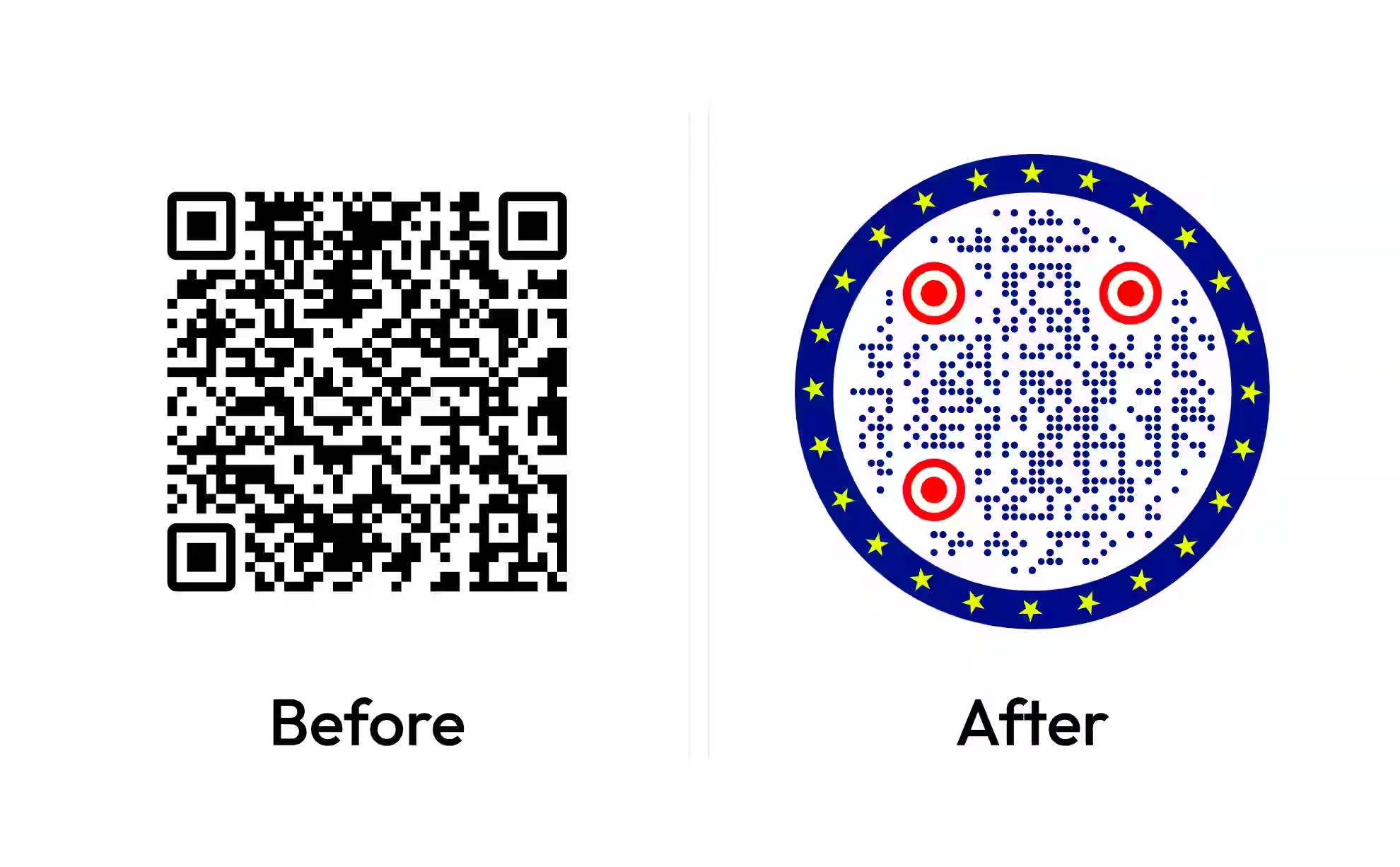
Make a Coupon QR Code
Paste the link that applies your offer, style the code, and download it print-ready - so a flyer, a receipt, or a packaging insert carries a discount that works in one scan.
Opens in Google Maps. Coordinates work too - "37.4224, -122.0841".
The code opens your business's "Write a review" form. Paste the Place ID, or a Google Maps link that carries one.
A UPI link carries no checksum, so a mistyped ID produces a code that scans perfectly and pays somebody else. Paste the ID from your payment app rather than typing it, and send yourself one rupee before printing.
Paste it exactly as copied. KoloQR does not assemble the payload - it encodes the one your bank issued, and checks it before you print it.
SVG, PNG, JPG • Max 2 MB
First month free
then $9/month
Dynamic QR Codes Are Coming
Change your link anytime, even after printing. See who scans, when and where.
- Edit without reprinting
- Scan analytics
- Bulk & custom domains
You're on the List
We'll email you once, when dynamic codes with scan analytics launch.
What Is a Coupon QR Code?
A coupon QR code is a QR code that stores the web address of a page that applies a discount - usually a shop link with the discount code already in it, so the price drops without anyone typing anything. The code carries the address, never the money, so the offer's rules live in your shop or till system rather than in the pattern.
A QR Code Cannot Be Single-Use on Its Own
This is the honest limit, and it decides which of the three patterns below fits your offer. A printed code is copyable by anyone with a camera, and nothing in the symbol counts scans:
- One shared code, unlimited redemptions - every printed copy carries the same discount link. Simple, cheap, and correct for an acquisition offer you would happily give to anyone.
- A batch of unique codes, one redemption each - generate a distinct discount code per copy in your shop platform, encode one per printed piece, and set each to a single use. This is real single-use.
- One code, manual redemption - staff mark, stamp, or take the voucher when it is used. The paper is the limit, not the code, which is why it only works in person.
Choose before you print, because the three cost different amounts of work and cannot be swapped afterwards. Shared codes are a single artwork file and no admin. Unique codes need your platform to bulk-generate discount codes and your print run to be variable data, which most digital printers handle but which doubles the setup. If you are printing a shared code, price the offer as though it will be posted online - because eventually one of them will be.
What Happens After the Scan
The scan should land on a page where the discount is already applied and visible, not on a page that asks the reader to type the code they just scanned. Most e-commerce platforms accept the discount in the address itself - on Shopify, appending ?discount=SPRING20 to a product or cart link applies it and carries it through to checkout - so the reader sees the reduced total before deciding anything. If your platform has no such parameter, send the scan to a landing page that states the offer, shows the code in large type, and has a copy button. What never works is encoding the words SPRING20 as plain text: the phone shows a string with nothing to tap, and the reader is left doing the work the code was meant to remove.
Generate QR Code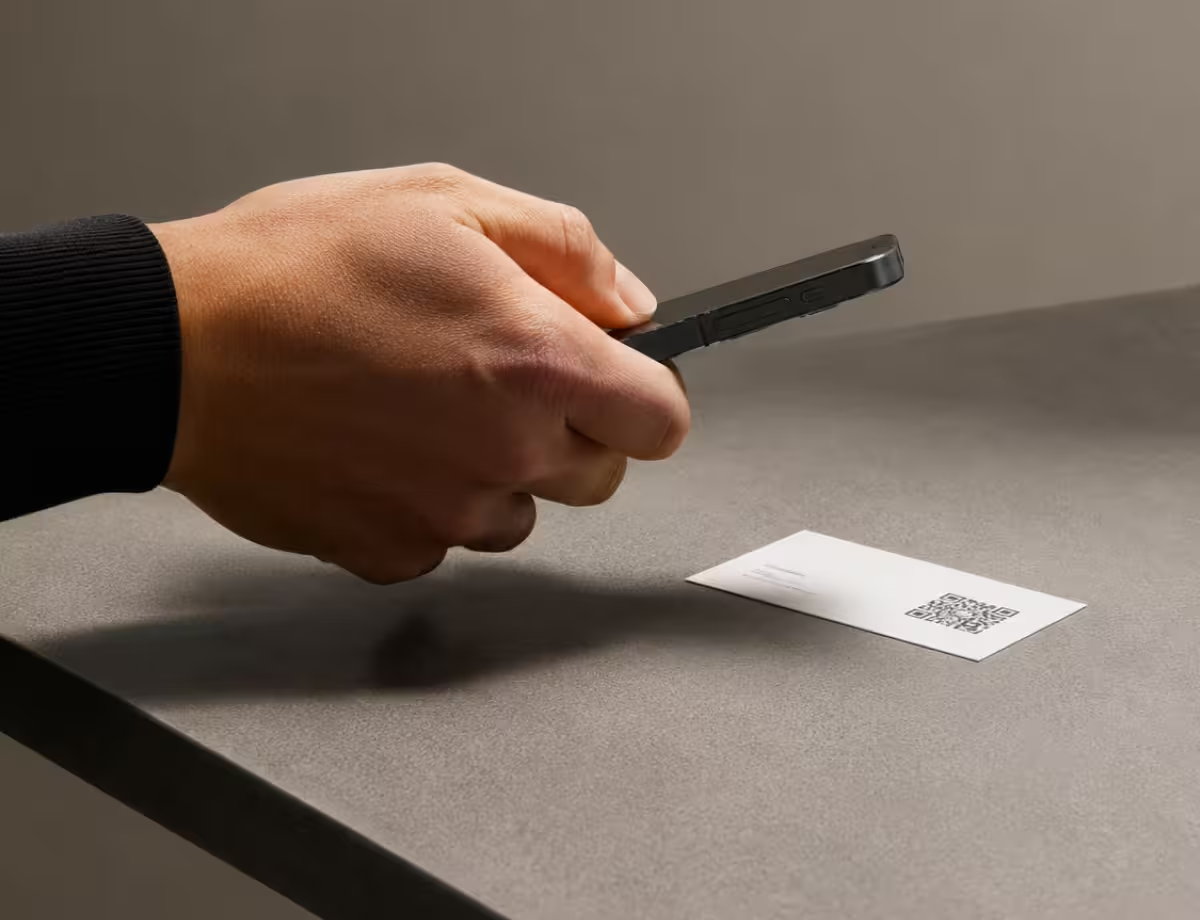
Where Coupon QR Codes Are Used
A coupon code works where the offer is being handed to someone who is already holding something of yours:
- 1
Create the Discount in Your Shop or Till System
Set the value, the products it applies to, the minimum spend, the usage limit, and the end date. Every rule of the offer lives here, not in the code.
- 2
Build a Link That Applies It Automatically
Use your platform's discount parameter where it has one - for example a Shopify link ending in ?discount=SPRING20 - or a landing page that shows the offer and the code.
- 3
Paste the Link and Design the Code
Choose the URL type, paste the link, then pick colours that suit the flyer, insert, or receipt, keeping the modules dark against a light background.
- 4
Test the Discount, Then Export
Scan the proof, put an item in the basket, and check the total actually drops. Then export SVG or PDF for print and PNG for screens.
Which File Format Should You Download?
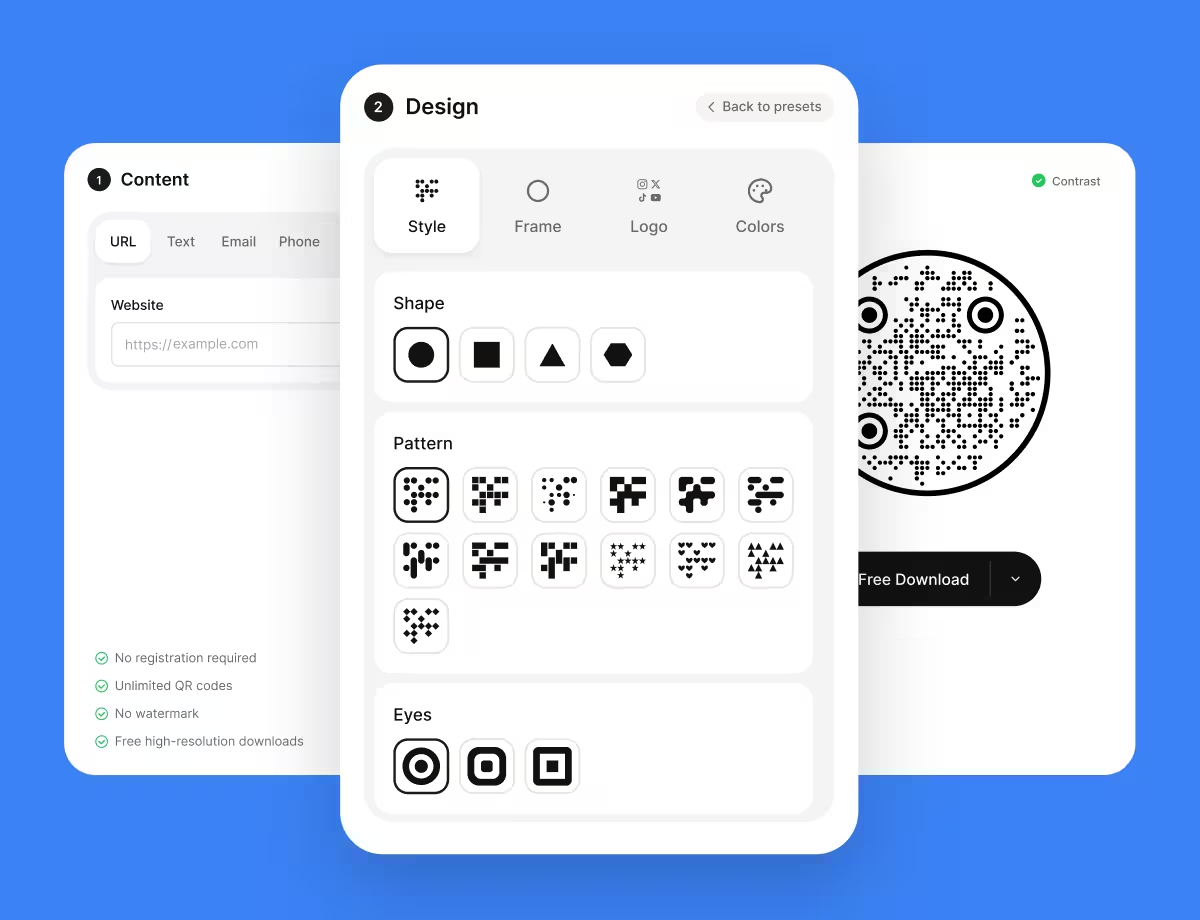
KoloQR exports your coupon QR code in three formats. Pick by where it will be seen:
- PNG for email campaigns, social posts, and in-store screens - anywhere the code appears at one fixed size on a display.
- SVG for flyers, inserts, vouchers, and packaging - anything a printer scales without softening the edges.
- PDF for handing to a print shop, or for sending a voucher a customer prints at home.
Coupons are printed on the worst papers a QR code meets. Uncoated flyer stock and thermal receipt roll both spread ink slightly, which eats into the white gaps between modules, and a heavily styled code with rounded modules and a large centre logo has less margin for that than a plain one. For anything printed on absorbent stock, keep the module shape simple, raise the error correction, and print a physical proof before committing to the run.
Generate QR CodeBest Practices for Coupon QR Codes
A coupon code is judged by redemptions, not scans. These habits protect both the redemption rate and the margin:
Print the Offer in Words Beside the Code
“20% off your next order” next to the square is what makes someone scan. A bare code asks for a leap of faith on a piece of paper.
Print the Expiry Date
The code cannot show one. An offer that has ended scans exactly like one that hasn't, and the reader finds out at the checkout.
Apply the Discount in the Link
Landing on a reduced price is a different experience from landing on a code to copy. Where the platform supports a discount parameter, use it.
Assume a Shared Code Will Be Posted Publicly
One photograph puts it on a deals forum. Set a usage cap, a minimum spend, or an end date in the platform so the exposure is bounded.
Use Unique Codes for Anything Genuinely Once-per-Customer
Bulk-generate single-use discount codes and print one per piece. This is the only arrangement that actually limits redemptions.
Set the Rules in the Platform, Not on the Paper
Minimum spend, excluded products, one per customer - enforced at the checkout rather than in small print nobody reads before scanning.
Give Each Placement Its Own Code
One per flyer, publication, or box insert, and the redemption report tells you which print run paid for itself.
Protect the Quiet Zone
Four modules of clear margin on every side. On a dense flyer, a border or a coupon-style dashed cut line is the usual intruder.
Size It for the Distance
Roughly a tenth of the reading distance: about 2 cm on a card in the hand, about 20 cm on a shop poster read from 2 metres.
Test a Real Purchase Before the Print Run
Scan, add to basket, reach the payment step, and confirm the total. Coupon codes fail at the checkout far more often than at the camera.
Why Your Coupon QR Code Isn't Working
Coupon codes usually scan fine and fail at the discount, which is why most of the fixes below are in your shop platform rather than in the generator.
The Scan Opens the Shop but No Discount Is Applied
- Cause
- The discount parameter was dropped - by a redirect, by a link shortener, or by a copy-paste that stopped at the question mark - or the platform does not support one.
- Fix
- Rebuild the full link, encode it whole, and verify by scanning rather than clicking. If the platform has no parameter, send the scan to a landing page that displays the code instead.
The Phone Just Shows Text Instead of Opening Anything
- Cause
- The discount code was encoded as plain text rather than as a URL, so there is nothing for the phone to open.
- Fix
- Regenerate as a URL pointing at the page that applies the offer. Plain text is a valid QR payload, but it is not a coupon.
The Offer Is Being Redeemed More Times Than You Printed
- Cause
- A shared code was photographed and shared. This is expected behaviour for a static code, not a fault.
- Fix
- Cap total uses, add a minimum spend, or reissue as a batch of single-use codes. Treat any shared coupon code as public from the day it is printed.
Customers Say the Code Has Expired
- Cause
- The discount's end date passed in the platform while the printed code kept scanning. The paper has no way to know.
- Fix
- Print the expiry date beside the code, and point expired offers at a page that says so and makes a current offer, rather than at a checkout error.
The Code on the Receipt or Flyer Scans Badly
- Cause
- Absorbent stock and low-resolution thermal printing spread the ink into the white gaps, and a heavily styled code has little tolerance for that.
- Fix
- Print at 20 mm or larger, simplify the module shape, raise the error correction level, and proof on the real stock rather than on office paper.
The Discount Works Online but Not in the Shop
- Cause
- The code was created in the e-commerce platform only, and the point-of-sale system is a separate discount list.
- Fix
- Create a matching discount in the till system, or print two codes clearly labelled online and in-store rather than expecting one to cover both.
Still not sure whether the fault is the file or the print? Drop the exported image into the QR code scanner - if it decodes on a desktop and not on paper, the fault entered after the file.
Questions? Answered
A coupon QR code stores the address of a page that applies a discount - normally a shop link with the discount code built into it. Scanning it opens the shop with the offer already applied, so the customer never types a code.
Create the discount in your shop or till system, build a link that applies it, then paste that link into a QR generator as a URL. Style the code and export SVG for print. The code itself costs nothing and never expires.
Not by itself. A printed code can be scanned by anyone who photographs it, and the symbol counts nothing. Single use has to come from the discount code behind it - generate a batch of unique single-use codes and print one per piece.
No. Plain text shows the reader a string with nothing to tap, leaving them to open the shop and type it. Encode a URL that opens the shop with the discount already applied, and the scan does the whole job.
You cannot stop it, so bound it instead. Set a total usage cap, a minimum spend, and an end date in your platform, or issue unique single-use codes. Treat any shared printed coupon as public from the day it is printed.
The code cannot, but the discount can, and it is the discount that matters. Set the end date in your platform and print it beside the code, because a scan gives the reader no warning that an offer has closed. For a sale weekend, QR codes for Black Friday shows how a short redirect on your own domain sends late scans to your current offers once the deal is over.
Yes, if your point-of-sale system holds the same discount. E-commerce and till systems keep separate discount lists on most platforms, so a code that works online can fail at the counter unless it was created in both.
Give each print run its own discount code, or add a source parameter to the link, and print a different QR code for each. The redemption report then attributes sales to placements rather than counting scans.
You can change the discount's value and rules in your platform at any time, because the code holds only the address. What you cannot change is the address itself, or the offer printed in words beside the code.
At least 2 cm on anything held in the hand, and roughly a tenth of the reading distance on a poster. On receipt roll or uncoated flyer stock, go larger than the minimum - both spread ink into the gaps between modules.
Keep Exploring
Pages that pick up where this one leaves off - the same setting, the same kind of code, or the next thing worth deciding.
Beauty Salons
Rebooking at the chair, per-service aftercare and a portfolio per stylist, with codes that survive acetone, colour and hairspray.
Marketing Agencies
Produce campaign codes for client print runs: sized per placement, exported as vector, and pointed at a redirect the client keeps.
Amazon QR Code
Take a scan straight to a product page, a storefront, or a wish list.
Shopify QR Code
Open a product, a collection, or a pre-filled basket in a single scan.
Product Packaging
What a code on a carton, pouch, label or bottle has to survive - sizes, finishes that kill a scan, and what the scan should open.
PayPal QR Code
Take a payment from a printed code by sending the scan to your PayPal.me link.
Why KoloQR?
- Create QR codes for websites, menus, Wi-Fi, PDFs, and business cards
- Customize colors, logos, and unique shapes
- Download high-quality PNG and SVG files
- Built for both print and digital