Where Can You Put a QR Code?
Almost anywhere, but not at the same size and not with the same finish. A carton, a bottle, a T-shirt and a vehicle each break a QR code in their own way. Each page below takes one surface and covers the size it needs there, what the scan should open, and what stops it working.
One Surface at a Time
Every page here is about the thing the code is printed on, rather than about the business printing it - the measurements, the material and the production step where codes usually die.
Product Packaging
What a code on a carton, pouch, label or bottle has to survive - sizes, finishes that kill a scan, and what the scan should open.
Business Cards
85 x 55 mm leaves room for one code and nothing else - where it goes, how small it can get, and which finishes kill it.
Flyers
A5, A6 and DL leaflets - what size the code needs, which corner it belongs in, and how to tell which batch produced the scans.
Stickers & Labels
Die-cut stickers, jar labels and thermal roll stock - the sizes that work, and why clear labels and gloss laminate break scans.
Posters
A3 to A0 - how big the code has to be for the distance people can actually stand at, and how high off the floor it belongs.
Invitations
Weddings, parties and formal invitations - where the code belongs, how small it can go, and which finishes and overlays block it.
Menus & Table Tents
The code sits 40 cm from a seated guest in dim light on a laminated card - what that costs in size, finish and page speed.
Banners
Roll-ups, exhibition and outdoor banners - the size the distance demands, the height that works, and why mesh and wind break scans.
Brochures
Tri-folds, bi-folds and stitched booklets - which panel the code belongs on, why the fold is fatal, and how to track panels separately.
Tickets
Entry codes and information codes on the same stub - how to separate them, size them, and stop thermal stock fading before the door opens.
Vehicles
Vans, cars and fleet livery - the size a code needs at the kerb, and the part of the bodywork where it survives rivets, seams and road film.
T-Shirts
Chest and back prints - the size woven fabric actually holds, which print method keeps the module edges, and what survives twenty washes.
Billboards
48-sheets, 6-sheets and building wraps - what the distance arithmetic asks for at that scale, and the placements where it argues against a code entirely.
Laser Engraving
Wood, anodised aluminium, slate, glass and steel - the file to export, the LightBurn settings, and the materials that invert the code.
The Part That Is the Same Everywhere
Surfaces differ; the code does not. Whatever it is printed on, a QR code needs enough width for the distance it is read from, a clear margin around it, and real contrast between the pattern and its background.

Design It for the Surface It Lands On
A code is artwork before it is a scan target, and it has to belong on the piece it sits on. KoloQR gives you the control to make it fit without making it unreadable.
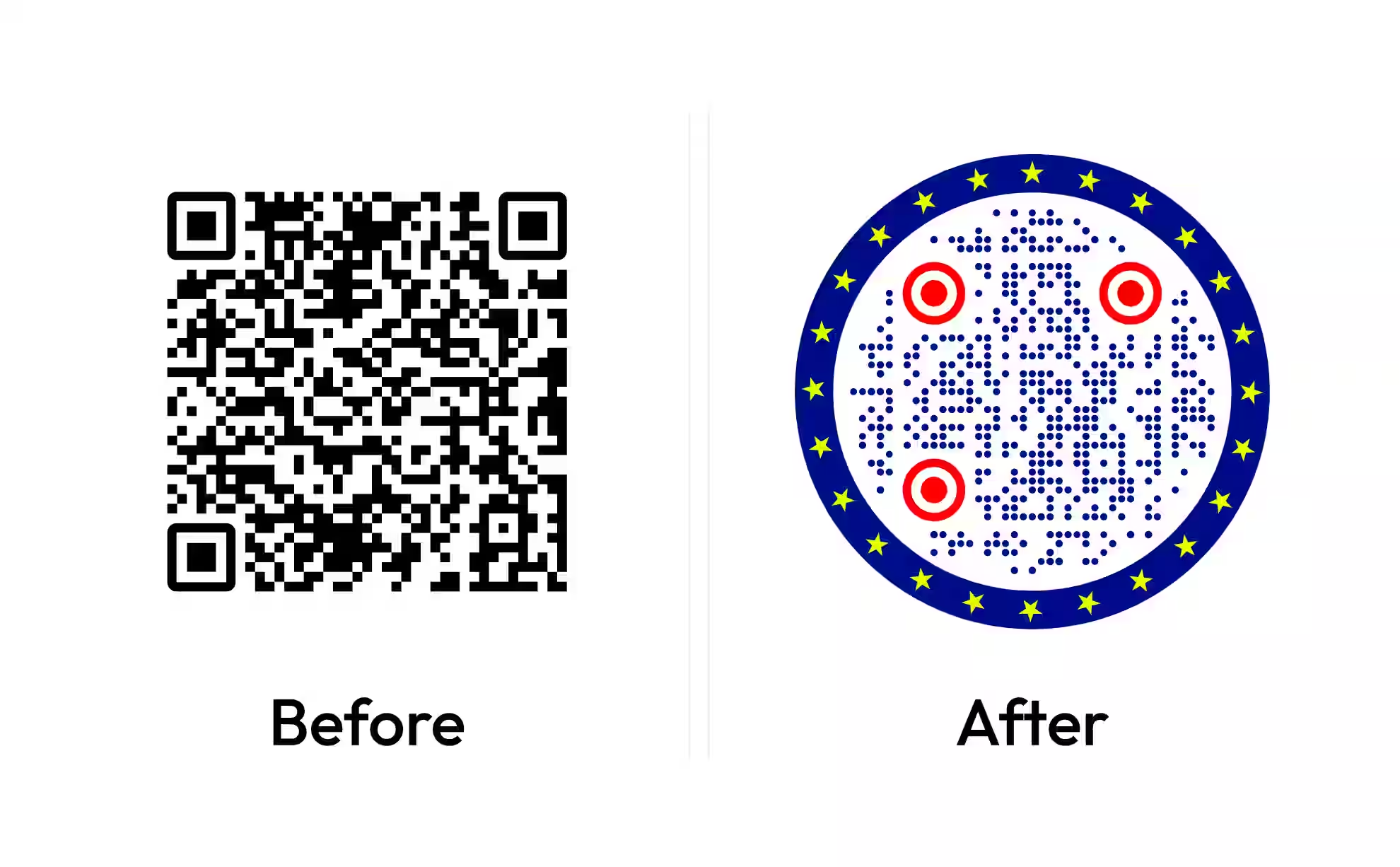
- Shapes and Colours - circular, hexagonal, triangular or square, with a logo in the middle and full colour control to match a brand palette.
- Vector Export - SVG, PDF and EPS for pre-press, so the same file places on a label and on a shop window without softening.
- Free, No Account - generate and download without signing up, whether it is one code or a set for a whole product range.
Styling changes how a code looks, not how it decodes. Keep the finder patterns intact and the contrast strong and a decorated code scans exactly like a plain one.
Test It Where It Will Actually Be Scanned
A code that works on a monitor has been tested under the best conditions it will ever meet: backlit, flat, full size and at arm's length. Nothing it faces afterwards is that kind.
Print the piece, put it where it will live, and scan it there - in that light, at that distance, at that size, after whatever varnish or lamination it gets. Two phones, one iPhone and one Android, is the whole test, and it is the step that catches the failures nothing on screen can show you.
Generate QR Code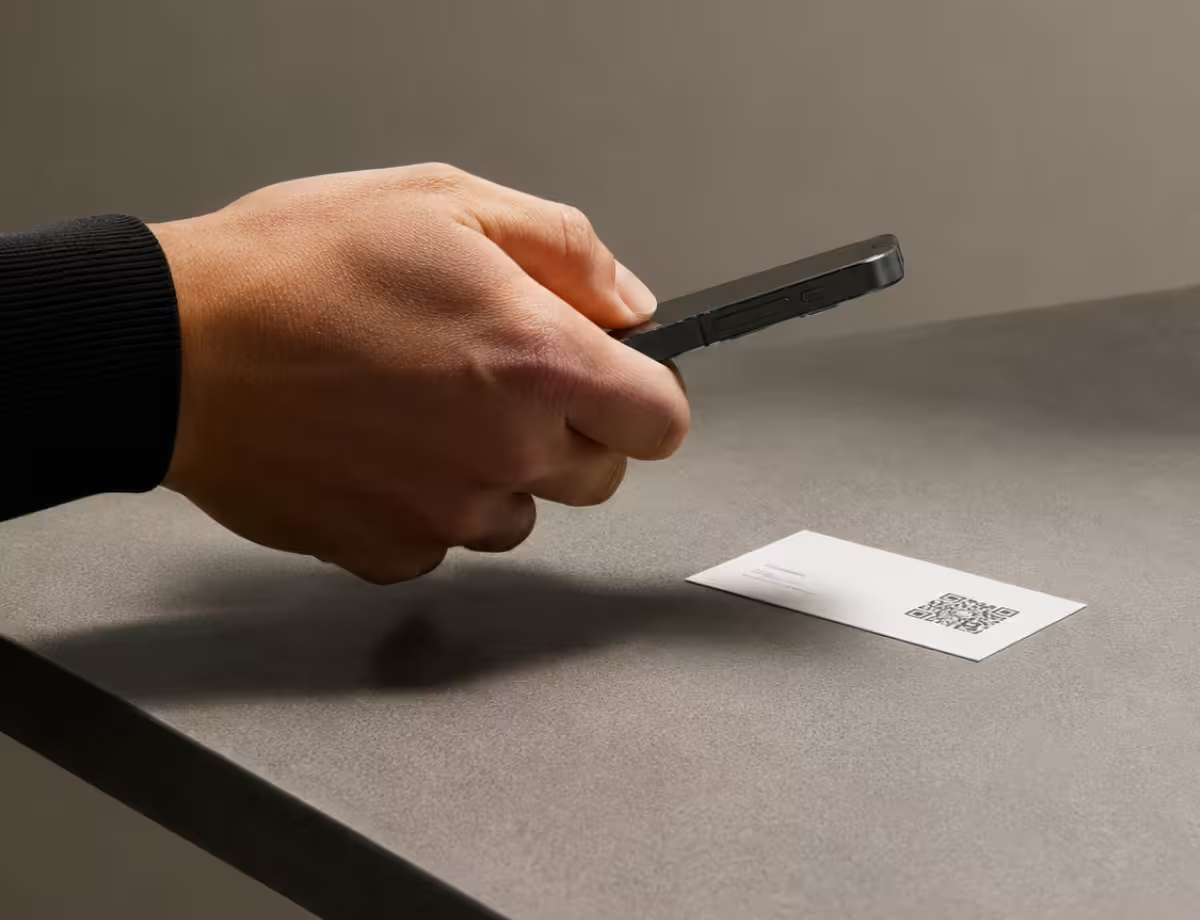
Questions? Answered
On the flattest panel that a buyer can see while holding the product, away from folds, seals and the retail barcode. Back and side panels work well on cartons; a bottle wants the flattest part of the label. Wherever it goes, leave a clear margin of four modules around it.
About 2 x 2 cm for a code read in the hand, which keeps each module near half a millimetre at typical densities. Smaller codes do exist, but they need a short URL, good print and clean contrast, and they lose scans in poor lighting. When space is tight, shorten the link rather than the code.
Yes, with allowances. Fabric needs a larger code because the weave blurs the module edges; metal and gloss need a matte treatment so they stop mirroring the phone's light; a curve needs the code to stay on a shallow part of the face. In each case, print a test piece before the run.
No. The surface decides the size, the finish and the placement; the type decides what happens on scan. A URL code behaves the same on a pouch and on a poster. Choose the type for the action you want, then size and finish it for the material it is printed on.
You can, and usually you should not. One code pointing at a homepage makes the scanner do the searching that the code was supposed to save. One code per product, each pointing at that product's own page, costs nothing extra to generate and is the difference between a scan that helps and a scan that annoys.
A static code works for as long as its destination does, because the link is encoded in the pattern itself - there is nothing to renew and no service to keep alive. What expires is the page behind it, so keep that URL on a domain you control and the printed code outlives the campaign that made it.
Why KoloQR?
- Create QR codes for websites, menus, Wi-Fi, PDFs, and business cards
- Customize colors, logos, and unique shapes
- Download high-quality PNG and SVG files
- Built for both print and digital