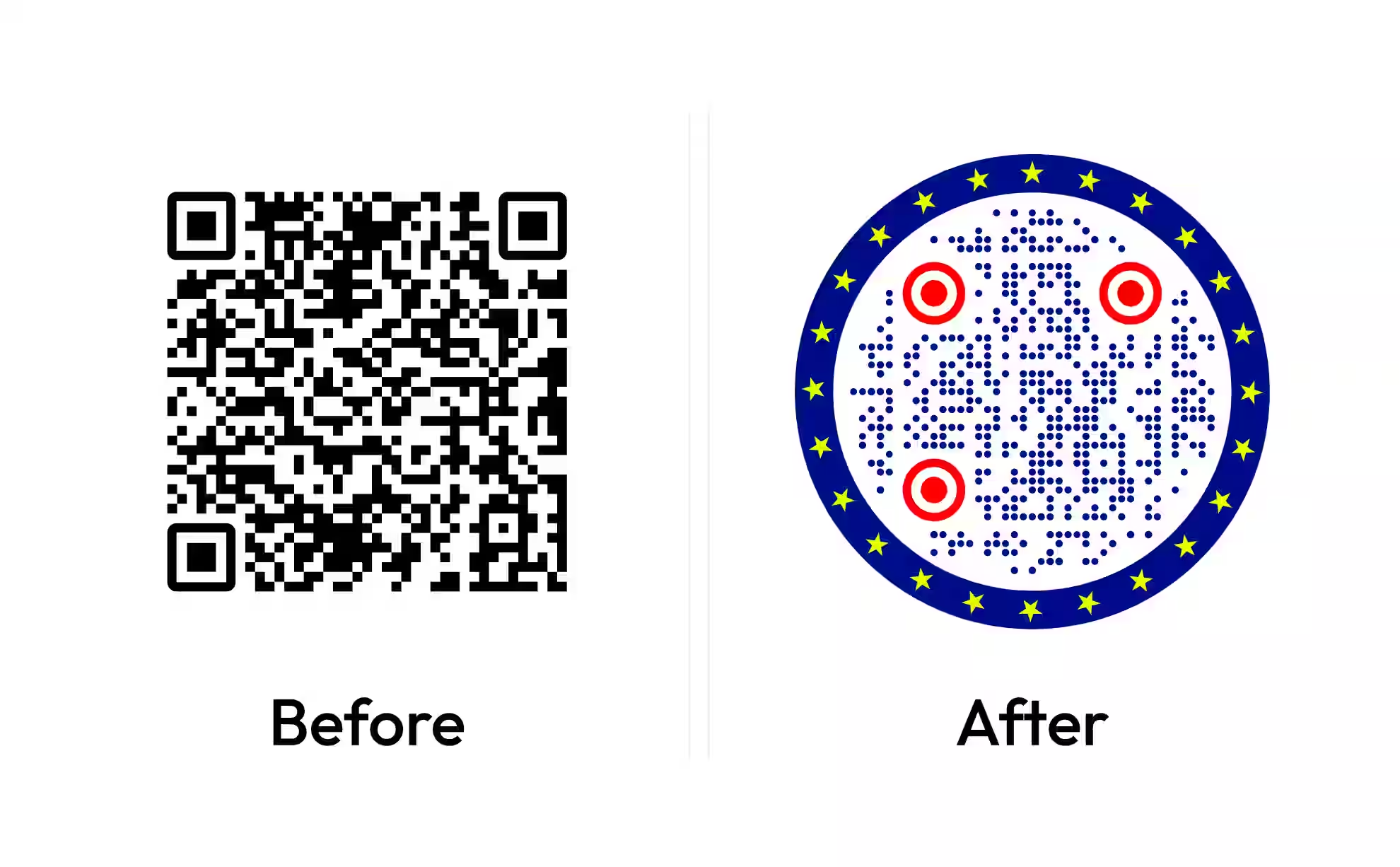
Custom QR Codes That Look Like They Belong
A QR code doesn't have to be a black square dropped onto your design. Browse the styles below to see how each one is built, where it fits, and what keeps it scannable on screen and in print.
Browse QR Code Design Styles
Each style shows what changes on the surface, what stays the same underneath, and where the format earns its place.
QR Code Shapes
The whole shape taxonomy - modules, eyes and frames - with the trade-offs behind round, triangle, hexagon and square codes.
Triangle QR Codes
Angular, geometric QR designs - how triangular styling works and when to use it.
Hexagon QR Codes
Honeycomb-styled codes for tech, gaming, and eco brands - with the design tips that keep them scannable.
Creative QR Codes
Design directions and real examples for QR codes that look intentional without giving up scan reliability.
Colored QR Codes
Put your palette on a QR code without breaking it: which color goes on the pattern, and which belongs on the frame.
Round QR Codes
Circular modules and a round frame, for the coasters, seals, and badges a square code never sat well on.
Branded QR Codes
Match QR codes to your brand with a logo, colors, and custom shapes - without sacrificing scannability.
Dot QR Codes
Round modules instead of square ones - how large the dots have to stay, what we measured when they shrink, and where the softer look fits.
Pixel QR Codes
Hard-edged square modules on screen, in pixel art and in physical builds - with the grid sizes, pixel counts and scaling rules that keep them scannable.
Transparent QR Codes
Codes with no background of their own - which surfaces they scan on, which ones break them, and how to place one on photos, video, glass and clear labels.
QR Code Frames
Borders, labels and call-to-action text around a code, plus acrylic stands and sign holders - with the margin and sizing rules that keep a framed code scannable.
Aesthetic QR Codes
Soft palettes, rounded modules and minimal layouts for invitations, bios, planners and packaging - with the contrast and size numbers that keep each one scanning.
Halloween QR Codes
Pumpkin, purple, slime and bone palettes for invitations, porch signs, scavenger hunts and costumes - with the contrast and size numbers that keep each one scanning in the dark.
Design Rules That Keep a QR Code Scannable
Design freedom stops where legibility does. These habits keep a good-looking code working in the real world, from a phone screen to printed packaging.
Keep Strong Contrast
Dark on light scans most reliably. Light-on-dark can work, but low-contrast or busy backgrounds break scanning. A contrast checker catches it before you print.
Respect the Quiet Zone
Leave clear space around the code, roughly four modules wide. Crowding it is the most common reason a styled code won't scan.
Add a Logo Carefully
A centered logo builds trust, but keep it small and raise the error-correction level so the pattern stays readable.
Keep the Eyes Legible
You can restyle the three corner finder patterns, but keep them distinct - scanners rely on them to lock on.
Don't Rely on Style for Scanning
Shapes and colors don't speed up scanning; legibility does. Treat contrast and the quiet zone as hard limits, not suggestions.
Test on Real Phones
Scan the final file on an iPhone and an Android with the native camera. A code that reads on screen can still fail on paper.
Export Vector for Print
SVG, PDF, or EPS so the code stays crisp at any size. PNG is fine for screens but degrades when scaled up.
Size for the Distance
Roughly a tenth of the scanning distance. A poster read from 3 m needs a code around 30 cm wide.
Questions? Answered
Yes, as long as you respect the limits: strong contrast, a clear quiet zone, and legible corner patterns. Styling changes how a code looks, not how it's read, so a well-made custom code scans as well as a plain one.
Pick a circular, hexagonal, or triangular outer shape, then customize the dot and eye styling - these are core KoloQR features. The underlying data stays a standard QR, so it scans with any phone camera.
Keep a centered logo small - roughly up to a fifth of the code - and raise the error-correction level to compensate. Cover too much of the pattern and scanners give up, so always test before printing.
Yes, with one rule: keep enough contrast between the code and its background. Dark code on a light background is safest; check contrast before you commit so the color never costs you a scan.
Yes. Export a vector file - SVG, PDF, or EPS - so it stays sharp at any size, keep strong contrast and a clear margin, and it holds up from a business card to a billboard.
No. A well-made custom code scans with the native camera on any modern iPhone or Android - no separate app required. The styling is visual only, so the phone reads it like any standard QR code.
No. Shapes, colors, and logos are purely visual - the encoded link is unchanged. You can restyle a code freely without affecting where it goes.
Why KoloQR?
- Create QR codes for websites, menus, Wi-Fi, PDFs, and business cards
- Customize colors, logos, and unique shapes
- Download high-quality PNG and SVG files
- Built for both print and digital