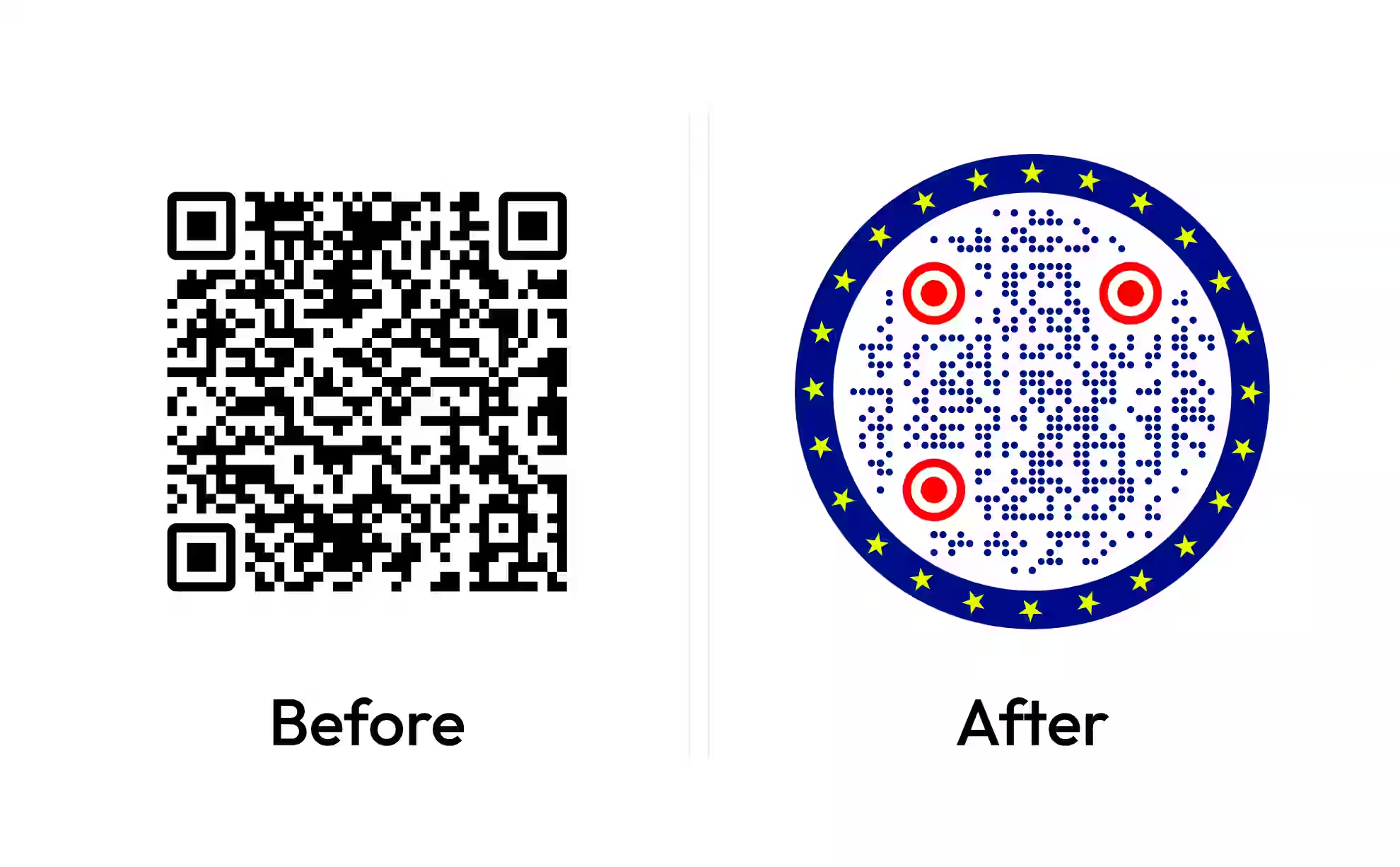
Where Should a QR Code Go on a Brochure?
A brochure is the one printed piece with several surfaces and a crease through the middle of most of them. Make the code below, then read on for the panel it belongs on, the fold it must avoid, and how to find out which section of the brochure people actually scanned.
Opens in Google Maps. Coordinates work too - "37.4224, -122.0841".
The code opens your business's "Write a review" form. Paste the Place ID, or a Google Maps link that carries one.
A UPI link carries no checksum, so a mistyped ID produces a code that scans perfectly and pays somebody else. Paste the ID from your payment app rather than typing it, and send yourself one rupee before printing.
Paste it exactly as copied. KoloQR does not assemble the payload - it encodes the one your bank issued, and checks it before you print it.
SVG, PNG, JPG • Max 2 MB
First month free
then $9/month
Dynamic QR Codes Are Coming
Change your link anytime, even after printing. See who scans, when and where.
- Edit without reprinting
- Scan analytics
- Bulk & custom domains
You're on the List
We'll email you once, when dynamic codes with scan analytics launch.
What Size Should a QR Code Be on a Brochure?
Print it at 2 to 2.5 cm. A brochure is held at 30-40 cm, which the ten-to-one rule puts at 3-4 cm, but a brochure code sits inside a designed panel rather than alone on a page - 2.5 cm scans reliably on coated stock and leaves the layout intact.
- The Panels, in Millimetres - an A4 tri-fold gives three panels of about 99 x 210 mm, and the tucked-in panel is 2-3 mm narrower so it folds cleanly. An A4 bi-fold gives two A5 panels at 148 x 210 mm.
- Never Across the Fold - a crease through the pattern breaks the modules the camera needs, and the paper never lies flat again afterwards. Keep the whole symbol and its quiet zone on one panel, at least 5 mm from the crease.
- Mind the Gutter - in a saddle-stitched booklet, the inner margin curves into the spine. Keep codes at least 12 mm from the gutter on a stitched job, more on anything over 32 pages.
- Quiet Zone Inside the Panel - four blank modules on every side, about 4 mm on a 2.5 cm code, and it cannot be shared with the panel's own margin or with a background image edge. The quiet zone explains what it is protecting.
Brochures are the one format where several codes are right. Each panel covers a different subject, so each can carry its own code and its own URL - which is also the only way to learn which section of the brochure did the work.
Generate QR CodeWhat to Link a Brochure QR Code To
A brochure is already the long version. A code should open what even a brochure cannot carry - the moving parts, the heavy files and the human being.
Current Prices
Prices are what date a brochure fastest and what forces the reprint. Printing 'current prices' with a code beside it keeps the brochure accurate for years while the numbers move on a page you control.
The Full Specification
Dimensions, materials, compliance, technical drawings. A brochure sells; the specification sheet answers the questions that follow, and it belongs behind a code rather than in eight pages of tables.
A Video Walkthrough
Property tours, machinery in operation, a treatment explained. It is the content a brochure most obviously cannot hold, and the one readers most want after the photographs.
Availability or Stock
Course dates, room availability, delivery times. Anything that has a calendar attached is out of date the day the brochure is printed and current the moment it is a link.
A Contact or Booking Form
The action the brochure exists to produce. On the back panel, beside the address block, where a reader looks once they have decided.
A Panel-Specific Landing Page
One code per panel, each with its own URL, so your analytics show which section of the brochure people acted on. It is the closest a printed piece gets to knowing what was read.
How to Make QR Codes for a Brochure
Five steps for a piece with several codes, several panels and a fold that decides where none of them can go.
Generate QR Code- 1
Map the Panels First
Lay out the fold plan and decide what each panel is about before placing a single code. A code belongs to a subject, and the subject belongs to a panel.
- 2
Give Each Panel Its Own URL
example.com/spec, example.com/prices, example.com/book. Distinct links cost nothing, encode more coarsely than one long tracked address, and tell you afterwards which panel earned the scan.
- 3
Build the Codes
Open the generator above and make each code in turn, keeping the same shape, colour and logo treatment across the set so the brochure reads as one piece rather than three.
- 4
Place Them Away From the Creases
At least 5 mm from any fold, 12 mm from a stitched gutter, and inside the panel's own margin with the quiet zone intact. Add a short line of text beside each one.
- 5
Fold a Proof and Scan Every Code
Print, fold and scan the finished piece, not the flat artwork. Folding is what reveals a code sitting a few millimetres too close to a crease, and a stitched proof is what reveals the gutter.
Coated Stock, Varnish and the Fold
Brochures are printed on coated paper and finished with varnish or lamination, which is good for photography and hostile to a QR code. A gloss finish across a whole page mirrors overhead light into the camera, and the folding line running through a code destroys the pattern permanently.
- Matte or Silk, Not Gloss - silk and matte coatings hold detail and scatter light. A full gloss varnish over a code turns it reflective under any office or showroom lighting.
- Score Before Folding - on 170 gsm and above, unscored folds crack the ink along the crease. Cracking near a code takes modules with it, so specify creasing on any heavy stock.
- Solid Ink, Not a Tint - print the pattern as one solid colour rather than a screened tint of a brand shade. At 2.5 cm the halftone dot pattern and registration drift both eat into the module edges.
- Consistent Placement Across Panels - put every code in the same position on its panel. A reader who has scanned one knows where to look for the next, which is worth more than any individual placement decision. Run the print checklist over the finished file.
Brochures have unusually long lives - they sit in reception areas and glove boxes for years after the campaign that produced them. That is the strongest argument on this page for encoding URLs on your own domain: the printed piece stays useful only as long as its links resolve, and those are the only part you can still change.
Generate QR CodeBefore the Brochure Goes to Print
A brochure is the most expensive piece per copy in this collection and the one most likely to be printed in the thousands. These checks come before the file goes.
Fold the Proof
Every fold-related failure is invisible on a flat PDF and obvious on a folded sheet. Print one, fold it by hand, and scan every code on the finished object.
One Code per Subject
Codes should map to sections, not decorate them. Three codes on three panels about three things is clear; three codes on one panel is a reader deciding not to scan any.
Keep 5 mm From Every Crease
The crease moves by a millimetre or two in finishing, and a code sitting on the tolerance loses modules in part of the run rather than all of it - which is worse, because it passes inspection.
Label What Each Code Opens
'Scan for current prices', 'Scan for the full specification'. With several codes on one piece, labels are what stop them reading as decoration.
Track Panels Separately
Distinct URLs per panel turn the brochure into something measurable. Same page, different paths, and your analytics answers which section did the work.
Keep Every Link Resolving
Brochures outlive campaigns by years in waiting rooms and glove boxes. Redirect old paths rather than deleting them, the way any long-lived printed code has to be maintained.
Questions? Answered
Inside a single panel, at least 5 mm from every crease, with its quiet zone clear of the panel margin. The back panel beside the contact details is the conventional place for the main code; panel-specific codes go with the section they belong to.
2 to 2.5 cm. A brochure is held at 30-40 cm, and 2.5 cm scans reliably on coated stock while still fitting inside a designed panel. Go to 3 cm on uncoated or recycled paper, where ink spreads into the fibre and thickens the modules.
No. A crease breaks the modules the camera needs and the paper never lies flat again, so the failure is permanent rather than occasional. Keep the whole symbol and its four-module quiet zone on one panel, 5 mm clear of the fold line.
One per subject, which usually means one per panel. Brochures are the one format where several codes make sense, because each panel covers something different. What does not work is several codes on one panel - the reader treats a cluster as decoration and scans none of them.
Give each code its own URL - example.com/spec against example.com/prices - and read the traffic in your web analytics. This measures page visits rather than raw scans, so the numbers run slightly low, but the comparison between panels is reliable and needs no subscription.
Often not under direct light. Gloss lamination mirrors overhead lighting straight into the camera, so the code reads as a bright rectangle. Silk or matte lamination scatters that light instead, and it is the finish to specify on any brochure carrying codes.
At least 12 mm from the gutter, and further on anything over 32 pages. The inner margin curves into the spine as the page count grows, and a code sitting close to it is scanned at an angle that distorts the finder patterns.
As long as the links resolve. A static code never expires, because the address is encoded in the pattern itself - but a brochure in a reception area outlives most campaign URLs. Point every code at your own domain and redirect rather than delete when a page moves, as a code on product packaging has to be maintained.
Keep Exploring
Pages that pick up where this one leaves off - the same setting, the same kind of code, or the next thing worth deciding.
Schools & Classrooms
Permission forms, newsletters, library links and student work, with the print sizes and privacy rules a school actually needs.
Beauty Salons
Rebooking at the chair, per-service aftercare and a portfolio per stylist, with codes that survive acetone, colour and hairspray.
YouTube QR Code
Send people straight to a channel, a single video, a playlist, or the subscribe prompt.
Google Forms QR Code
Open a survey, sign-up sheet, or feedback form straight from a printed page.
Product Packaging
What a code on a carton, pouch, label or bottle has to survive - sizes, finishes that kill a scan, and what the scan should open.
Tickets
Entry codes and information codes on the same stub - how to separate them, size them, and stop thermal stock fading before the door opens.
Why KoloQR?
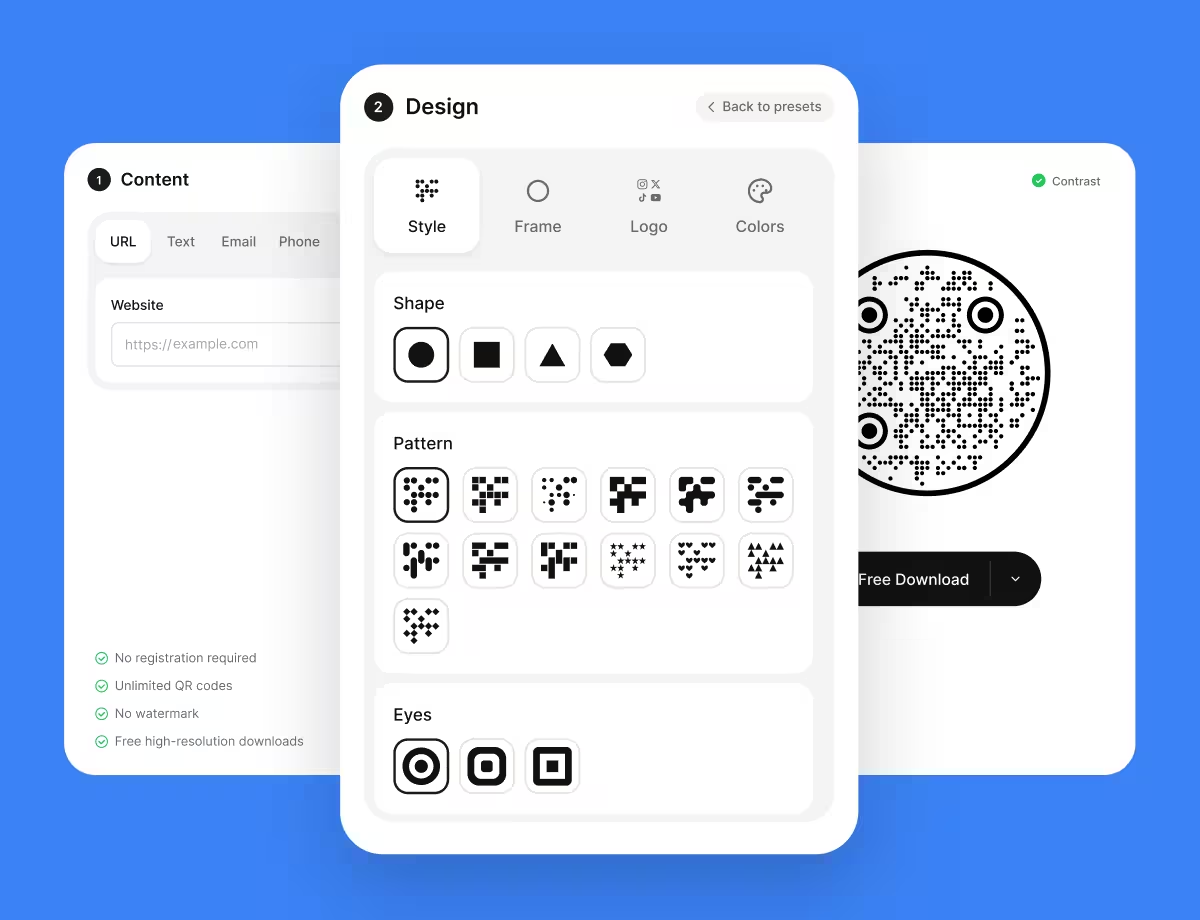
- Create QR codes for websites, menus, Wi-Fi, PDFs, and business cards
- Customize colors, logos, and unique shapes
- Download high-quality PNG and SVG files
- Built for both print and digital