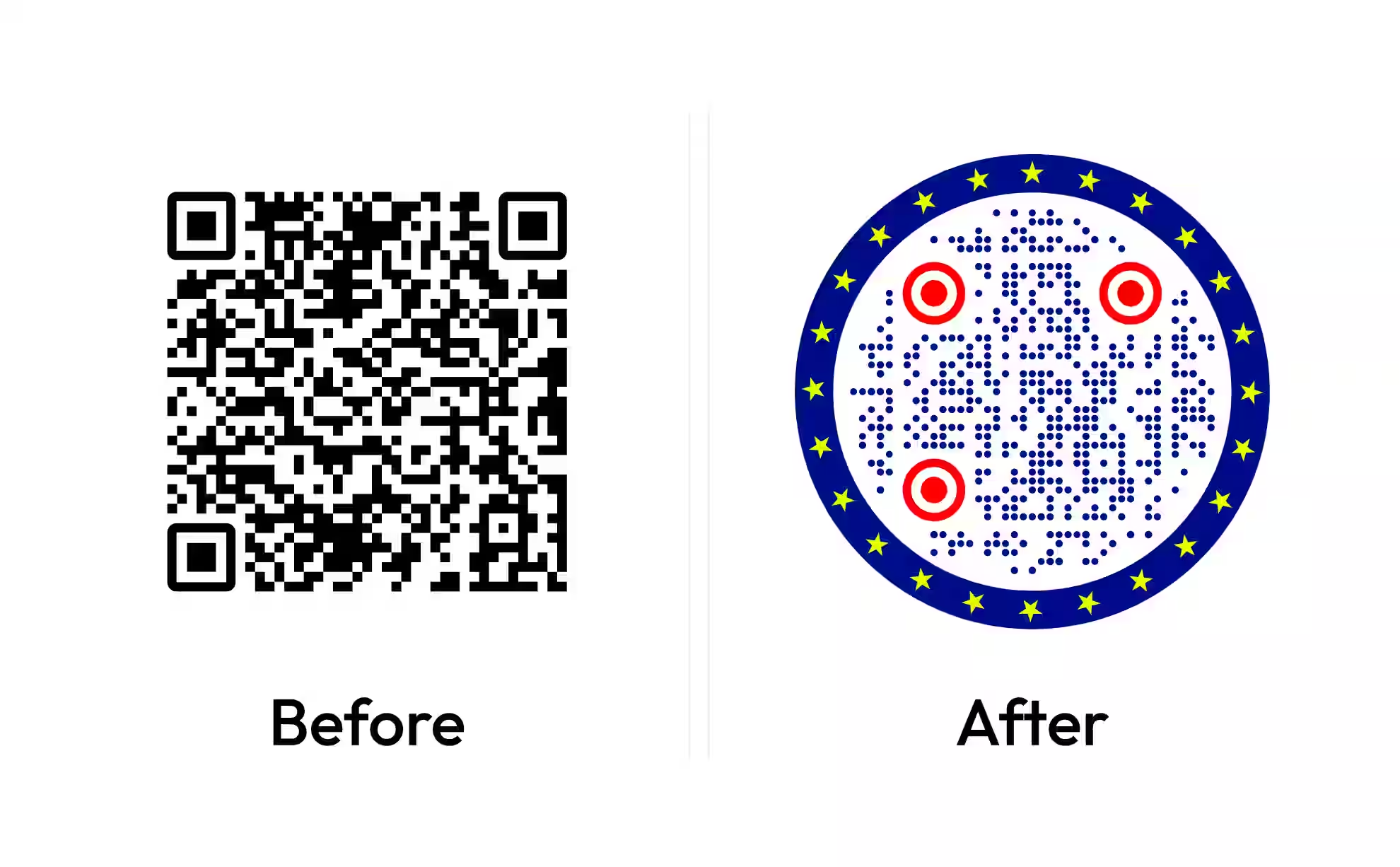
Make a QR Code for a Google Form
Paste your form link, style the code, and download it print-ready - so a poster, a handout, or a table card collects answers without anyone typing a URL.
Opens in Google Maps. Coordinates work too - "37.4224, -122.0841".
The code opens your business's "Write a review" form. Paste the Place ID, or a Google Maps link that carries one.
A UPI link carries no checksum, so a mistyped ID produces a code that scans perfectly and pays somebody else. Paste the ID from your payment app rather than typing it, and send yourself one rupee before printing.
Paste it exactly as copied. KoloQR does not assemble the payload - it encodes the one your bank issued, and checks it before you print it.
SVG, PNG, JPG • Max 2 MB
First month free
then $9/month
Dynamic QR Codes Are Coming
Change your link anytime, even after printing. See who scans, when and where.
- Edit without reprinting
- Scan analytics
- Bulk & custom domains
You're on the List
We'll email you once, when dynamic codes with scan analytics launch.
What Is a Google Forms QR Code?
A Google Forms QR code is a QR code that stores the web address of a Google Form. Scanning it opens the form in the phone's browser, ready to fill in. Nothing about the form lives in the code - only its address - so edits to the questions never affect a code that is already printed.
Use the Short Link, Not the One in the Address Bar
Google gives the same form three different addresses, and they are not equally printable:
- forms.gle/AbCdEf123 - the short link from the form's Send dialog, around 20 characters. This is the one to encode.
- docs.google.com/forms/d/e/1FAIpQLSc.../viewform - the address in your browser bar when the form is open. Around 90 characters, and it encodes into a visibly denser pattern.
- .../viewform?usp=pp_url&entry.123456789=Table+4 - a prefilled link. Every answer you prefill adds its field id and its value to the payload, which is how a form link passes 150 characters.
The difference is not cosmetic. A payload of about 20 characters fits a small symbol with few, large modules; around 90 characters needs a larger symbol, so the same printed square holds more and smaller modules - each one harder for a camera to resolve at distance or on rough paper. Both scan on a desk. On a poster read from two metres, or on a code printed at 15 mm on a receipt, the short link is what keeps working.
What Happens After the Scan
The scan opens the form in a browser, which means the form's own settings decide what the reader actually sees - and two of those settings turn a working code into a dead end. If “Accepting responses” has been switched off, or a response limit or closing date has passed, the scan lands on a page saying the form is no longer accepting responses; the code is intact, the form is closed. If the form is restricted to your organisation, or set to collect email addresses by requiring sign-in, the scan lands on a Google sign-in screen instead of a question - which is fine for staff and fatal for the public. Check both settings by scanning the printed proof from a phone that is not signed into your account.
Generate QR Code
Where Google Forms QR Codes Are Used
A form code belongs wherever you want an answer from someone who is standing in front of something, rather than sitting at a computer:
- 1
Get the Short Link From the Send Dialog
Open the form, choose Send, pick the link tab, and turn on the shorten-URL option. The forms.gle address it produces is the shortest payload the form has.
- 2
Check the Response and Access Settings
Confirm the form is accepting responses and that it does not require sign-in, unless every scanner will be signed in to your organisation.
- 3
Paste the Link and Design the Code
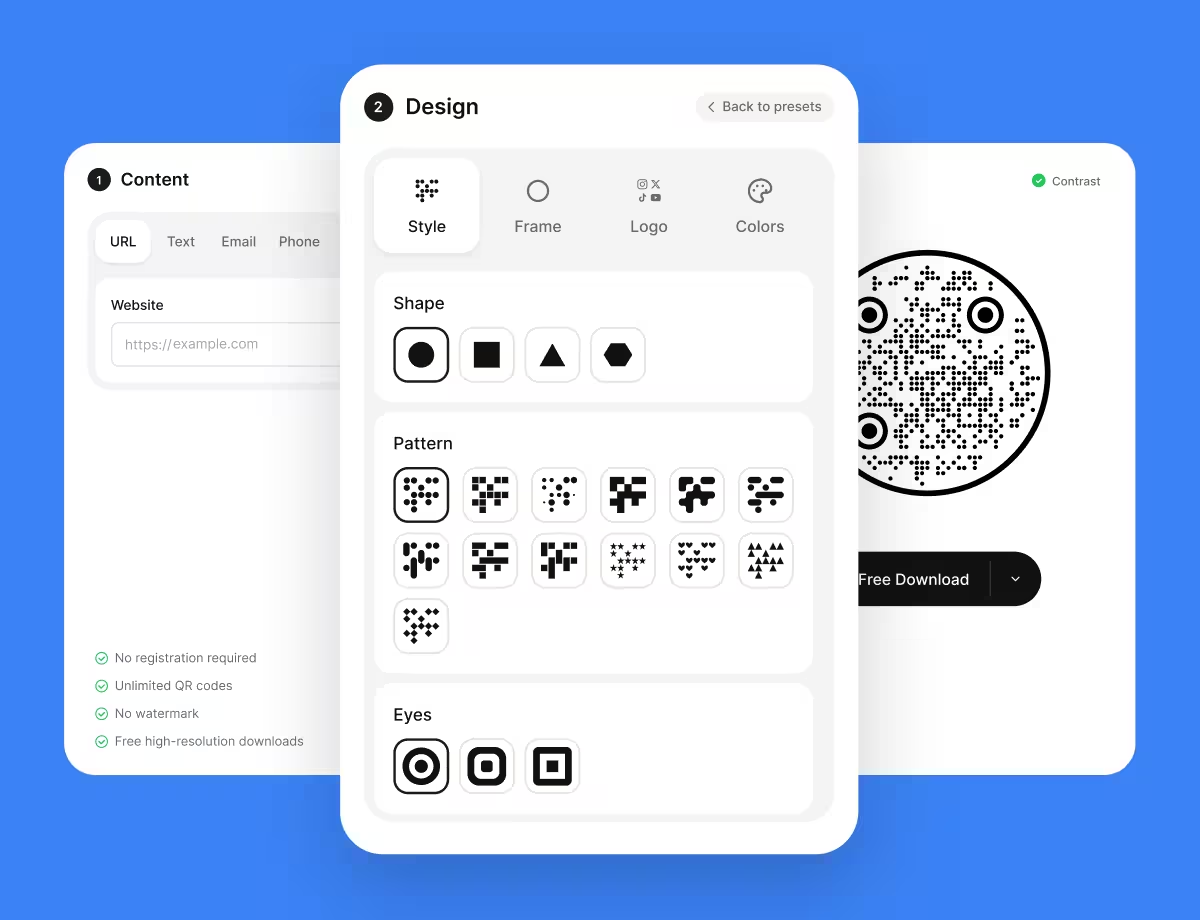
Choose the URL type, paste the link, then pick a shape and colours that match the handout or sign the code will sit on.
- 4
Test and Export
Scan the code from a phone that is not signed into your Google account, submit a test answer, then export SVG or PDF for print and PNG for screens.
Which File Format Should You Download?
KoloQR exports your Google Forms QR code in three formats. Pick by where it will be seen:
- PNG for slide decks, email signatures, and anywhere the code appears at one fixed size on a screen.
- SVG for worksheets, posters, table cards, and stickers - anything a printer scales without softening the edges.
- PDF for handing to a print shop, or for dropping straight into a handout at print-ready quality.
Form codes are printed small more often than most - at the top of a worksheet, on a table card, on an asset sticker - and that is exactly where payload length is felt. A forms.gle link at around 20 characters prints legibly at 15 to 20 mm; the full viewform URL at around 90 characters wants noticeably more room for the same reliability.
Generate QR CodeBest Practices for Google Forms QR Codes
A form code is scanned once, in a hurry, by someone who is doing something else. These are the habits that respect that:
Encode the forms.gle Link
The Send dialog's shortened link is roughly a fifth the length of the address bar URL, which means larger modules in the same printed square.
Confirm the Form Is Open Before Printing
A form with responses switched off, a closing date, or a response limit will hand the reader a rejection page. The code cannot tell them that in advance.
Don't Require Sign-In for a Public Form
Restricting a form to your organisation, or collecting verified email addresses, puts a Google sign-in screen between the scan and the first question.
Prefill the Context Instead of Asking for It
Use the form's own prefilled-link option to fill in the room, table, or machine, so the answer arrives labelled and the reader has one less question to answer.
Keep Prefilled Values Short
Every prefilled answer is encoded verbatim, field id included. “Table 4” costs a few characters; a full asset name and a UUID cost enough to change the symbol version.
Say What the Form Is For and How Long It Takes
“Three questions, about 30 seconds” beside the code raises completion far more reliably than a larger code does.
Keep the First Question Answerable on a Phone
The scan arrives on a phone in portrait. A grid question with eight columns is where a form code loses most of its answers.
Protect the Quiet Zone
Four modules of clear margin on every side. On a dense worksheet this is the first thing a layout squeezes out.
Size It for the Distance
Roughly a tenth of the reading distance: about 2 cm on a handout, about 20 cm on a hall poster read from 2 metres.
Test With a Signed-Out Phone
Your own phone is signed into the account that owns the form, so it sees a version of the page nobody else will. Test on a phone that is not.
Why Your Google Forms QR Code Isn't Working
Almost every failure here is the form's settings rather than the code, which is why the fixes below are in Google Forms rather than in the generator.
The Scan Says the Form Is No Longer Accepting Responses
- Cause
- Responses have been switched off, or the form hit a closing date or a response limit. The QR code still resolves; the form behind it is closed.
- Fix
- Reopen the form in its Responses settings. For a form that must close on a date, print the closing date beside the code so a reader who arrives late knows why.
The Scan Lands on a Google Sign-In Screen
- Cause
- The form is restricted to an organisation, or set to collect email addresses by requiring sign-in. Both put authentication before the first question.
- Fix
- Turn off the restriction for a public form. If you need email addresses from the public, ask for one as an ordinary question instead of a verified one.
The Printed Code Scans Slowly or Not at All
- Cause
- The full docs.google.com viewform URL was encoded rather than the short link, so the symbol carries far more modules than the print size supports.
- Fix
- Regenerate from the forms.gle link. If the code must stay the size it is, that alone is usually the difference between a scan that hesitates and one that fires immediately.
The Prefilled Answers Don't Appear
- Cause
- The prefilled link lost its query string - often to a shortener, a link cleaner, or a copy-paste that stopped at the question mark.
- Fix
- Rebuild the link with the form's prefilled-link option, paste it whole, and verify by scanning rather than by clicking. Then check the field is not one Forms refuses to prefill, such as a file upload.
Still not sure whether the fault is the file or the print? Drop the exported image into the QR code scanner - if it decodes on a desktop and not on paper, the fault entered after the file.
Questions? Answered
A Google Forms QR code stores the address of a Google Form. Scanning it opens the form in the phone's browser. The code holds only the address, so editing the questions never breaks a code that is already printed.
Open the form, choose Send, take the shortened forms.gle link, then paste it into a QR generator as a URL. Style it, test it on a signed-out phone, and export SVG for print or PNG for screens.
Use forms.gle. It is around 20 characters against roughly 90 for the docs.google.com address, so the printed code carries fewer and larger modules - which is what makes it readable at distance and at small sizes.
Yes. The code stores the form's address, not its questions, so you can add, reword, or reorder questions freely. What you cannot change is the address itself - that is fixed once the code is printed.
Because the form is restricted to your organisation, or set to collect verified email addresses. Both settings require a Google account. Turn them off for a public form and ask for an email as a normal question instead.
Yes. Use the form's “Get pre-filled link” option and encode that link, and the answer arrives already filled in - useful for the table number, room, or machine the code is stuck to. Keep prefilled values short.
The code does not, but the form can. A closing date, a response limit, or responses being switched off will all end the form while the printed code keeps scanning - and the reader only finds out after scanning.
About 15 to 20 mm with a forms.gle link, which is small enough for a worksheet header or an asset sticker. The full viewform URL needs noticeably more room for the same reliability.
Yes, by prefilling a hidden question with the location and printing a different code for each one. That is more reliable than scan counting, because it records the answer rather than the scan.
Not unless the form requires sign-in. An unrestricted form opens in any phone's browser and can be submitted by anyone, with no account and no app.
Keep Exploring
Pages that pick up where this one leaves off - the same setting, the same kind of code, or the next thing worth deciding.
Google Slides QR Code
Hand out a deck, or one slide from it, straight from a printed page.
Event QR Codes
One scan connects guests to tickets, schedules, directions and RSVPs - on invites, posters and signage.
Schools & Classrooms
Permission forms, newsletters, library links and student work, with the print sizes and privacy rules a school actually needs.
YouTube QR Code
Send people straight to a channel, a single video, a playlist, or the subscribe prompt.
Discord QR Code
Open a Discord server invite with one scan - if the invite is set never to expire.
Calendly QR Code
Let someone book a time with you by scanning a card, a sign, or a badge.
Why KoloQR?
- Create QR codes for websites, menus, Wi-Fi, PDFs, and business cards
- Customize colors, logos, and unique shapes
- Download high-quality PNG and SVG files
- Built for both print and digital