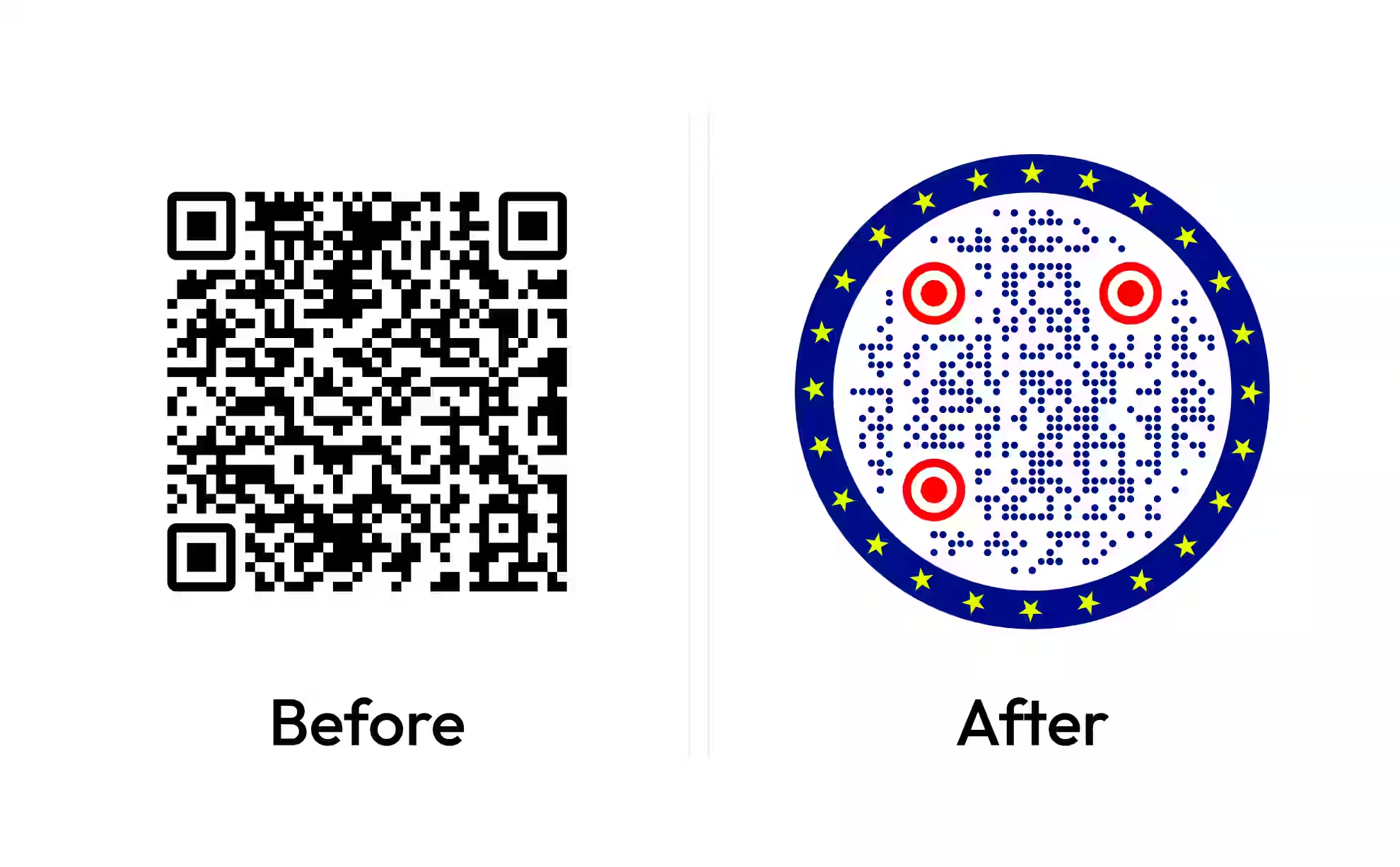
Make a QR Code for Your Etsy Shop
Paste your shop or listing address, style the code to match your packaging, and download it print-ready for swing tags, thank-you cards, and market signage.
Opens in Google Maps. Coordinates work too - "37.4224, -122.0841".
The code opens your business's "Write a review" form. Paste the Place ID, or a Google Maps link that carries one.
A UPI link carries no checksum, so a mistyped ID produces a code that scans perfectly and pays somebody else. Paste the ID from your payment app rather than typing it, and send yourself one rupee before printing.
Paste it exactly as copied. KoloQR does not assemble the payload - it encodes the one your bank issued, and checks it before you print it.
SVG, PNG, JPG • Max 2 MB
First month free
then $9/month
Dynamic QR Codes Are Coming
Change your link anytime, even after printing. See who scans, when and where.
- Edit without reprinting
- Scan analytics
- Bulk & custom domains
You're on the List
We'll email you once, when dynamic codes with scan analytics launch.
What Is an Etsy QR Code?
An Etsy QR code is a QR code that stores an etsy.com address - your shop front, a single listing, or a section within the shop. Scanning it opens that page in the phone's browser, or in the Etsy app if it is installed. The code holds the address only, so prices, stock and photos all come from Etsy at the moment of the scan.
Shop Link or Listing Link - They Have Different Lifespans
Etsy gives you three addresses worth printing, and only one of them is safe on a long print run:
- etsy.com/shop/YourShopName - your shop front. It survives every listing that comes and goes underneath it, which is what makes it the right code for packaging and tags.
- etsy.com/listing/1234567890 - one item. The numeric id alone resolves, so the title slug after it can be dropped and about forty characters go with it.
- etsy.com/shop/YourShopName?section_id=12345678 - one section of the shop, which is the middle ground: narrower than the shop front, and it does not expire the way a single listing does.
Etsy listings run on a four-month cycle: a listing expires and has to be renewed, automatically or by hand. A code printed on a thousand swing tags and pointed at one listing is a code that depends on that renewal continuing for as long as the tags are in circulation - through a sell-out, a seasonal pause, or a decision to relist the item under a new title. The shop URL has no such cycle. Print the listing code for a run you will use up in weeks; print the shop code for anything that outlives the item.
What the Buyer Sees After the Scan
The scan opens the mobile Etsy page, and what happens next is Etsy's decision rather than yours. On many phones the link is handed to the Etsy app if it is installed, which is good for a buyer who already shops there and adds an install prompt for one who does not. Etsy also shows related items from other sellers on a listing page, so a code on your own packaging leads to a page that advertises your competitors - which is a reason to point tags at your shop front, where your own range fills the screen first. Test the scan on a phone without the app to see the version most new customers will get, and check that your shop's banner and first row of listings say what you sell without any scrolling. If the stall sign has to carry the mailing list and the social accounts as well as the shop, a link-in-bio code is the one printed square that holds all three.
Generate QR Code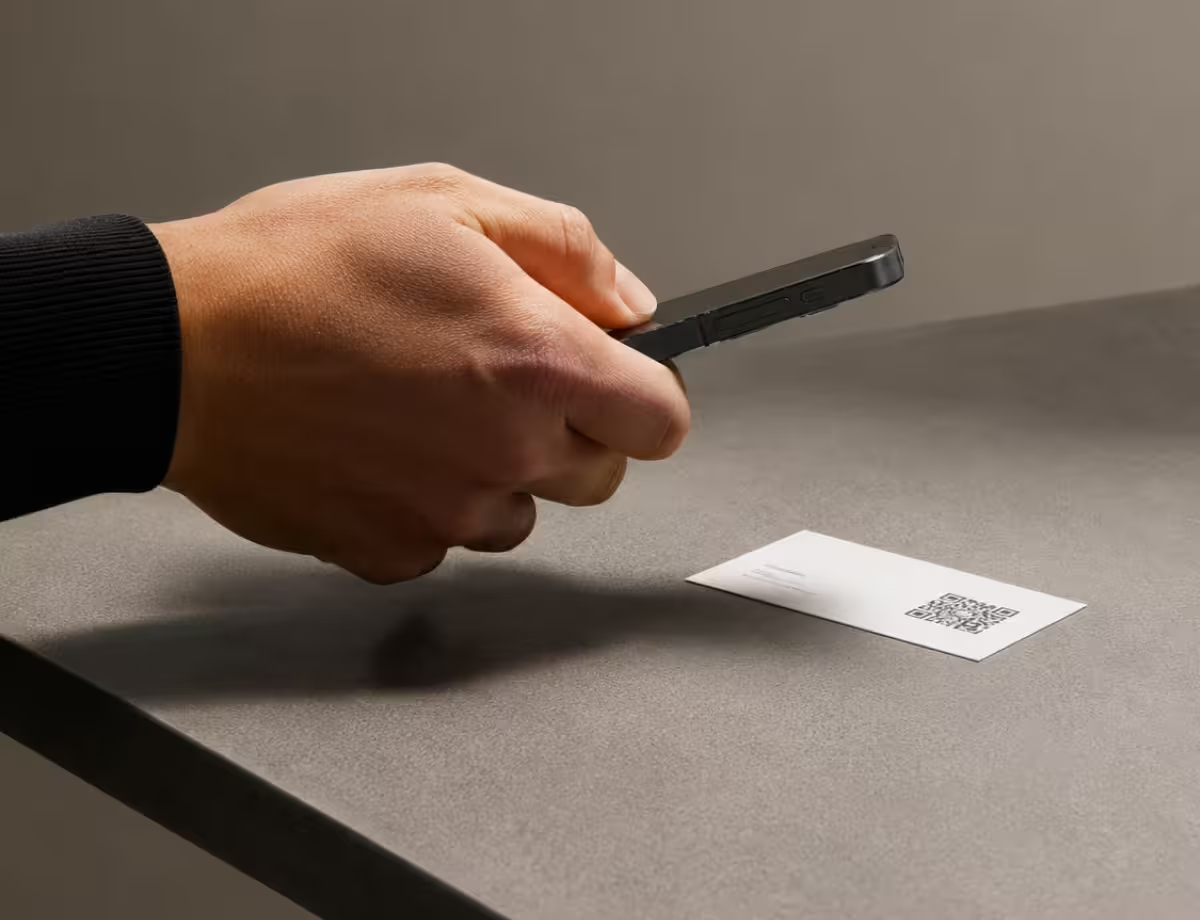
Where Etsy QR Codes Are Used
An Etsy code is almost always printed by the maker, and it is at its most useful where someone is already holding the work:
- 1
Choose Between Shop and Listing
The shop URL for tags, packaging and signage that will be in use for months. A listing URL only for a short run tied to one item.
- 2
Trim the Address
A listing needs only etsy.com/listing/ and the numeric id - the title slug after it can go. Drop tracking parameters such as ref and click ids entirely.
- 3
Paste the Link and Design the Code
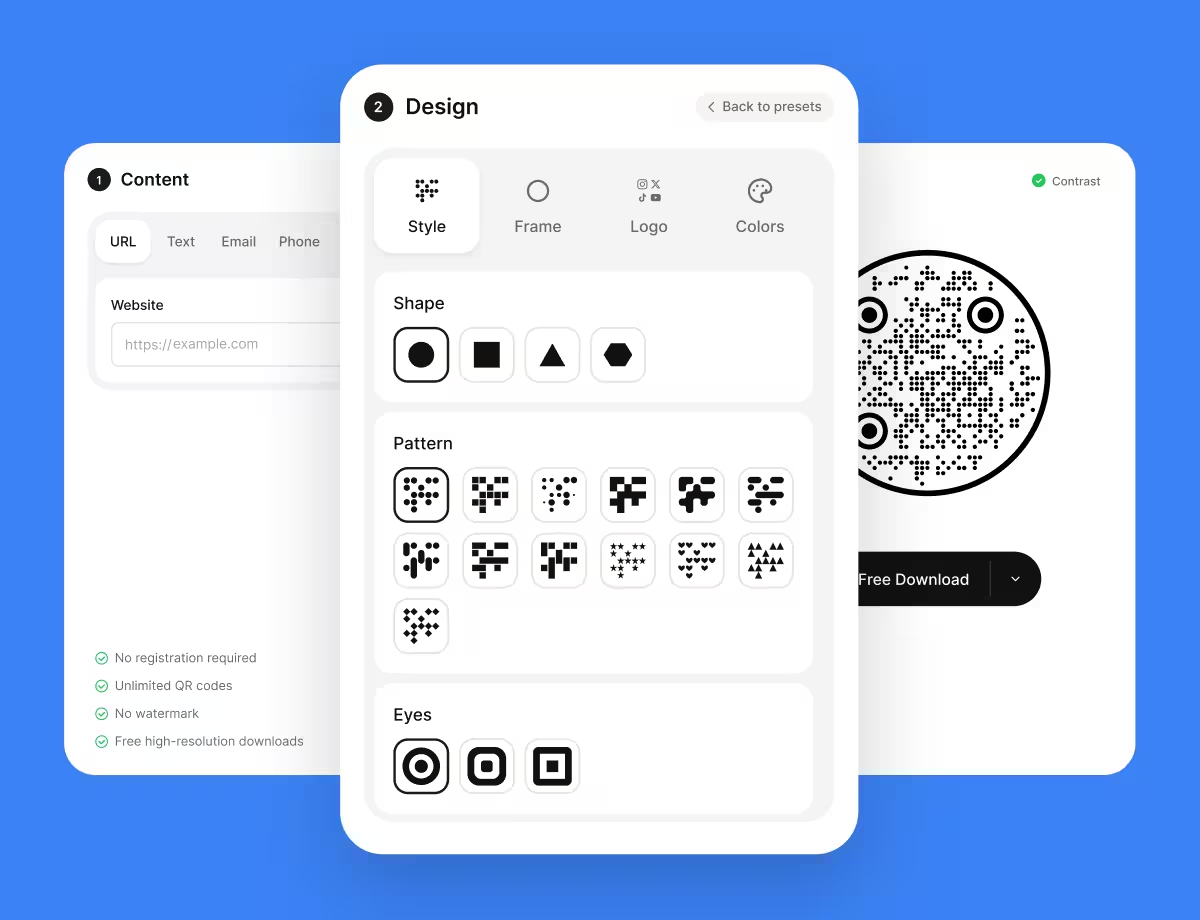
Choose the URL type, paste the address, then style the code in your own colours so it belongs on the tag rather than being stuck to it.
- 4
Test and Export
Scan from a phone with the Etsy app and one without, then export SVG or PDF for print and PNG for social posts.
Which File Format Should You Download?
KoloQR exports your Etsy QR code in three formats. Pick by where it will be seen:
- PNG for listing photos, social posts, and email, where the code appears at one fixed size on a screen.
- SVG for swing tags, stickers, packaging, and stall signage - anything a printer scales without softening the edges.
- PDF for handing to a print shop, or for a sheet of tags you will cut down yourself.
Makers print small, on textured stock, in short runs - kraft card, cotton labels, brown boxes. All three cost contrast and eat fine detail, so a short payload matters more here than on glossy commercial packaging: etsy.com/shop/YourShopName is around 30 characters and prints comfortably at 20 mm on kraft, while a full listing URL with its title slug is the payload that starts failing on the same tag.
Generate QR CodeBest Practices for Etsy QR Codes
Most Etsy codes are printed once, in bulk, by someone paying for the run themselves. That is the constraint these are written for:
Print the Shop URL on Anything Long-Lived
Listings expire on a four-month cycle and can sell out or be relisted. A shop front has no cycle, so it is the address that matches a printed tag's lifespan.
Drop the Title Slug From a Listing Link
etsy.com/listing/1234567890 resolves on its own. Removing the words after the id can save forty characters and a symbol version with them.
Strip Tracking Parameters
A link copied from Etsy's share sheet or from search often carries ref and click parameters. They add length, and they tell you nothing once the code is printed.
Confirm the Shop Address Before a Print Run
Changing your shop name changes the address that gets printed. Test the old address in a browser before assuming anything still redirects to the new one.
Say What the Scan Leads To
“Scan to see the full collection” or “scan to reorder” outperforms a bare code on a tag, which most people never lift a phone for.
Design for Kraft and Uncoated Card
Brown stock lowers contrast before any ink is laid. Print the modules as dark as the process allows and leave the light half genuinely light.
Keep Your Own Colours, Within Reason
A code can carry your palette, but the pattern needs to stay clearly darker than its background. Put the brand colour in the artwork around it if it is too pale to hold the modules.
Protect the Quiet Zone
Four modules of clear margin on every side - the first casualty on a swing tag where the hole punch and the trim edge are already competing.
Size It for the Distance
Roughly a tenth of the reading distance: about 2 cm on a tag held in the hand, about 20 cm on a stall sign read from 2 metres across an aisle.
Scan the Printed Sample, Not the File
Textured card, hand-cut edges and a laser printer's toner spread all change the pattern. Scan one tag from the finished run before printing the other nine hundred.
Why Your Etsy QR Code Isn't Working
An Etsy code usually fails for one of two reasons: the listing behind it has moved on, or the material it is printed on cannot hold the pattern.
The Scan Says the Listing Is No Longer Available
- Cause
- The listing expired at the end of its four-month cycle, sold out, or was relisted under a new id. The code is intact; the item behind it is gone.
- Fix
- Point the code at the shop front or a section instead, and keep listing codes for short runs. If tags are already printed, relist the item and check whether the old id still resolves before reprinting.
The Code Won't Scan on a Kraft Swing Tag
- Cause
- Brown or textured card lowers the contrast the camera depends on, and a long listing URL packs more modules into the same small square.
- Fix
- Shorten the payload to the shop URL or a bare listing id, print at 20 mm or more, and keep the modules as dark as the stock allows with a genuinely light background.
The Scan Opens the Etsy App and Asks People to Install It
- Cause
- The phone is handing etsy.com links to the app, and on a phone without it the mobile page can show an install prompt over the listing.
- Fix
- Nothing on the code can change this, so test it and design around it: a shop-front landing is a better first impression under an install prompt than a single listing is.
The Code Leads Somewhere That Shows Competitors' Items
- Cause
- Etsy fills a listing page with related items from other sellers, which is how the platform works and not something a seller controls.
- Fix
- Send printed traffic to your shop front, where your own range fills the screen first, and keep listing links for cases where the exact item is the whole point.
Still not sure whether the fault is the file or the print? Drop the exported image into the QR code scanner - if it decodes on a desktop and not on paper, the fault entered after the file.
Questions? Answered
An Etsy QR code stores an etsy.com address - your shop, a section, or a single listing. Scanning it opens that page in the phone's browser or in the Etsy app. The code holds the address only, not the prices or photos.
Link to the shop for tags, packaging and signage that stay in use for months, because listings expire on a four-month cycle. Link to a listing only for a short run tied to that one item.
Keep etsy.com/listing/ and the numeric id, and delete the title slug and any ref or tracking parameters after it. That often removes forty characters or more from the payload.
The address that was printed changes with it. Test the old etsy.com/shop/ address in a browser before assuming it still leads anywhere, and settle the name before committing to a print run.
About 20 mm on kraft or uncoated card with a shop URL. Textured brown stock costs contrast before any ink is laid, so it needs more room than the same code on white coated paper.
Yes, as long as the modules stay clearly darker than the background. A pale brand colour belongs in the artwork around the code rather than in the pattern itself.
No. The link opens in any mobile browser. If the app is installed the phone may open it instead, and a phone without it may show an install prompt over the page.
Yes - a thank-you card pointing at the shop front is one of the most common uses, and one of the few ways a maker reaches a buyer again after Etsy has handled the transaction.
The code does not. The listing behind it can: Etsy listings run on a four-month renewal cycle, and an expired or relisted item leaves a printed listing code pointing at a page that no longer exists.
Not from the code itself. Etsy Stats show traffic sources but cannot separate a scan from any other direct visit, so a redirect on your own domain is the only way to count one print run against another. QR codes for Black Friday sets that redirect up for a sale weekend, so a code printed once can move from the early-access offer to the main sale without a reprint.
Keep Exploring
Pages that pick up where this one leaves off - the same setting, the same kind of code, or the next thing worth deciding.
Beauty Salons
Rebooking at the chair, per-service aftercare and a portfolio per stylist, with codes that survive acetone, colour and hairspray.
Barbershops
Window bookings, one code per chair for rebooking, reviews and Instagram - with sizes in cm and finishes that survive hairspray and station lights.
Branded QR Codes
Match QR codes to your brand with a logo, colors, and custom shapes - without sacrificing scannability.
Google Review QR Code
Open your business's Google review form in one scan, with the stars ready to tap.
Trustpilot QR Code
Open your review form in one scan, from a parcel insert, a receipt, or a card.
Shopify QR Code
Open a product, a collection, or a pre-filled basket in a single scan.
Why KoloQR?
- Create QR codes for websites, menus, Wi-Fi, PDFs, and business cards
- Customize colors, logos, and unique shapes
- Download high-quality PNG and SVG files
- Built for both print and digital