Make a QR Code for Your Linktree Page
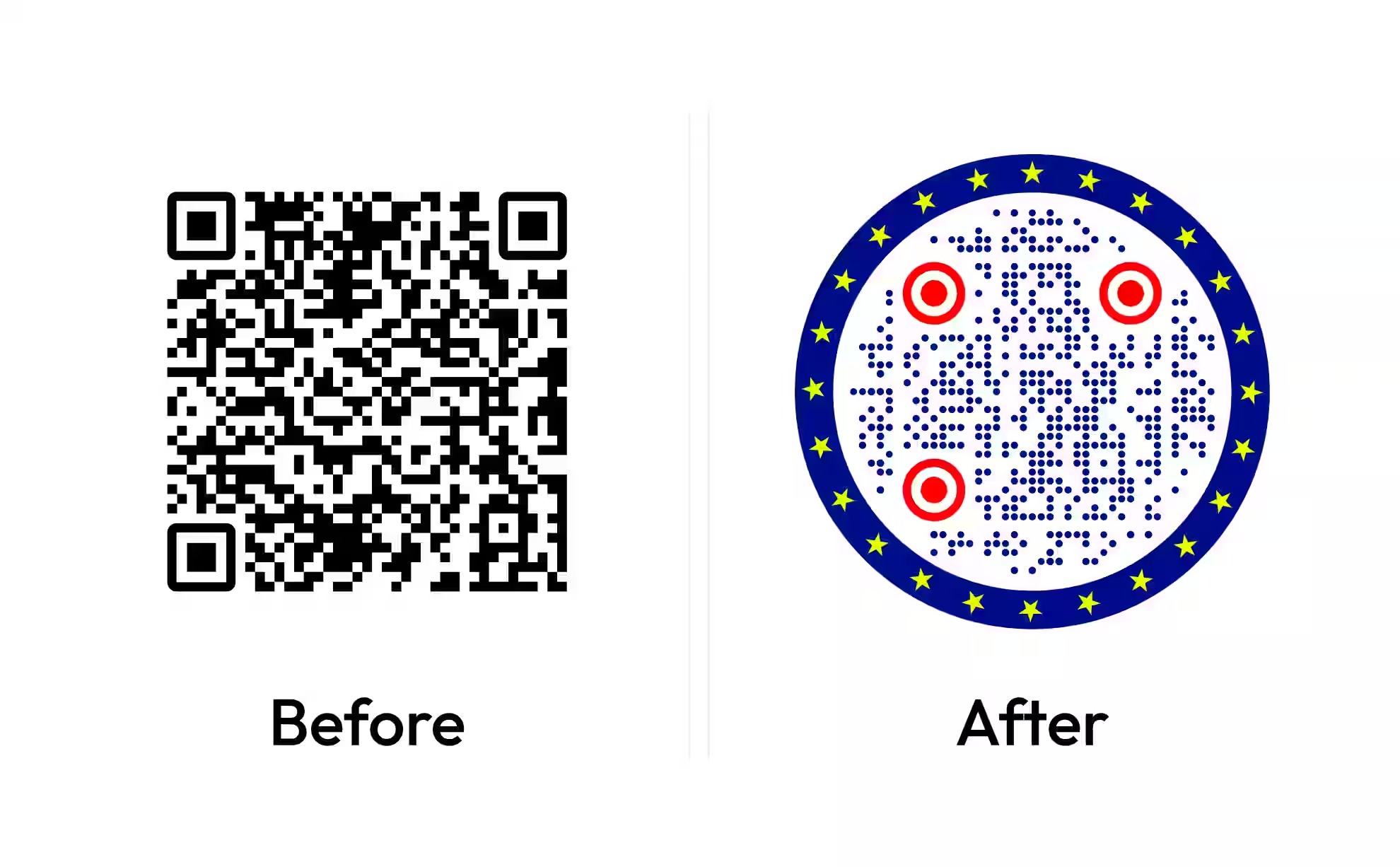
Enter your linktr.ee address, style the code to match your artwork, and download it print-ready. The links behind it stay yours to change afterwards.
Opens in Google Maps. Coordinates work too - "37.4224, -122.0841".
The code opens your business's "Write a review" form. Paste the Place ID, or a Google Maps link that carries one.
A UPI link carries no checksum, so a mistyped ID produces a code that scans perfectly and pays somebody else. Paste the ID from your payment app rather than typing it, and send yourself one rupee before printing.
Paste it exactly as copied. KoloQR does not assemble the payload - it encodes the one your bank issued, and checks it before you print it.
SVG, PNG, JPG • Max 2 MB
First month free
then $9/month
Dynamic QR Codes Are Coming
Change your link anytime, even after printing. See who scans, when and where.
- Edit without reprinting
- Scan analytics
- Bulk & custom domains
You're on the List
We'll email you once, when dynamic codes with scan analytics launch.
What Is a Linktree QR Code?
A Linktree QR code is a QR code that stores your linktr.ee address - the web address of your link-in-bio page. Scanning it opens that page in the phone's browser, where every link you have added is listed. The address lives in the pattern; the list behind the address lives in your Linktree account.
Why This Code Can Be Edited After It Is Printed
A printed QR code is fixed. A Linktree page is not, and that difference is the whole point:
- The Code Holds One Address - linktr.ee/yourname, about 20 characters. It never changes, so the printed pattern never has to.
- The Page Holds the Destinations - and you edit those in your Linktree account whenever you like. Add a link, reorder, retire an old campaign; the printed code follows along.
- The Account Holds the Handle - which is the one part that can be lost. A closed or renamed account leaves the printed code pointing at nothing.
This is the honest version of what a paid dynamic QR code sells. A dynamic code puts a redirect on the provider's domain and charges monthly to keep it alive; a link-in-bio page puts a page on Linktree's domain and gives you the same after-print edit. Neither is your own domain, so both carry the same underlying risk - see what actually breaks with subscription QR codes. The difference is that one of them costs nothing to keep scanning.
Linktree's Own QR Code Versus a Generated One
Linktree can produce a QR code for your page inside its own dashboard, and it works - it is a standard QR code holding your linktr.ee address, which is exactly what a generated one holds. What differs is what you are allowed to do with it: the styling options in Linktree's own tool depend on the plan you are on, and the download is an image at whatever size that tool gives you. A generated code carries the same address, exports as vector at any size, and can be drawn in your own shape and colours so it sits inside your artwork rather than beside it. For a story sticker or a screen, either is fine. For anything a printer will touch, generate one and export SVG. And where the printed surface is really about one destination rather than a menu of them - a booking page, a repository, a form - a code pointed straight at it converts better: see the Calendly and GitHub pages for those.
Generate QR Code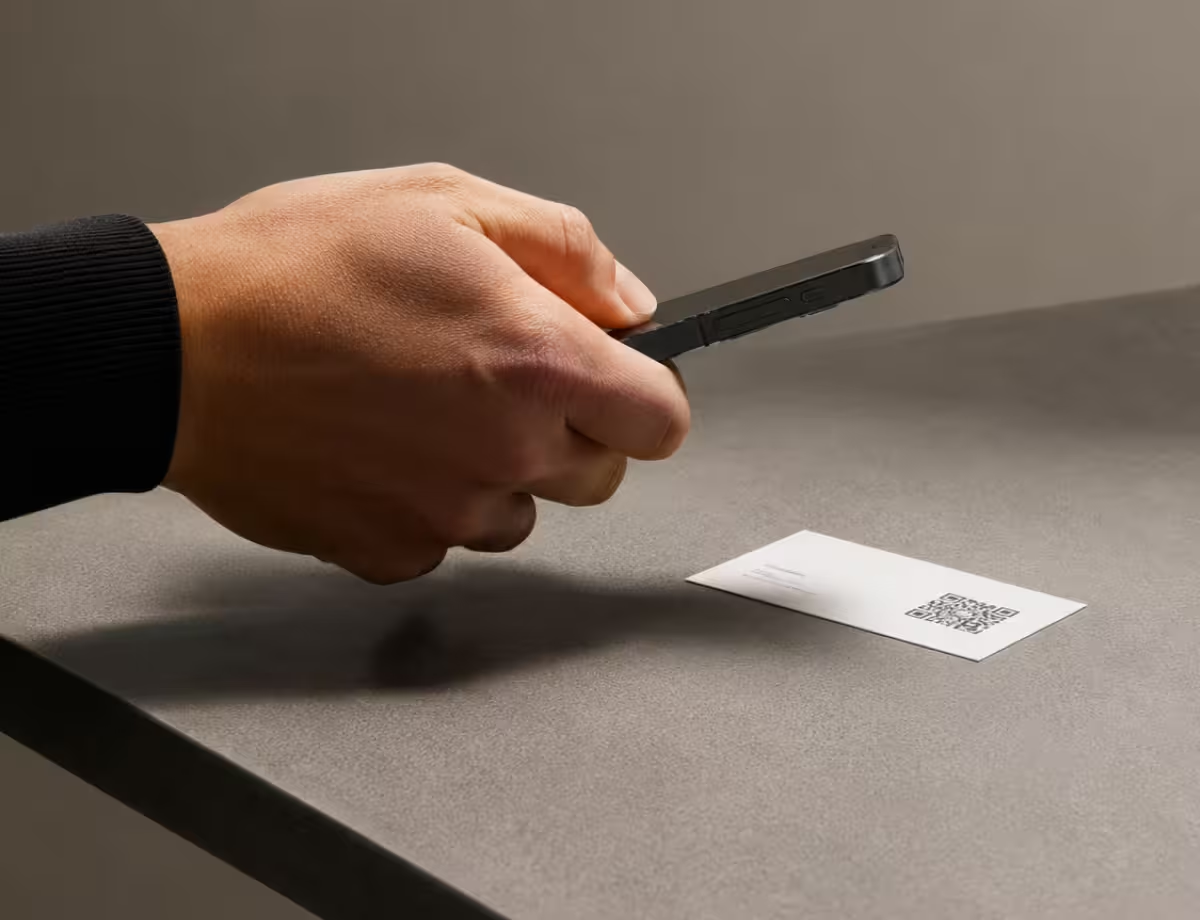
Where Linktree QR Codes Are Used
A link-in-bio page earns its place wherever one printed surface has to lead to several destinations:
- 1
Settle Your Linktree Handle First
The handle is the part of the address that gets printed. Change it later and every printed code stops working, so choose the one you intend to keep before generating anything.
- 2
Paste the Full linktr.ee Address
Choose the URL type and paste linktr.ee/yourname. Include nothing else - no tracking string, no trailing slash - so the pattern stays as sparse as the short address allows.
- 3
Customize the Design
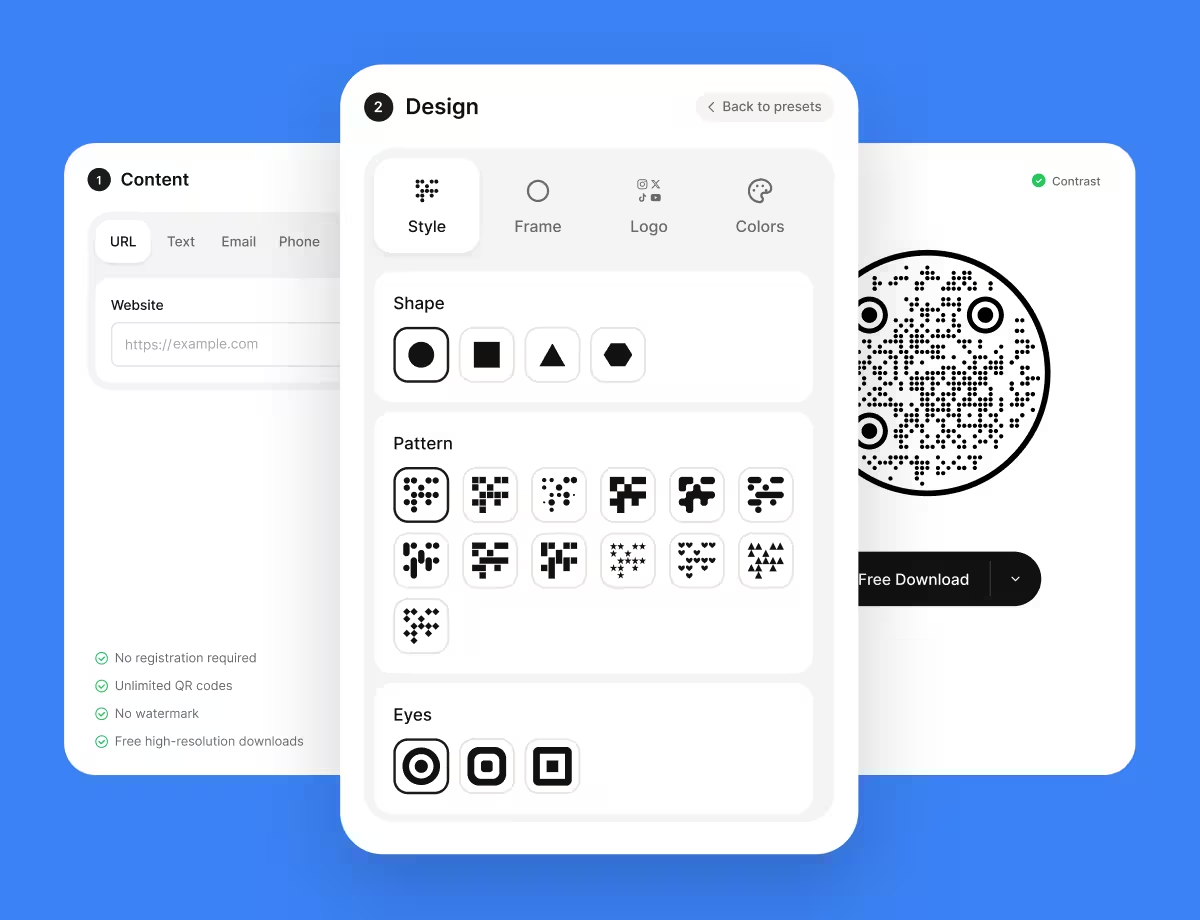
Pick a shape, set the colors, drop your own logo in the middle. This is the code people will see on a poster, so it should look like your poster.
- 4
Test and Export
Scan it from a phone before exporting, then take SVG or PDF for print and PNG for screens.
Which File Format Should You Download?
KoloQR exports your Linktree QR code in three formats. Pick by where it will be seen:
- PNG for websites, story posts, and slides, where the code appears at one fixed size.
- SVG for flyers, stickers, and packaging - anything a printer scales without softening the edges.
- PDF for handing to a print shop or a signage supplier at print-ready quality.
A linktr.ee address is around 20 characters, which is short enough to encode as a low-version symbol with large, forgiving modules. That is worth protecting. Adding a campaign string like ?utm_source=flyer can push the same code up a symbol version or two and shrink every module in it, and Linktree pages are not where that measurement pays off anyway.
Generate QR CodeBest Practices for Linktree QR Codes
The code is the easy part here. Almost everything that goes wrong goes wrong on the page behind it:
Lock the Handle Before You Print
linktr.ee/yourname is what gets encoded. Renaming the account after a print run leaves every printed code pointing at an address that no longer resolves.
Put the Most Likely Link at the Top
Someone who scans a poster in the street is standing up, holding a phone, and will not scroll far. The link the poster is actually about belongs in the first position.
Say Where the Scan Leads
“Scan for tickets, menu and directions” sets an expectation. A bare code beside a logo asks the reader to gamble on it.
Check the Page on a Slow Connection
A link-in-bio page is a web page with images on it, and it is often scanned in exactly the places with the worst signal - a festival field, a basement bar, a trade-hall aisle.
Keep the URL Clean
No tracking parameters, no shortener stacked on top. A shortener adds a second point of failure in front of a page that is already the redirect layer.
Consider Your Own Domain for Long-Lived Print
For packaging or signage measured in years, encode a short URL on a domain you own and redirect it to Linktree. A change of platform then costs one edit rather than a reprint.
Match the Code to the Artwork, Not to Linktree
The code sits on your flyer, not on your Linktree page. Draw it in the flyer's colours - and keep the modules dark against a light background.
Protect the Quiet Zone
Four modules of clear margin on every side. A busy flyer is the most common place for that margin to be eaten by other artwork.
Size It for the Distance
Roughly a tenth of the reading distance: about 2 cm on a business card read at arm's length, about 20 cm on a poster read from 2 metres.
Rescan After Every Design Change
A logo enlarged past the error correction budget, or a colour pair with too little contrast, fails on some phones and not others. Test the file you are actually sending to print.
Why Your Linktree QR Code Isn't Working
A Linktree code that scans correctly can still fail the reader, because the failure usually sits one layer further back - on the page rather than in the pattern.
The Scan Opens a Page That Says the Link Doesn't Exist
- Cause
- The handle changed, or the account was closed or suspended. Linktree does not redirect an old handle to a new one, and a freed handle can later be taken by someone else.
- Fix
- Reclaim the old handle if it is still free. For anything printed at volume, encode a URL on your own domain that redirects to Linktree, so a platform change costs one edit instead of a reprint.
The Code Scans but Nobody Taps Anything
- Cause
- The page opens on a list the reader did not expect. A scan is a single act with a single intention; a menu of eight options is a decision they did not come to make.
- Fix
- Label the code with what the scan is for, and put that destination first on the page. If the poster is about one thing, consider linking straight to that thing instead.
The Code Is Hard to Scan on Printed Flyers
- Cause
- Usually size or contrast rather than the payload - a linktr.ee address is one of the shorter ones, so the pattern itself is forgiving.
- Fix
- Print at least 2 x 2 cm for close reading, keep four modules of quiet zone, and keep the modules dark on a light ground rather than the other way round.
The Page Loads Slowly After the Scan
- Cause
- Link-in-bio pages carry avatars, thumbnails and analytics, and get scanned in exactly the places where mobile data is worst.
- Fix
- Trim the page to the links that matter, keep the header image small, and test the page once on a phone with mobile data rather than on office Wi-Fi.
Still not sure whether the fault is the file or the print? Drop the exported image into the QR code scanner - if it decodes on a desktop and not on paper, the fault entered after the file.
Questions? Answered
A Linktree QR code stores your linktr.ee address. Scanning it opens your link-in-bio page in the phone's browser, listing every destination you have added there. The code holds the address; your account holds the links.
Yes - by editing the links on your Linktree page rather than the code. The printed pattern always points at the same address, so reordering, adding or retiring destinations behind it needs no reprint.
No. A dynamic code sells an editable redirect on someone else's domain for a monthly fee; a link-in-bio page already gives you that edit for free. Both share the same risk - the address is not on your domain.
Linktree's holds the same address, so it scans identically. A generated code exports as vector for print at any size and can be drawn in your own shapes and colours, which matters once it sits on a flyer or a box.
Every printed code pointing at the old handle stops working, with no redirect, and the freed handle can be claimed by someone else. Settle the handle before printing, or encode a redirect on your own domain.
About 2 x 2 cm for close reading, such as a business card or a product tag. The address is short - roughly 20 characters - so the pattern is sparse and tolerates the small end of the range better than most.
Usually not. A campaign string lengthens the payload and can push the symbol up a version, shrinking every module. If you need to tell one printed code from another, use a separate short redirect on your own domain.
Yes. Keep it small enough that the error correction can absorb it - as a rule of thumb, no more than about a fifth of the code's width - and rescan the exported file before printing.
No. A linktr.ee page is an ordinary web page, so any phone camera opens it in the browser. Only the person publishing the page needs an account.
Not by itself - the code is a printed pattern with nothing behind it. Linktree's own analytics count views and clicks on the page, which is the closest measurement and does not distinguish a scan from a tap in a bio.
Keep Exploring
Pages that pick up where this one leaves off - the same setting, the same kind of code, or the next thing worth deciding.
OnlyFans QR Code
Open your profile in one scan, from a card, a screen, or a stream overlay.
Photographers
Client galleries, print reorders, portfolio links and guest photo uploads, on cards, albums, prints and event signs.
X (Twitter) QR Code
Send people straight to your X profile, a single post, or a one-tap follow prompt.
TikTok QR Code
Send people straight to your TikTok profile, a single video, or a campaign hashtag.
Beauty Salons
Rebooking at the chair, per-service aftercare and a portfolio per stylist, with codes that survive acetone, colour and hairspray.
Google Forms QR Code
Open a survey, sign-up sheet, or feedback form straight from a printed page.
Why KoloQR?
- Create QR codes for websites, menus, Wi-Fi, PDFs, and business cards
- Customize colors, logos, and unique shapes
- Download high-quality PNG and SVG files
- Built for both print and digital