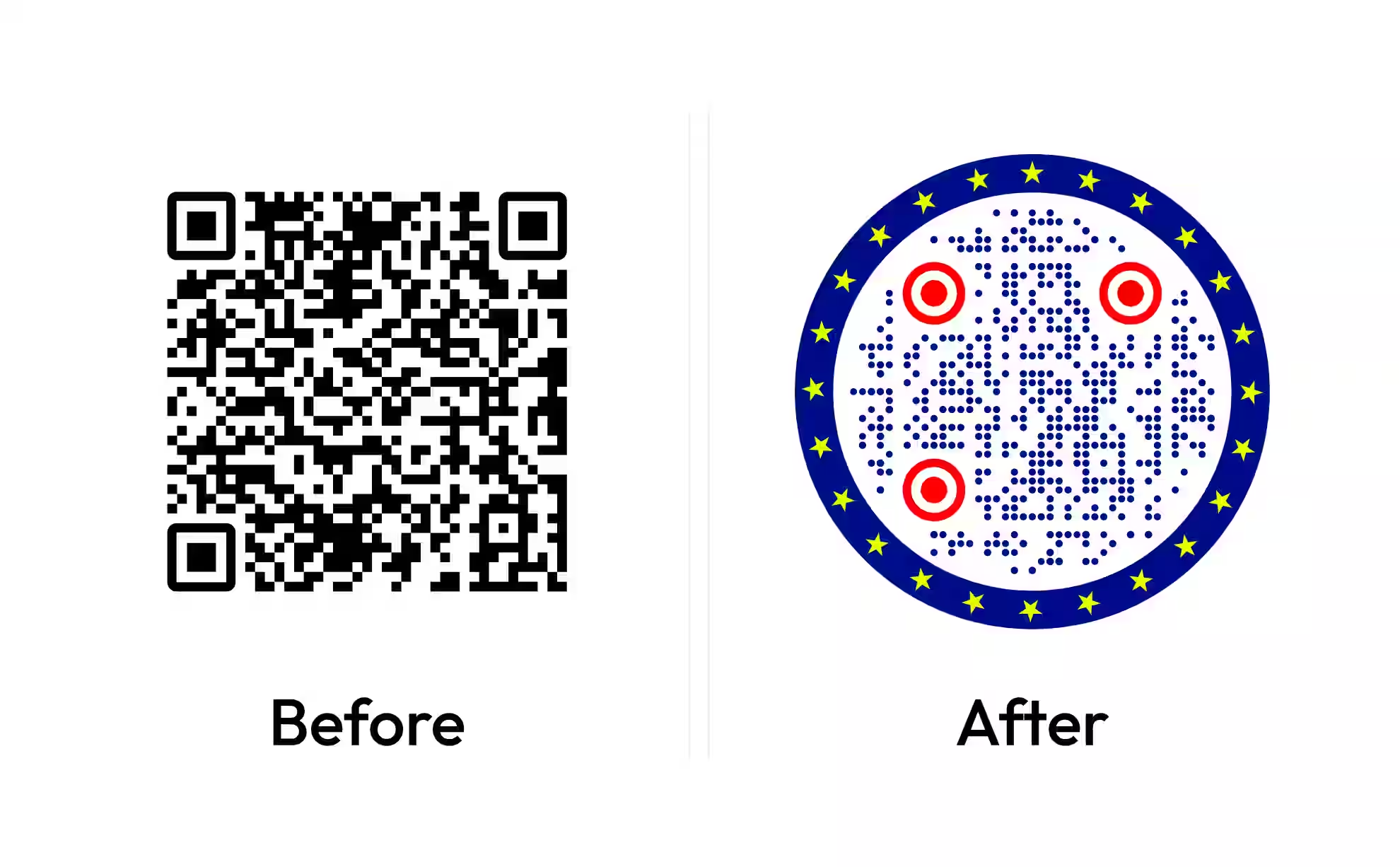
Make a QR Code for a GitHub Profile or Repo
Paste the address, style the code to match your sticker or slide, and download it print-ready - pointed at a URL that will still resolve after the next rename.
Opens in Google Maps. Coordinates work too - "37.4224, -122.0841".
The code opens your business's "Write a review" form. Paste the Place ID, or a Google Maps link that carries one.
A UPI link carries no checksum, so a mistyped ID produces a code that scans perfectly and pays somebody else. Paste the ID from your payment app rather than typing it, and send yourself one rupee before printing.
Paste it exactly as copied. KoloQR does not assemble the payload - it encodes the one your bank issued, and checks it before you print it.
SVG, PNG, JPG • Max 2 MB
First month free
then $9/month
Dynamic QR Codes Are Coming
Change your link anytime, even after printing. See who scans, when and where.
- Edit without reprinting
- Scan analytics
- Bulk & custom domains
You're on the List
We'll email you once, when dynamic codes with scan analytics launch.
What Is a GitHub QR Code?
A GitHub QR code is a QR code that stores a github.com address - a profile, a repository, a release, a gist, or a file at a specific commit. Scanning it opens that page in the phone's browser. GitHub has no app requirement for reading a repository, so the scan works on any phone.
Which GitHub URL Should Go in the Code?
GitHub has several addresses for the same thing, and they age at very different rates:
- github.com/owner/repo/releases/latest - always redirects to the newest published release. Print this on hardware or documentation instead of a version number that will be wrong within a month.
- github.com/owner/repo/blob/<commit>/path - a permalink to a file as it was at one commit. Pressing y on a file page rewrites the branch URL into this form, and it is the only file link that cannot rot.
- github.com/owner/repo/blob/main/README.md - a branch link. Convenient, but it shows whatever main holds when it is scanned, which for a printed reference may be years of changes later.
GitHub does keep redirects when a repository or an account is renamed, so a printed code does not necessarily die on a rename - but the redirect depends on the old name staying unclaimed, and a freed username can be registered by someone else. For anything printed at volume, that is a reason to encode a short URL on a domain you control and point it at GitHub, so a move costs one redirect edit rather than a reprint.
What the Scan Actually Opens on a Phone
A repository page on a phone is a narrow column: the file list, then the README rendered below it. That is readable, and it is why a code on a conference sticker or a dev-board silkscreen works at all. Two things are worth knowing before printing one. A private repository shows a 404 rather than a sign-in prompt to anyone not logged in, so a code pointed at private work looks broken rather than protected - test it from a signed-out phone. And a raw file URL on raw.githubusercontent.com downloads or renders as plain text rather than opening the repository, which is right for a config file and wrong for anything a human is meant to read.
Generate QR Code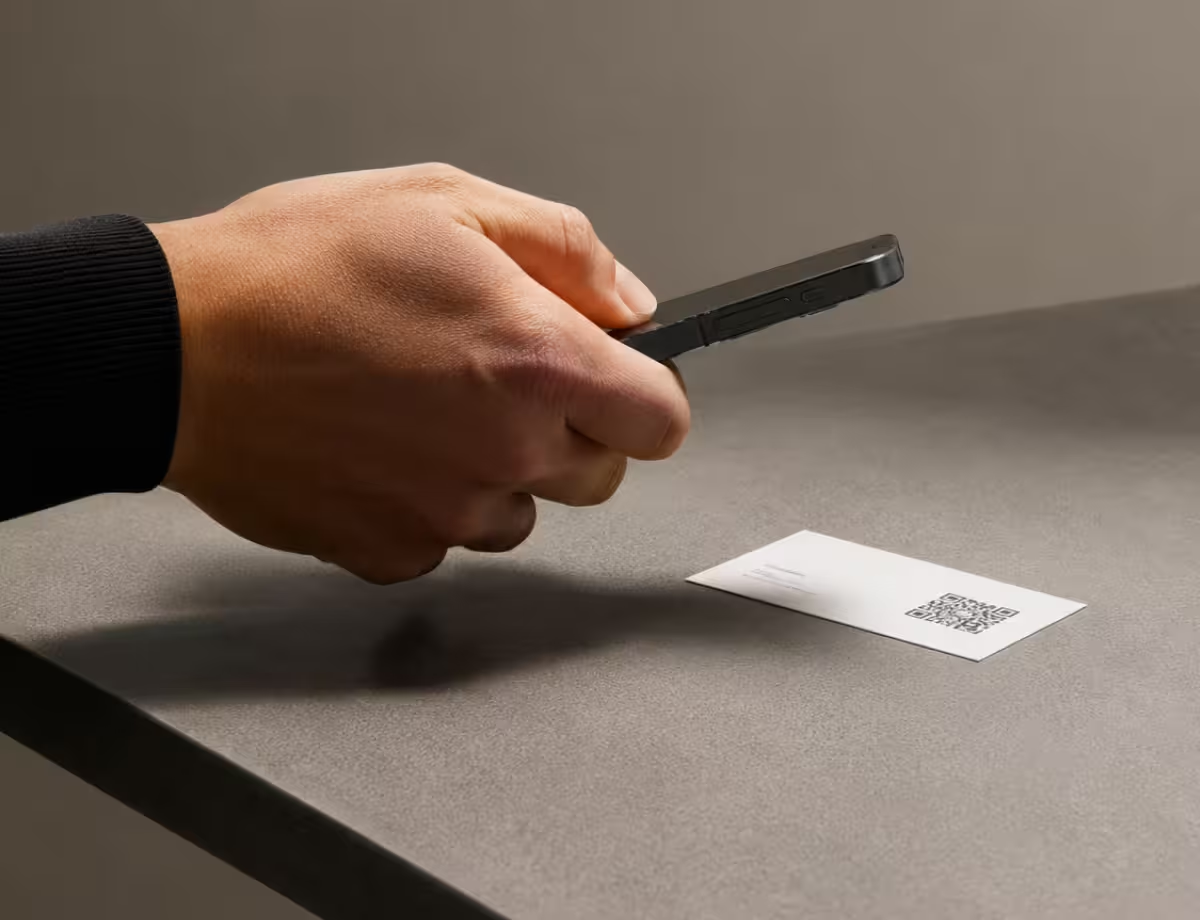
Where GitHub QR Codes Are Used
A code on a physical object is the shortest path from hardware, paper, or a stage to the source behind it:
- 1
Choose the URL That Will Age Best
A profile for a card, /releases/latest for hardware and manuals, a commit permalink for a code excerpt. Avoid branch links and version numbers in anything printed.
- 2
Check It Resolves While Signed Out
Open the URL in a private window. A private repository returns 404 rather than a sign-in prompt, and that is what your reader will see too.
- 3
Paste the Link and Design the Code
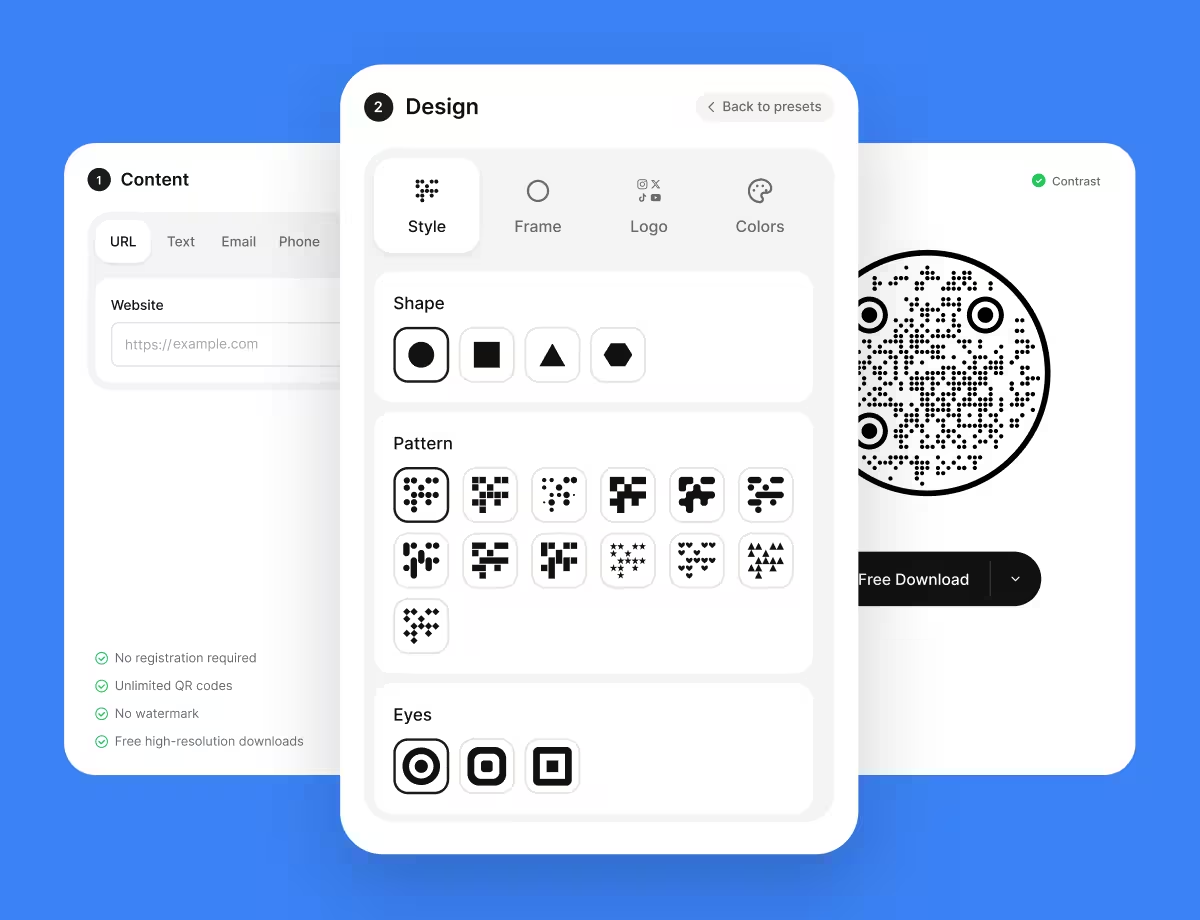
Choose the URL type and paste the address, then pick a shape and colours. Dark modules on a light ground survive a matte sticker better than an inverted pair.
- 4
Test and Export
Scan it from a phone, then export SVG or PDF for stickers and silkscreen, PNG for slides.
Which File Format Should You Download?
KoloQR exports your GitHub QR code in three formats. Pick by where it will be seen:
- PNG for slides, READMEs, and documentation sites, where the code appears at one fixed size.
- SVG for stickers, silkscreen artwork, and printed manuals - anything scaled without softening the edges.
- PDF for handing to a sticker printer or a board fabricator at print-ready quality.
Payload length is the thing to watch on this page. github.com/owner is around 25 characters and prints small comfortably; a commit permalink to a file deep in a tree can pass 100, which needs a larger symbol or a larger sticker. If a long permalink has to go on something the size of a thumbnail, put a short redirect on your own domain in front of it.
Generate QR CodeBest Practices for GitHub QR Codes
A printed link to a codebase has one job the code itself cannot do: still be true later.
Print /releases/latest, Not a Version Number
That address always redirects to the newest published release, so a manual or a device label never names a version that has been superseded.
Use Commit Permalinks for Code Excerpts
A link to a file on a branch shows whatever that branch holds when it is scanned. A permalink to a commit shows what you actually printed alongside.
Check Private Repositories Return a 404
GitHub does not prompt signed-out visitors to log in for a repository they cannot see. A code to private work looks broken to everyone outside the org.
Don't Rely on Rename Redirects for Long-Lived Print
Renaming a repository or account leaves a redirect, but only while the old name stays unclaimed. Silkscreen and packaging outlive that guarantee.
Keep the URL Short Enough for the Surface
A profile URL prints happily at 15 mm. A deep permalink at the same size is a denser symbol on the same square millimetres, and it is where scans start failing.
Prefer the Repository Page to a Raw File
A raw.githubusercontent.com link hands a phone plain text or a download. The repository page renders the README, which is what a human scanned for.
Label What the Code Leads To
“Firmware and docs” or “source for this talk” beside the code is the difference between a scan and a shrug.
Watch Contrast on Dark Stickers
Dark modules on a light ground is what phone cameras expect. If the sticker has to be dark, test the inverted version on several phones before ordering a run.
Protect the Quiet Zone
Four modules of clear margin on every side - easily lost on a small sticker where the artwork runs to the die line.
Size It for the Distance
Roughly a tenth of the reading distance: about 2 cm on a laptop sticker, about 20 cm on a poster read from 2 metres.
Why Your GitHub QR Code Isn't Working
The pattern is rarely the problem on this page. The URL behind it usually is - either because of what it points at, or because of how long it is.
The Scan Shows a 404 Page
- Cause
- The repository is private, or it was renamed or deleted and the old name has since been taken by someone else, which removes the redirect.
- Fix
- Make the repository public, or point the code at a public profile or docs page instead. For anything printed at volume, encode a redirect on your own domain so the destination stays editable.
The Code Won't Scan on a Small Sticker
- Cause
- A deep permalink or a long file path was encoded, so the symbol carries far more modules than a 15 mm sticker can resolve.
- Fix
- Shorten the destination - the profile, the repository root, or /releases/latest - or put a short URL on your own domain in front of the long one, then regenerate.
The Scan Downloads a File Instead of Opening a Page
- Cause
- The URL is a raw.githubusercontent.com address, which serves the file itself rather than GitHub's rendered page for it.
- Fix
- Encode the github.com/owner/repo/blob/... address instead. Keep raw links for machines - a config a script fetches - rather than for a human with a camera.
The Code Points at an Old Version of the Project
- Cause
- A tagged release URL or a branch link was encoded, and the project moved on. The code is doing exactly what it was told.
- Fix
- Reprint against /releases/latest for downloads, or the repository root for source. Both follow the project instead of pinning it to the day the artwork was made.
Still not sure whether the fault is the file or the print? Drop the exported image into the QR code scanner - if it decodes on a desktop and not on paper, the fault entered after the file.
Questions? Answered
A GitHub QR code stores a github.com address - a profile, repository, release, or file at a specific commit. Scanning it opens that page in the phone's browser. No app and no account are needed to read a public repository.
A profile for a business card, github.com/owner/repo/releases/latest for hardware and manuals, and a commit permalink for a code excerpt. Avoid branch links and pinned version numbers in anything printed.
GitHub redirects the old address to the new one, so the printed code usually keeps working - but only while the old name stays unclaimed. If someone else registers it, the redirect stops and the code lands on their project.
You can, but signed-out visitors get a 404 rather than a sign-in prompt, so the code looks broken to everyone outside the organisation. Point public print at public pages.
Encode github.com/owner/repo/releases/latest. GitHub redirects it to the newest published release, so a code printed on a device or a manual never names a version that has been superseded.
A profile or repository URL - around 25 to 40 characters - prints reliably from about 15 mm. A long commit permalink needs a larger symbol, so either give it more room or shorten the destination first.
Because it encodes a raw.githubusercontent.com URL, which serves the file itself. Use the github.com/owner/repo/blob/... address if a person is meant to read the page rather than a machine fetch the file.
Yes - export PNG and commit it like any other image. It is worth doing when the README documents hardware, so the printed object and the repository carry the same code.
Yes. Public repositories render in any mobile browser, README included. The app changes nothing about whether the scan resolves.
Not from the code, and GitHub's traffic insights only cover repositories you own. Encoding a redirect on your own domain is the only reliable way to count scans from a specific poster or sticker run.
Keep Exploring
Pages that pick up where this one leaves off - the same setting, the same kind of code, or the next thing worth deciding.
Google Docs QR Code
Open a document, a handout, or a template straight from a printed page.
Schools & Classrooms
Permission forms, newsletters, library links and student work, with the print sizes and privacy rules a school actually needs.
Photographers
Client galleries, print reorders, portfolio links and guest photo uploads, on cards, albums, prints and event signs.
YouTube QR Code
Send people straight to a channel, a single video, a playlist, or the subscribe prompt.
LinkedIn QR Code
Share your LinkedIn profile or company page with a code any phone camera can read.
Form QR Code
Open a survey, application, or sign-up form from anything printed.
Why KoloQR?
- Create QR codes for websites, menus, Wi-Fi, PDFs, and business cards
- Customize colors, logos, and unique shapes
- Download high-quality PNG and SVG files
- Built for both print and digital