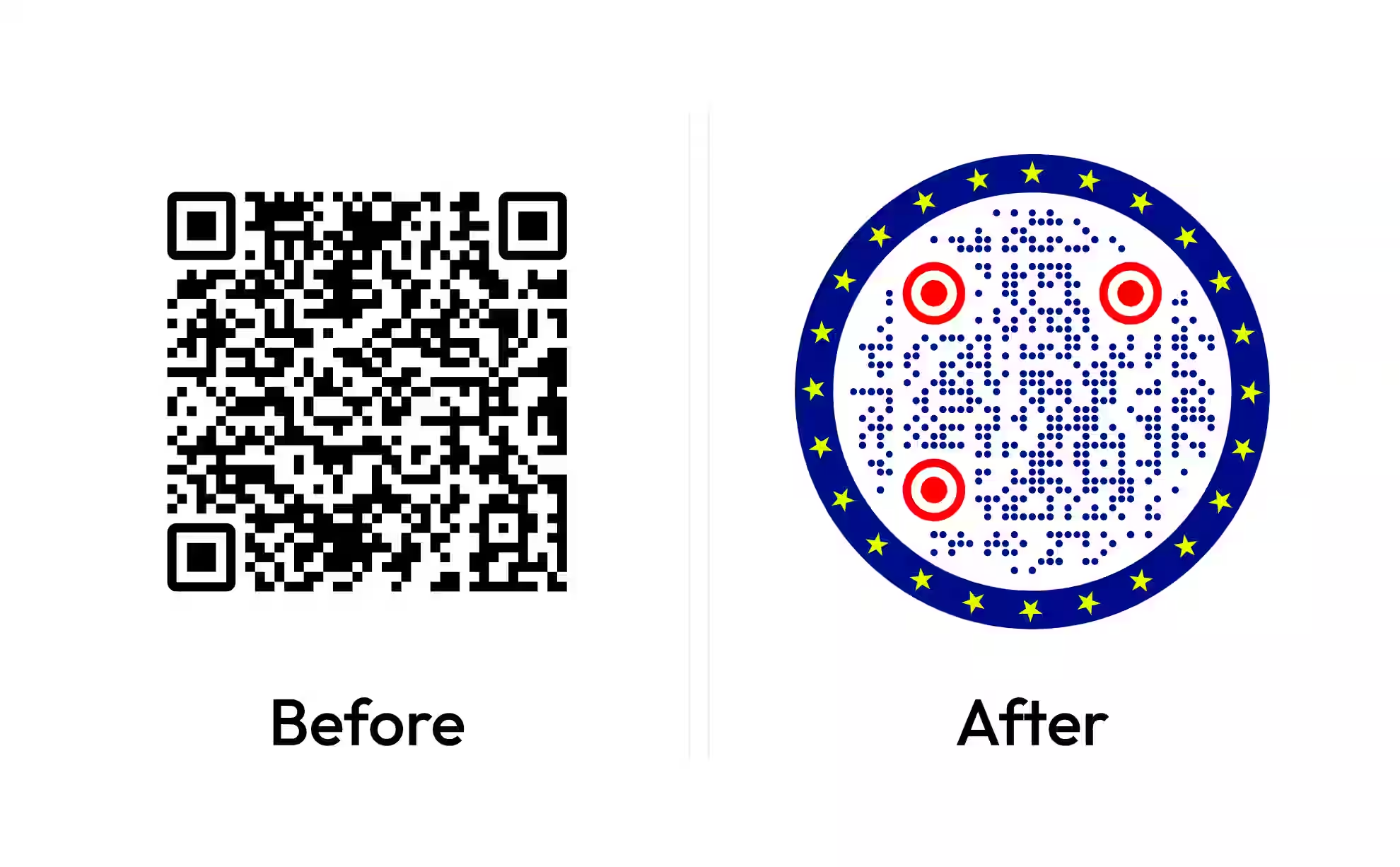
Make a QR Code for a Google Doc
Paste your document link, style the code, and download it print-ready - so a handout, a notice, or a pack of materials opens on a phone without anyone typing an address.
Opens in Google Maps. Coordinates work too - "37.4224, -122.0841".
The code opens your business's "Write a review" form. Paste the Place ID, or a Google Maps link that carries one.
A UPI link carries no checksum, so a mistyped ID produces a code that scans perfectly and pays somebody else. Paste the ID from your payment app rather than typing it, and send yourself one rupee before printing.
Paste it exactly as copied. KoloQR does not assemble the payload - it encodes the one your bank issued, and checks it before you print it.
SVG, PNG, JPG • Max 2 MB
First month free
then $9/month
Dynamic QR Codes Are Coming
Change your link anytime, even after printing. See who scans, when and where.
- Edit without reprinting
- Scan analytics
- Bulk & custom domains
You're on the List
We'll email you once, when dynamic codes with scan analytics launch.
What Is a Google Docs QR Code?
A Google Docs QR code is a QR code that stores the web address of a Google Doc, so scanning it opens that document in the phone's browser. Only the address is inside the code, never the text, which is why you can keep editing the document after the code is printed and every future scan shows the current version.
Change the End of the Link, Change What the Scan Does
A Google Docs URL ends with /edit, and that last segment is interchangeable. Swapping it is the most useful thing you can do to a document link before encoding it:
- /edit - the address from your browser bar. It opens the editor, with a toolbar, a comment sidebar, and an invitation to change your document.
- /preview - a clean read-only page with no Docs interface at all. This is the one for a handout, a notice, or anything meant to be read rather than worked on.
- /copy - opens a “Make a copy” prompt, so the reader ends up editing their own duplicate. This is how you hand out a template without twenty people typing into one file.
- /export?format=pdf - downloads the document as a PDF instead of opening it. Useful for a form somebody has to print, awkward for anything meant to be read on the phone.
All four are roughly the same length, because the document id is 40-odd characters and dominates the URL either way. So the choice costs nothing in module size and changes the whole experience of the scan. Pick /preview for reading, /copy for templates, /edit only when you genuinely want collaborators, and check which one you pasted before the artwork goes to print.
What Happens After the Scan
The scan opens the document under the sharing rules the document has, and that is where printed Docs codes fail. A document left on its default setting is private to you and to anyone you named, so every other scan lands on “You need access” with a request button - and your phone will not show you that, because your phone is signed in as the owner. The fix is one setting: General access set to “Anyone with the link”, with the role set to Viewer for a handout and Commenter or Editor only when you mean it. Organisation accounts add a second trap, because “Anyone in your organisation with the link” looks permissive in the dialog and refuses every scan from outside it. Test the printed proof in a private browser window, which is signed into nothing.
Generate QR Code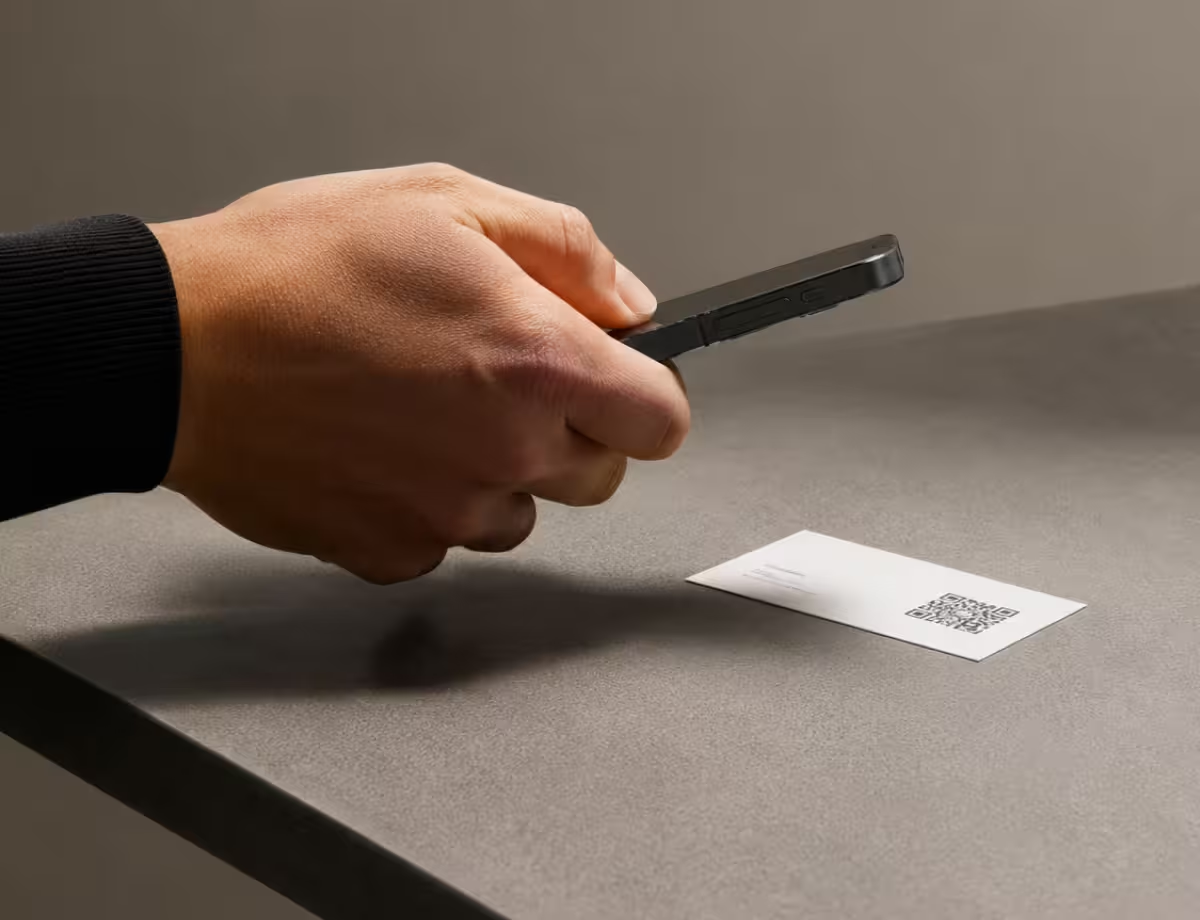
Where Google Docs QR Codes Are Used
A Docs code belongs where a paper thing needs a longer, editable, or shareable companion:
- 1
Set Sharing to Anyone With the Link
Open Share, set General access to “Anyone with the link”, and choose Viewer for a handout. This is the step that decides whether strangers can open it at all.
- 2
Decide What the Scan Should Do
Copy the link, then replace the trailing /edit with /preview for a clean read, /copy to hand out a template, or /export?format=pdf for a download.
- 3
Paste the Link and Design the Code
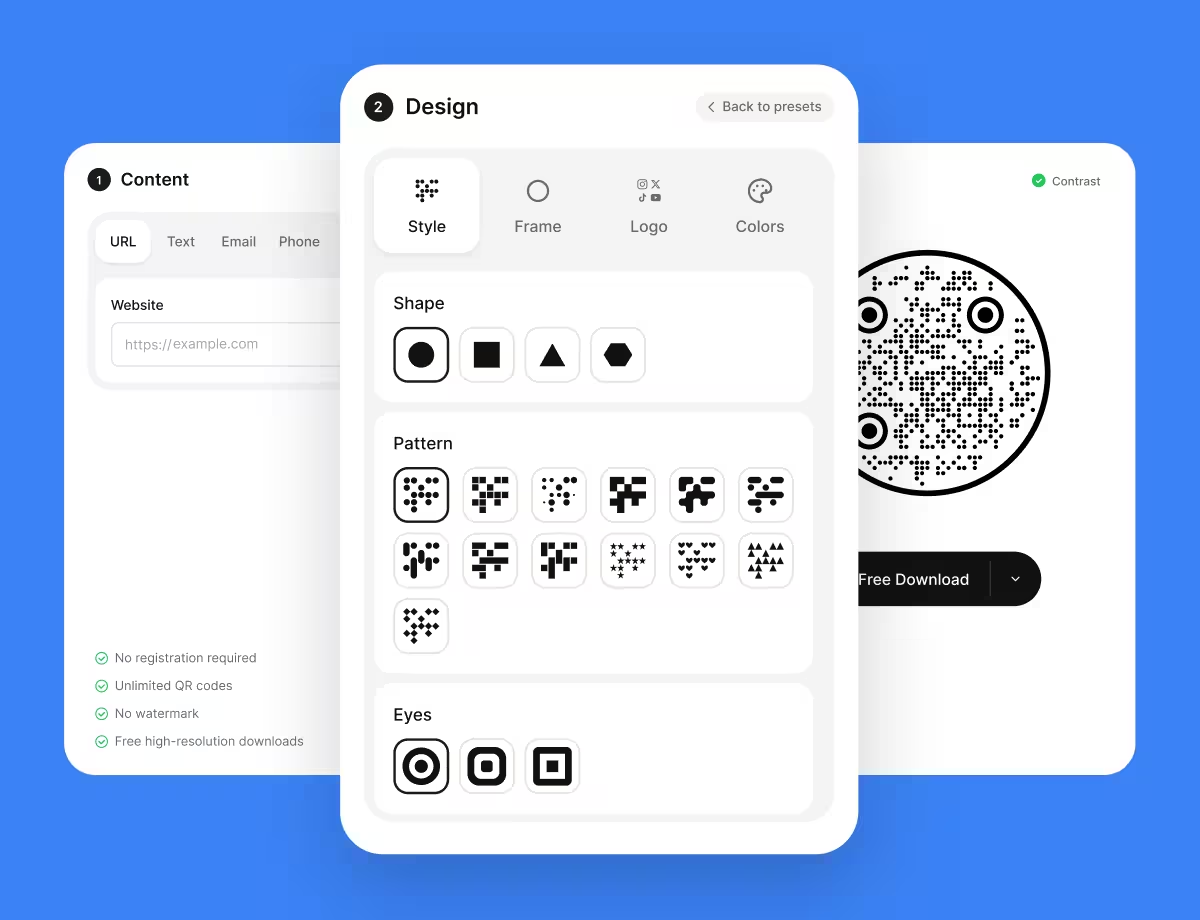
Choose the URL type, paste the link, then pick a shape and colours that match the handout, notice, or pack the code will sit on.
- 4
Test in a Private Window, Then Export
Scan the proof from a phone that is not signed into your Google account, confirm the document opens, then export SVG or PDF for print and PNG for screens.
Which File Format Should You Download?
KoloQR exports your Google Docs QR code in three formats. Pick by where it will be seen:
- PNG for slide decks, email signatures, and shared screens - anywhere the code appears at one fixed size on a display.
- SVG for handouts, notices, packs, and labels - anything a printer scales without softening the edges.
- PDF for handing to a print shop, or for dropping straight into a document at print-ready quality.
A Google Docs URL is around 90 characters, dominated by the 44-character document id, and no amount of tidying will shorten it much. That length is worth planning around rather than fighting: give the code a little more room than you would give a short link, keep the module shape simple, and print at 20 mm or larger on a handout. If the code has to be tiny, put the document behind a short link on your own domain and encode that instead.
Generate QR CodeBest Practices for Google Docs QR Codes
Almost everything that goes wrong with a printed Docs code is a sharing setting or the wrong link ending. These are the habits that avoid both:
Set Access Before You Generate the Code
“Anyone with the link - Viewer” is the setting a public handout needs. Do it first, so the link you copy is one you have already made openable.
Use /preview for Anything Meant to Be Read
It strips the toolbars and the comment sidebar, which on a phone screen are most of what the reader sees when you send them to /edit.
Use /copy to Hand Out a Template
Every reader gets their own duplicate, your original stays untouched, and you avoid the alternative of granting edit access to strangers.
Never Print an Edit Link for a Public Audience
Anyone with an edit link can rewrite or delete the contents. Version history will recover it, but only after somebody notices.
Check the Document on a Phone First
Wide tables, multi-column layouts, and large images reflow badly on a 6 cm screen. The scan is a phone scan, so proof it as one.
Keep the Document, Not the Link, as the Thing That Changes
The document id survives renaming and moving between folders. Deleting the document and making a new one is what breaks a printed code.
Say What Is Behind the Code
“Full policy”, “Editable template”, “Recipe and timings”. A bare code on a notice gives the reader no reason to spend a scan on it.
Protect the Quiet Zone
Four modules of clear margin on every side. On a dense handout header this is the first thing a layout squeezes out.
Size It for a Long Payload
A 90-character URL packs more and smaller modules into the same square, so print at 20 mm or more on a handout and about a tenth of the reading distance on a wall.
Test From an Account That Isn't Yours
Your own phone is signed in as the owner and sees a document nobody else can. A private browser window is the two-second version of this check.
Why Your Google Docs QR Code Isn't Working
The code is almost never the problem here. Sharing settings and the link's last segment account for nearly every failure below.
The Scan Says “You Need Access”
- Cause
- The document's General access is still Restricted, so only named people can open it. The owner's own phone opens it fine, which is why this survives testing.
- Fix
- Open Share, set General access to “Anyone with the link”, choose Viewer, then re-test in a private browser window rather than on your own signed-in phone.
Only People at Your Company Can Open It
- Cause
- Access was set to “Anyone in your organisation with the link”, which reads as open in the dialog and refuses every external scan.
- Fix
- Change it to “Anyone with the link”. If your admin blocks external sharing, publish to the web or export a PDF and host that instead.
The Scan Opens the Editor With a Toolbar
- Cause
- The /edit link from the address bar was encoded, so readers land in the editing interface rather than on the document.
- Fix
- Replace /edit with /preview and regenerate. The URL length barely changes and the reader gets a clean page.
Everyone Is Typing Into the Same Document
- Cause
- An edit link was shared as a template, so all the readers are editing your original at the same time.
- Fix
- Replace /edit with /copy and regenerate, then restore your original from File, Version history.
The Printed Code Scans Slowly or Only Up Close
- Cause
- A Docs URL is around 90 characters, so the symbol carries more modules than a short link and needs more physical room.
- Fix
- Print larger, simplify the module shape, or put the document behind a short link on a domain you control and encode that.
The Code Stopped Working After Months
- Cause
- The document was deleted, moved to another Drive, or its sharing was reset by an administrator. Renaming it does not do this; deleting it does.
- Fix
- Restore the document from Trash within the retention window, or recreate it and republish under a short link you control so the next reprint is not needed.
Still not sure whether the fault is the file or the print? Drop the exported image into the QR code scanner - if it decodes on a desktop and not on paper, the fault entered after the file.
Questions? Answered
A Google Docs QR code stores the web address of a Google Doc. Scanning it opens the document in the phone's browser. The text lives in Google Drive, not in the code, so editing the document never breaks a code that is already printed.
Set the document's sharing to “Anyone with the link”, copy the link, replace /edit with /preview, then paste it into a QR generator as a URL. Style the code, test it in a private browser window, and export SVG for print.
Because the document is still restricted to named people. Open Share and set General access to “Anyone with the link” with the Viewer role. Your own phone hides this problem, because it is signed in as the owner.
Replace the trailing /edit in the link with /preview before encoding it. That opens a clean read-only page with no Docs interface, which is far easier to read on a phone and cannot be accidentally edited.
Yes. Replace /edit with /copy in the link and encode that. Each reader is prompted to make their own duplicate in their own Drive, which is the correct way to hand out a template to a room full of people.
Yes. Replace /edit with /export?format=pdf and the scan downloads a PDF instead of opening the document. It suits anything meant to be printed, and reads worse than /preview for anything meant to be read on the phone.
Yes, and that is the main advantage. The code holds the document's address, so every future scan shows the current version. Renaming the document and moving it between folders are also safe; deleting it is not.
Not if the document is set to “Anyone with the link”. It opens in any phone browser without signing in. A /copy link is the exception - saving a copy to Drive does require the reader to have an account.
Because a Docs URL runs to around 90 characters, most of it a 44-character document id. More characters mean more and smaller modules in the same printed square, so give the code extra room or hide the link behind a short URL you control.
It is as public as the code. Anyone who photographs the code, or the document link, can pass it on, and link-based sharing has no way to identify who opened it. Keep anything confidential out of a document reached this way.
Keep Exploring
Pages that pick up where this one leaves off - the same setting, the same kind of code, or the next thing worth deciding.
GitHub QR Code
Send a scan to a profile, a repository, or the latest release of a project.
Schools & Classrooms
Permission forms, newsletters, library links and student work, with the print sizes and privacy rules a school actually needs.
Photographers
Client galleries, print reorders, portfolio links and guest photo uploads, on cards, albums, prints and event signs.
YouTube QR Code
Send people straight to a channel, a single video, a playlist, or the subscribe prompt.
LinkedIn QR Code
Share your LinkedIn profile or company page with a code any phone camera can read.
Google Slides QR Code
Hand out a deck, or one slide from it, straight from a printed page.
Why KoloQR?
- Create QR codes for websites, menus, Wi-Fi, PDFs, and business cards
- Customize colors, logos, and unique shapes
- Download high-quality PNG and SVG files
- Built for both print and digital