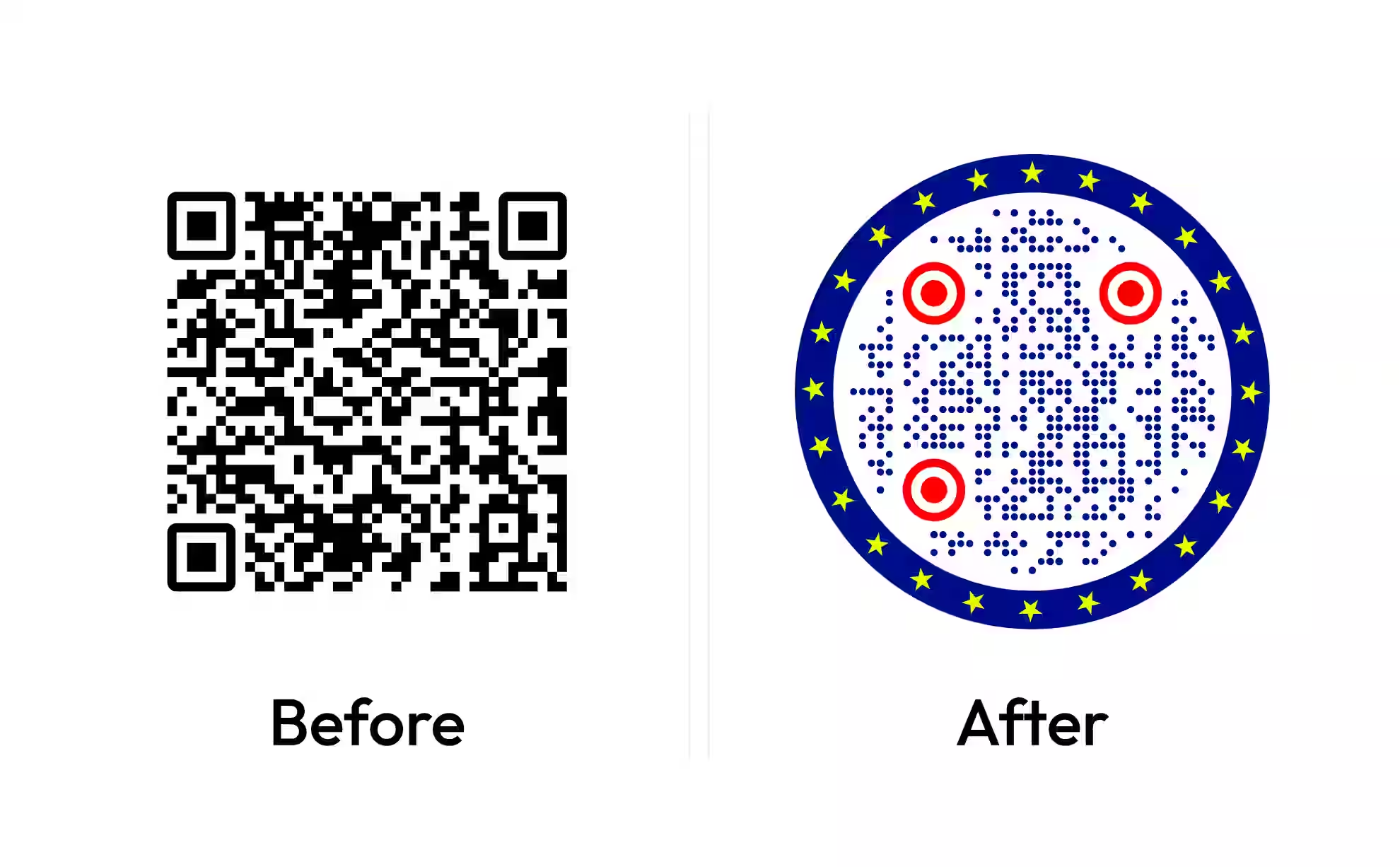
Make a QR Code for an Online Form
Paste the link to your form, style the code, and download it print-ready - so a poster, a handout, or a counter card collects submissions without anyone typing a URL.
Opens in Google Maps. Coordinates work too - "37.4224, -122.0841".
The code opens your business's "Write a review" form. Paste the Place ID, or a Google Maps link that carries one.
A UPI link carries no checksum, so a mistyped ID produces a code that scans perfectly and pays somebody else. Paste the ID from your payment app rather than typing it, and send yourself one rupee before printing.
Paste it exactly as copied. KoloQR does not assemble the payload - it encodes the one your bank issued, and checks it before you print it.
SVG, PNG, JPG • Max 2 MB
First month free
then $9/month
Dynamic QR Codes Are Coming
Change your link anytime, even after printing. See who scans, when and where.
- Edit without reprinting
- Scan analytics
- Bulk & custom domains
You're on the List
We'll email you once, when dynamic codes with scan analytics launch.
What Is a Form QR Code?
A form QR code is a QR code that stores the web address of an online form, so scanning it opens that form in the phone's browser. The questions themselves are never inside the code - only the address - which is why you can rewrite, reorder, or add questions after the code is printed without breaking anything.
Encode the Share Link, Not the Builder URL
Every form platform hands out more than one address for the same form, and they differ in length by a factor of five or more:
- The share link - tally.so/r/AbCdEf, forms.gle/AbCdEf123, form.typeform.com/to/AbCdEfGh, forms.office.com/r/AbCdEfGhIj. Roughly 17 to 30 characters. This is the one to encode.
- The builder or editor URL - the address in your browser bar while you are editing. It usually opens a permission-denied page for anyone else, and on some platforms runs past 100 characters.
- The embed URL - the address inside the iframe snippet. It is written to sit in someone else's page, so on its own it can render without your styling, or not at all.
Length is not cosmetic once the code is printed. A payload of around 20 characters fits a small symbol with few, large modules; a payload past 100 needs a larger symbol, so the same printed square holds more and smaller modules - each one harder for a camera to resolve on rough paper, at an angle, or from two metres away. Both scan on a desk. Only the short one keeps working on a poster.
What Happens After the Scan
The scan opens the form in the phone's browser, so the form's own settings decide what the reader sees - and the settings that break a printed code are all invisible from the code itself. A form that has been closed, has hit a response limit, or has passed its deadline will show a rejection page while the code scans perfectly. A form restricted to an organisation, or set to collect verified email addresses, will show a sign-in screen instead of the first question. A form still saved as a draft will show nothing at all. Test the printed proof from a phone that is not signed into the form platform, and submit a real answer, because that is the only check that exercises all three.
Generate QR Code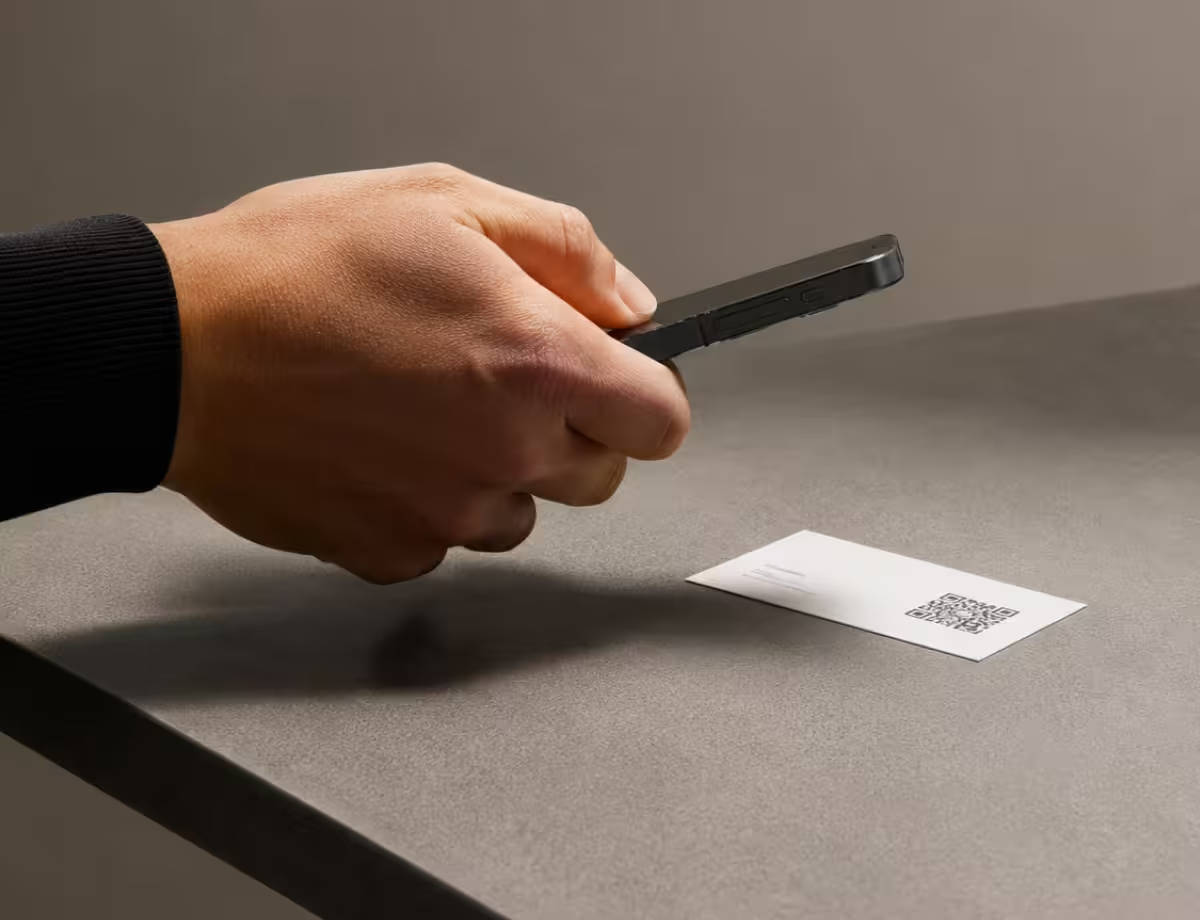
Where Form QR Codes Are Used
A form code belongs wherever the person with the answer is standing somewhere, rather than sitting at a computer:
- 1
Publish the Form and Copy Its Share Link
Take the link from the platform's share or send dialog, not from your browser's address bar. Turn on the shortened link option where the platform offers one.
- 2
Add a Source Parameter if You Print More Than One
Most platforms accept a query parameter that lands in the response - append something like ?source=window-poster so you can tell the placements apart.
- 3
Paste the Link and Design the Code
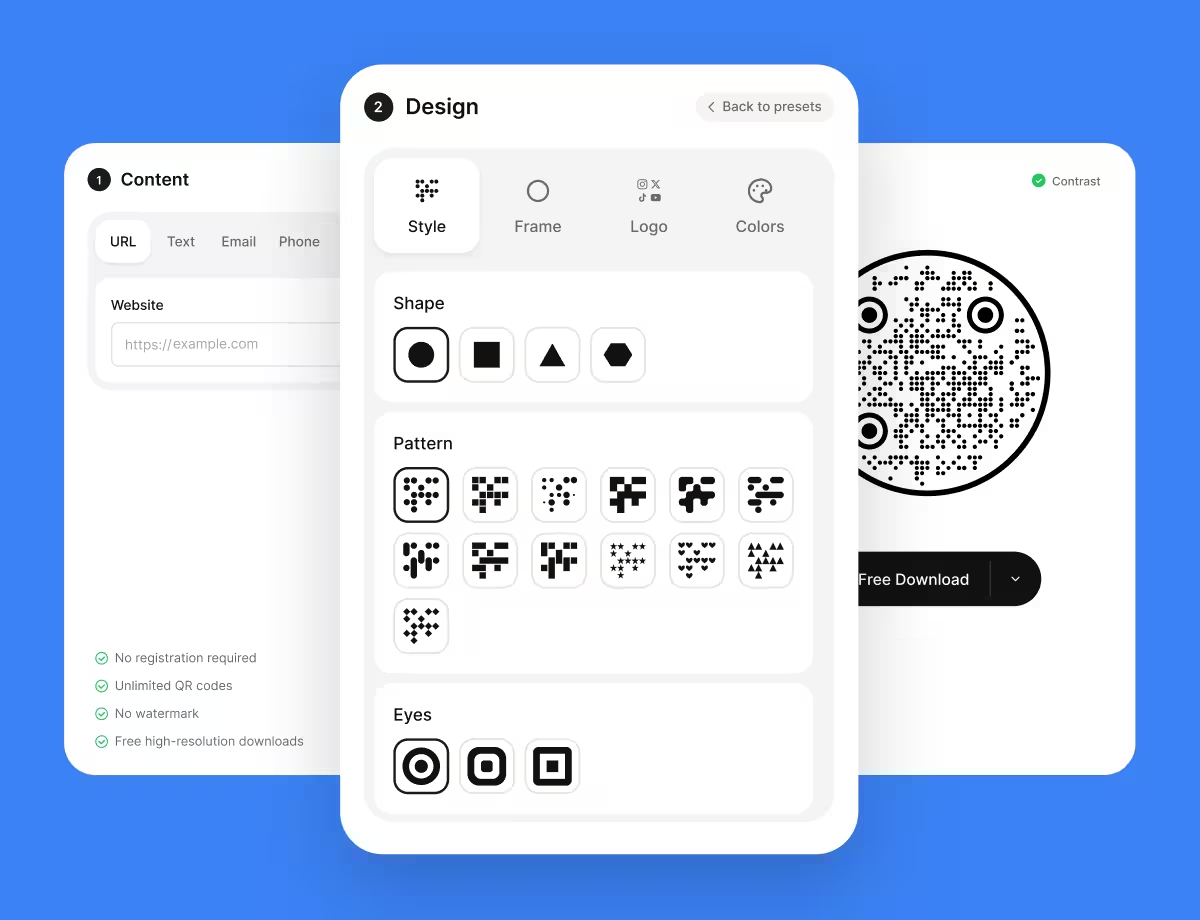
Choose the URL type, paste the link, then pick a shape and colours that match the poster, leaflet, or sticker the code will sit on.
- 4
Test Signed Out, Then Export
Scan the proof from a phone that is not signed into the form platform, submit a test answer, then export SVG or PDF for print and PNG for screens.
Which File Format Should You Download?
KoloQR exports your form QR code in three formats. Pick by where it will be seen:
- PNG for slide decks, social posts, and email signatures - anywhere the code appears at one fixed size on a screen.
- SVG for posters, leaflets, stickers, and window graphics - anything a printer scales without softening the edges.
- PDF for handing to a print shop, or for dropping straight into a handout at print-ready quality.
Choose the format before you choose the size, not after. A PNG exported at 300 px is fine on a slide and visibly soft on an A3 poster, because a raster file has one resolution and enlarging it invents nothing. SVG has no fixed size at all - the same file prints a 15 mm sticker and a 1 metre window graphic with identical edges - which is why anything going to a printer should leave as SVG or PDF.
Generate QR CodeBest Practices for Form QR Codes
A printed form code is scanned once, by someone standing up, who will not come back for a second attempt. These are the habits that respect that:
Encode the Shortest Public Link
The share link is typically 20 to 30 characters against 100 or more for a builder URL, which means larger modules in the same printed square.
Say What the Form Is and How Long It Takes
“Apply in two minutes” or “Four questions” beside the code raises completion far more reliably than a larger code does.
Don't Require an Account to Answer
A sign-in wall between the scan and the first question loses most of the people who scanned. Ask for an email as a normal question instead of a verified one.
Keep the First Question Tappable
The scan arrives on a phone in portrait. A rating or a choice opens the form; an essay box, a long grid, or a file upload closes it.
Tag Each Placement in the Link
A source parameter per poster tells you which placement worked. It records the answer's origin rather than the scan, which is the more useful of the two facts.
Check the Form Is Open Before Printing
Deadlines, response limits, and draft status all leave the code scanning and the form refusing. The reader only discovers that after scanning.
Protect the Quiet Zone
Four modules of clear margin on every side. On a crowded poster this is the first thing a layout squeezes out.
Size It for the Distance
Roughly a tenth of the reading distance: about 2 cm on a leaflet, about 20 cm on a window poster read from 2 metres.
Keep the Contrast Dark on Light
Dark modules on a light background is what phone cameras are tuned for. Inverting it, or dropping the contrast below about 40 per cent, is where a styled code starts hesitating.
Test on Two Phones Before the Print Run
One iPhone, one Android, both with the native camera app rather than a scanner app - that is what your readers will use, and it is a two-minute check.
Why Your Form QR Code Isn't Working
Most failures here are the form's settings or the link that was copied, not the code. The fixes below are mostly in the form platform.
The Scan Opens a Page Saying the Form Is Closed
- Cause
- The form has passed a deadline, hit a response limit, or been switched off. The code still resolves; the form behind it refuses.
- Fix
- Reopen the form in its settings. If it genuinely has to close on a date, print that date beside the code so a late reader knows why.
The Scan Asks People to Sign In
- Cause
- The form is restricted to an organisation, or set to collect verified email addresses. Both put an account between the scan and the first question.
- Fix
- Turn the restriction off for a public form and collect the email as an ordinary optional question instead.
The Printed Code Scans Slowly or Only Up Close
- Cause
- A long builder or embed URL was encoded, so the symbol carries far more modules than the printed size supports.
- Fix
- Regenerate from the platform's short share link. At the same printed size that alone is usually the difference between a scan that hesitates and one that fires immediately.
The Source Parameter Doesn't Show Up in Responses
- Cause
- The query string was lost - to a link shortener, a link cleaner, or a copy-paste that stopped at the question mark - or the platform needs the field declared as a hidden field first.
- Fix
- Declare the hidden field in the form builder, rebuild the full link, paste it whole, and verify by scanning rather than by clicking.
The Code Works on Your Phone but Not on Customers'
- Cause
- Your phone is signed into the account that owns the form, so it sees a version of the page nobody else does - including drafts and restricted forms.
- Fix
- Test in a private browser window or on a phone signed out of the platform. This single check catches most launch-day failures.
Still not sure whether the fault is the file or the print? Drop the exported image into the QR code scanner - if it decodes on a desktop and not on paper, the fault entered after the file.
Questions? Answered
A form QR code stores the web address of an online form. Scanning it opens the form in the phone's browser, ready to fill in. The questions live on the form platform, not in the code, so editing them never breaks a code that is already printed.
Publish the form, copy its short share link, then paste that link into a QR generator as a URL. Style the code, scan the proof from a signed-out phone, and export SVG for print or PNG for screens.
All of them. Typeform, Jotform, Microsoft Forms, Tally, Google Forms, SurveyMonkey and a contact page on your own site are all just web addresses, and a QR code can hold any web address.
The share link from the platform's share or send dialog, typically 17 to 30 characters. Avoid the builder URL from your address bar, which is longer and often permission-restricted, and the embed URL, which is written to sit inside another page.
Yes. The code holds the address, not the questions, so you can add, reword, or reorder questions freely. What you cannot change is the address itself - that is fixed the moment the code goes to print.
Yes. Append a source parameter to the link - one value per placement - and print a different code for each. The value arrives with the response, which is more useful than a scan count because it records completed answers.
About 15 to 20 mm with a short share link, which fits a sticker or a worksheet header. A long builder URL needs noticeably more room for the same reliability, which is the practical reason to shorten the link first.
Only if the form's address might change after printing, or you need scan analytics. A static code is free, never expires, and depends on no service staying online - but it points at one address forever.
Usually because your browser is signed into the form platform. A draft form, an organisation-restricted form, or an unpublished one opens for the owner and refuses everyone else. Always test signed out.
Yes. The scan opens a normal web page in the phone's browser, and the native cameras on iOS and Android have handled QR codes without an app for years. No app, and no account unless the form itself demands one.
Keep Exploring
Pages that pick up where this one leaves off - the same setting, the same kind of code, or the next thing worth deciding.
Zoom QR Code
Open a Zoom meeting, webinar registration, or personal room from a printed sign.
Event QR Codes
One scan connects guests to tickets, schedules, directions and RSVPs - on invites, posters and signage.
Schools & Classrooms
Permission forms, newsletters, library links and student work, with the print sizes and privacy rules a school actually needs.
Discord QR Code
Open a Discord server invite with one scan - if the invite is set never to expire.
Google Forms QR Code
Open a survey, sign-up sheet, or feedback form straight from a printed page.
Booking QR Code
Take an appointment, table, or room booking straight from a printed sign.
Why KoloQR?
- Create QR codes for websites, menus, Wi-Fi, PDFs, and business cards
- Customize colors, logos, and unique shapes
- Download high-quality PNG and SVG files
- Built for both print and digital