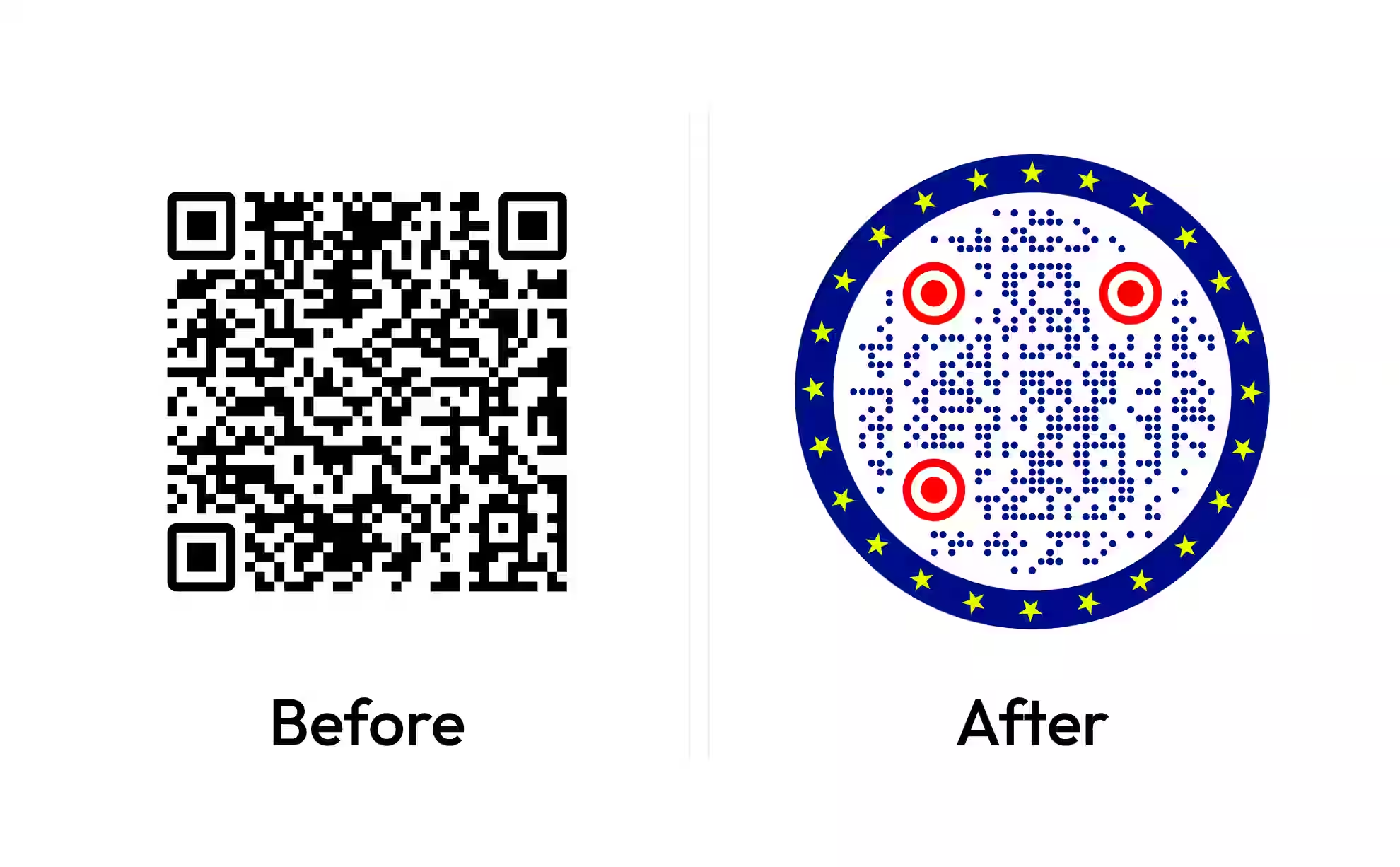
Make a QR Code for Google Drive
Paste your Drive link, style the code, and download it print-ready - so a poster, a pack, or a label hands over a file without an email or a USB stick.
Opens in Google Maps. Coordinates work too - "37.4224, -122.0841".
The code opens your business's "Write a review" form. Paste the Place ID, or a Google Maps link that carries one.
A UPI link carries no checksum, so a mistyped ID produces a code that scans perfectly and pays somebody else. Paste the ID from your payment app rather than typing it, and send yourself one rupee before printing.
Paste it exactly as copied. KoloQR does not assemble the payload - it encodes the one your bank issued, and checks it before you print it.
SVG, PNG, JPG • Max 2 MB
First month free
then $9/month
Dynamic QR Codes Are Coming
Change your link anytime, even after printing. See who scans, when and where.
- Edit without reprinting
- Scan analytics
- Bulk & custom domains
You're on the List
We'll email you once, when dynamic codes with scan analytics launch.
What Is a Google Drive QR Code?
A Google Drive QR code is a QR code that stores the web address of a file or folder in Google Drive, so scanning it opens that item in the phone's browser. The file itself never enters the code - only its address - which is why a 400 MB video and a one-page PDF produce codes of exactly the same size.
File, Folder, or Direct Download
Drive gives three useful addresses, and they behave differently on a phone. Each is built around the same 33-character file id:
- drive.google.com/file/d/<id>/view - one file in Drive's own preview. PDFs, images and video play in the browser, which is what most printed codes should point at.
- drive.google.com/drive/folders/<id> - a folder listing. The reader sees whatever is in it at the moment they scan, including anything you add later by accident.
- drive.google.com/uc?export=download&id=<id> - starts the download immediately, with no preview. Right for a file meant to be kept, wrong for anything meant to be looked at once.
Prefer the file link over the folder link whenever the printed piece names one thing. A folder is a live surface: it shows what is in it right now, its contents can be renamed under a reader who bookmarked it, and it exposes every file you drop in later to everyone who ever scanned the code. A folder code is the right answer for a genuine collection - a conference's slide archive, a product's manual set - and the wrong one for “the PDF from the poster”.
What Happens After the Scan
Two settings decide whether the scan works for anyone but you, and both are invisible from your own phone. The first is sharing: a Drive item defaults to private, so unless General access is set to “Anyone with the link”, every outside scan lands on a request-access screen while your own phone opens the file perfectly. The second is quota. Google applies a download and view limit to files that get an unusual amount of traffic, and a file that hits it answers “Sorry, you can't view or download this file at this time” for roughly 24 hours - to everybody, including you. A QR code printed at scale is exactly the kind of traffic that triggers it, which is why a file expected to be popular belongs on ordinary web hosting rather than in Drive. Test the printed proof in a private browser window before the run, and put anything you expect thousands of scans on somewhere without a quota.
Generate QR Code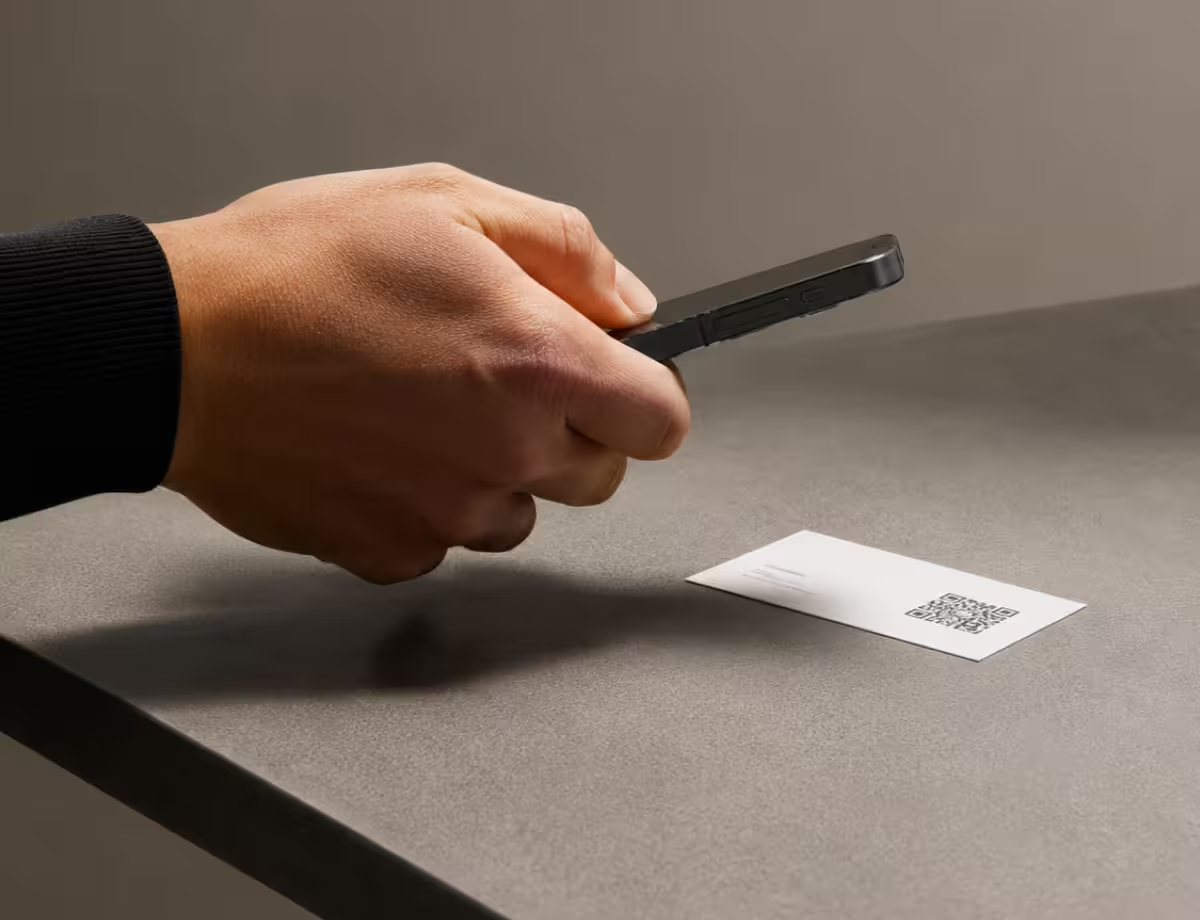
Where Google Drive QR Codes Are Used
A Drive code belongs where a file has to reach somebody who is standing next to a physical thing:
- 1
Set Sharing to Anyone With the Link
Right-click the file or folder, choose Share, set General access to “Anyone with the link”, and pick Viewer. Nothing else in this list matters until this is done.
- 2
Copy the Link You Actually Want
Use the file link for a single item, the folder link for a genuine collection, or rebuild it as drive.google.com/uc?export=download&id=<id> to download straight away.
- 3
Paste the Link and Design the Code
Choose the URL type, paste the link, then pick a shape and colours that match the label, poster, or pack the code will sit on.
- 4
Test in a Private Window, Then Export
Scan the proof from a phone that is not signed into your Google account, open the file, then export SVG or PDF for print and PNG for screens.
Which File Format Should You Download?
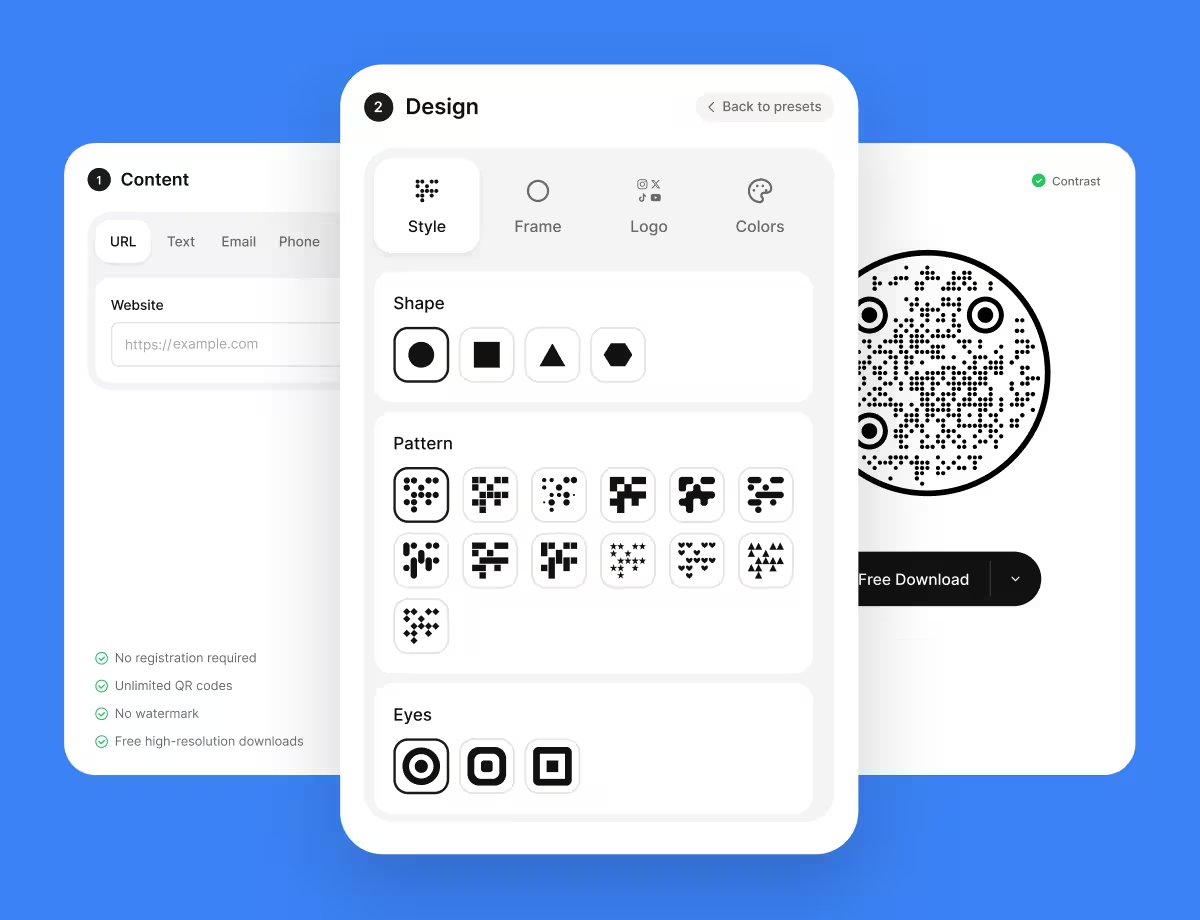
KoloQR exports your Google Drive QR code in three formats. Pick by where it will be seen:
- PNG for slide decks, screens, and email signatures - anywhere the code appears at one fixed size on a display.
- SVG for equipment labels, posters, packs, and window signs - anything a printer scales without softening the edges.
- PDF for handing to a print shop, or for a document that carries the code at print-ready quality.
Equipment labels are where Drive codes are hardest on the printing. A label on a machine lives with oil, cleaning fluid, sunlight and abrasion, so it wants a laminated or synthetic stock, a size well above the theoretical minimum, and the highest error correction the design allows - which lets the symbol keep decoding with a corner scratched away. Export as SVG so the label printer can scale it, and expect to replace the label long before the file behind it changes.
Generate QR CodeBest Practices for Google Drive QR Codes
Drive codes fail for reasons that have nothing to do with the code, so most of these habits are about the file behind it:
Set Access Before You Generate the Code
“Anyone with the link - Viewer” is what a public file needs. Your own phone will open a private file happily, so this must be set rather than tested for.
Link a File, Not a Folder, Unless It Is Really a Collection
A folder shows whatever it contains at scan time. Anything you add to it later becomes public to everyone who has ever seen the code.
Don't Put a High-Traffic File in Drive
Drive limits downloads on files with unusual traffic and blocks them for about a day. For a print run of any size, host the file on a normal web server instead.
Say What the File Is and How Big
“Manual, PDF, 4 MB” beside the code lets someone on mobile data decide. A bare code that starts a 300 MB download is a bad surprise.
Keep the Same File Rather Than Uploading a New One
The file id survives renaming and moving between folders. Uploading a replacement creates a new id and breaks every printed code.
Use the Direct-Download Link Only When Downloading Is the Point
It skips the preview entirely, which is right for a template someone must keep and wrong for anything they only want to read once.
Check Large Files Are Actually Downloadable
Above roughly 100 MB, Drive shows a page saying it cannot scan the file for viruses before letting the download proceed. It works, but the reader has to tap through it.
Protect the Quiet Zone
Four modules of clear margin on every side. On an equipment label crowded with warnings, this is the first thing a layout squeezes out.
Size It for a Long Payload
A Drive URL runs to around 60 characters or more, so the symbol packs smaller modules - print at 20 mm or larger on a label, and about a tenth of the reading distance on a sign.
Test From an Account That Isn't Yours
A private browser window is signed into nothing, which is the state your readers are in. It catches the sharing mistake that survives every other check.
Why Your Google Drive QR Code Isn't Working
Sharing, quota, and replaced files account for almost every Drive code failure. None of them is visible from the owner's own phone.
The Scan Asks People to Request Access
- Cause
- The item's General access is still Restricted, so only named people can open it. Your own phone opens it because it is signed in as the owner.
- Fix
- Open Share, set General access to “Anyone with the link” with the Viewer role, then re-test in a private browser window.
“Sorry, You Can't View or Download This File at This Time”
- Cause
- The file exceeded Drive's download quota for heavily accessed items - normally because a lot of people scanned the same code within a short period.
- Fix
- Wait around 24 hours for the limit to reset, then move the file to ordinary web hosting, or to a copy in a different account, before the next print run.
The Code Worked Until You Updated the File
- Cause
- A new file was uploaded rather than the existing one being updated, so the id in the printed link now points at nothing.
- Fix
- Use File, Manage versions to upload a new version of the same file, which keeps the id. If the file is already replaced, restore the old one from Trash.
Only People at Your Company Can Open It
- Cause
- Access is set to “Anyone in your organisation with the link”, which reads as open in the dialog and refuses everyone outside it.
- Fix
- Change it to “Anyone with the link”. If your administrator forbids that, host the file outside Drive rather than working around the policy.
The Download Shows a Virus Warning Page
- Cause
- The file is large enough that Drive cannot scan it, so it shows an interstitial before the download starts. This is normal behaviour, not a fault.
- Fix
- Nothing to fix in the code. Print “large file - tap Download anyway” beside it, or split the file so it falls under the scanning limit.
The Printed Code Scans Slowly or Only Up Close
- Cause
- The Drive URL is long and the code was printed at a size chosen for a short link.
- Fix
- Print larger, simplify the module shape, or put the file behind a short link on a domain you control and encode that instead.
Still not sure whether the fault is the file or the print? Drop the exported image into the QR code scanner - if it decodes on a desktop and not on paper, the fault entered after the file.
Questions? Answered
A Google Drive QR code stores the address of a file or folder in Drive. Scanning it opens that item in the phone's browser. The file stays in Drive, so a code for a 400 MB video is exactly the same size as one for a small PDF.
Set the file's sharing to “Anyone with the link”, copy its link, then paste it into a QR generator as a URL. Style the code, scan the proof in a private browser window, and export SVG for print or PNG for screens.
Because the file is still private. Open Share and set General access to “Anyone with the link” with the Viewer role. Your own phone opens it either way, since it is signed in as the owner, so always test signed out.
Yes. Rebuild the link as drive.google.com/uc?export=download&id= followed by the file id, and the scan starts the download with no preview. Use it for files meant to be kept, not for anything meant to be read once.
Link a file whenever the printed piece names one thing. A folder shows whatever it contains at the moment of the scan, which means anything you add to it later becomes visible to everyone who ever scanned the code.
Yes. Drive limits downloads on files with unusually high traffic and returns “you can't view or download this file at this time” for around a day. For a large print run, host the file on ordinary web hosting instead.
Yes, if you keep the same file. Use File, Manage versions to upload a new version, which preserves the id in the printed link. Uploading a separate new file creates a new id and breaks every code already printed.
No, as long as sharing is set to “Anyone with the link”. The file opens in any phone browser without signing in. Saving a copy into their own Drive is the only step that needs an account.
No. A link-shared file is open to anyone who has the link, and a printed code can be photographed and passed on. Drive records no identity for link access, so keep anything confidential out of a file reached this way.
At least 20 mm on a label or handout, and roughly a tenth of the reading distance on a sign. A Drive URL is long, so the symbol packs smaller modules than a short link at the same size - err upwards rather than down.
Keep Exploring
Pages that pick up where this one leaves off - the same setting, the same kind of code, or the next thing worth deciding.
Schools & Classrooms
Permission forms, newsletters, library links and student work, with the print sizes and privacy rules a school actually needs.
Event QR Codes
One scan connects guests to tickets, schedules, directions and RSVPs - on invites, posters and signage.
URL QR Code
Send anyone straight to a web page, landing page, or link with a single scan.
YouTube QR Code
Send people straight to a channel, a single video, a playlist, or the subscribe prompt.
Google Forms QR Code
Open a survey, sign-up sheet, or feedback form straight from a printed page.
Amazon QR Code
Take a scan straight to a product page, a storefront, or a wish list.
Why KoloQR?
- Create QR codes for websites, menus, Wi-Fi, PDFs, and business cards
- Customize colors, logos, and unique shapes
- Download high-quality PNG and SVG files
- Built for both print and digital