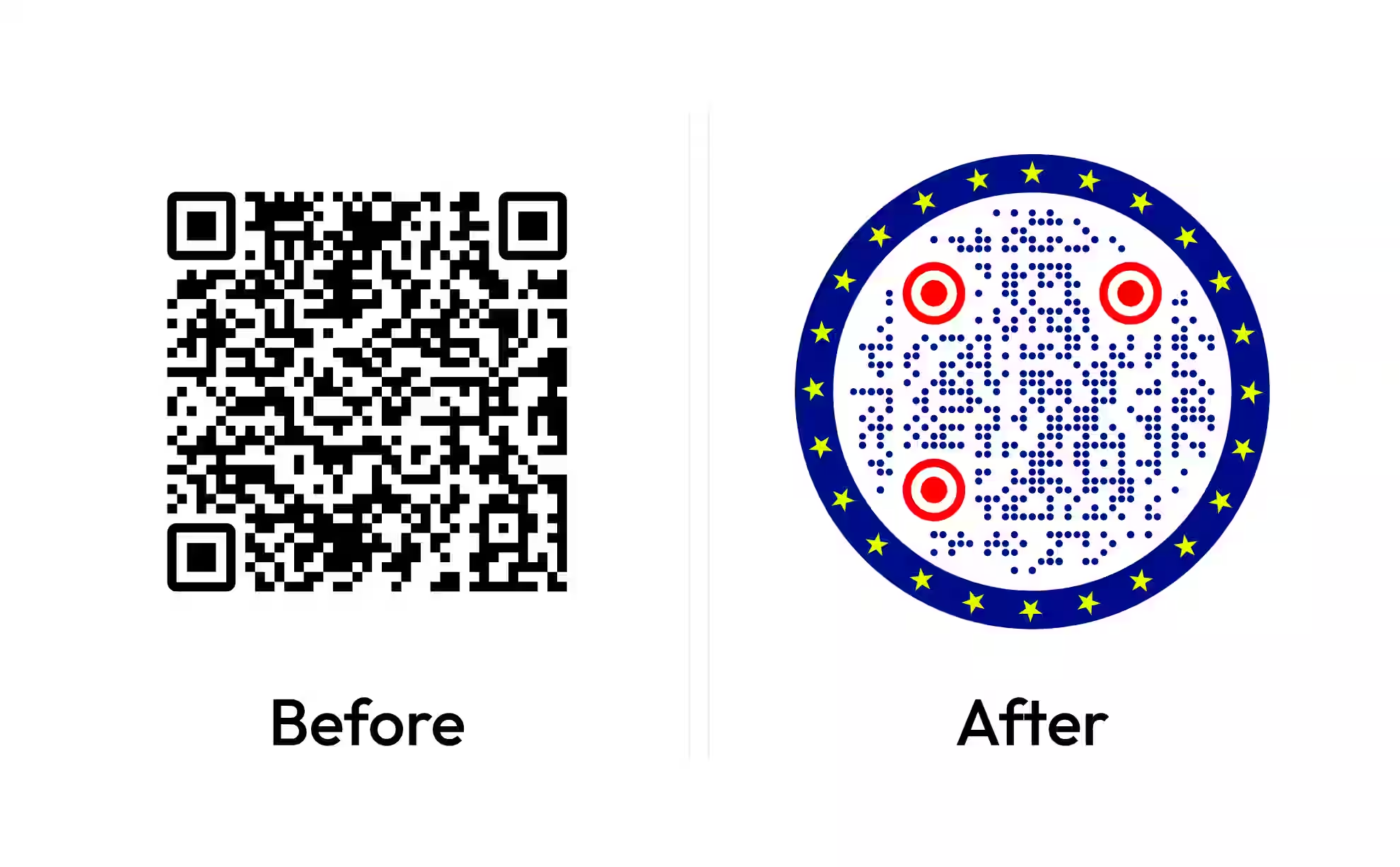
Make an Event QR Code People Can Add to Their Calendar
Enter the name, place, and times, style the code to match your invitation, and download one that opens a ready-made calendar entry - no link, no page, no login.
Opens in Google Maps. Coordinates work too - "37.4224, -122.0841".
The code opens your business's "Write a review" form. Paste the Place ID, or a Google Maps link that carries one.
A UPI link carries no checksum, so a mistyped ID produces a code that scans perfectly and pays somebody else. Paste the ID from your payment app rather than typing it, and send yourself one rupee before printing.
Paste it exactly as copied. KoloQR does not assemble the payload - it encodes the one your bank issued, and checks it before you print it.
SVG, PNG, JPG • Max 2 MB
First month free
then $9/month
Dynamic QR Codes Are Coming
Change your link anytime, even after printing. See who scans, when and where.
- Edit without reprinting
- Scan analytics
- Bulk & custom domains
You're on the List
We'll email you once, when dynamic codes with scan analytics launch.
What Is an Event QR Code?
An event QR code is a QR code that stores a calendar entry rather than a web address. Scanning it offers to add an event - its name, place, start and end - to the phone's own calendar. Because the entry is written into the pattern, the code needs no link, no page, and no internet connection at the moment it is scanned.
The Code Holds a File, Not a Link
What is inside an event code is a fragment of the iCalendar format - the same standard behind every .ics attachment:
- SUMMARY - the event's name, and the line the phone shows as the calendar entry's title.
- DTSTART and DTEND - the start and end, written as a compact timestamp like 20260614T190000. The end is optional; without one, phones assume a short default.
- LOCATION - the venue as free text. Tapping it in the calendar hands it to the phone's map app, which is why writing a findable address here matters more than writing a pretty one.
That is the whole payload, and it is why this type behaves unlike every other one on the site: nothing is fetched, so a printed event code works in a field with no signal, and it keeps working after any website behind the event has gone. The trade is that it is fixed at print time - move the date and every printed code is wrong, with no redirect to save you.
Time Zones Are the Thing to Get Right
An event QR code written without a time zone stores what iCalendar calls floating local time: 19:00 means 19:00 on whatever clock the scanning phone is set to. For an event held in one place, that is exactly the behaviour you want - a guest whose phone is still on last week's holiday time zone still sees 19:00, which is when the doors actually open. For anything remote it is the wrong behaviour, and quietly so: a webinar at 15:00 UTC lands at 15:00 in every attendee's calendar regardless of where they are, so most of them will miss it and none of them will know why. The rule that follows is simple. Use an event QR code for things that happen at a place - a wedding, a gig, a market, a conference session - where local time is the truth. For a call, a stream, or anything an international audience joins from home, print a link to a page that states the time zone in words, and let the calendar entry come from there.
Generate QR Code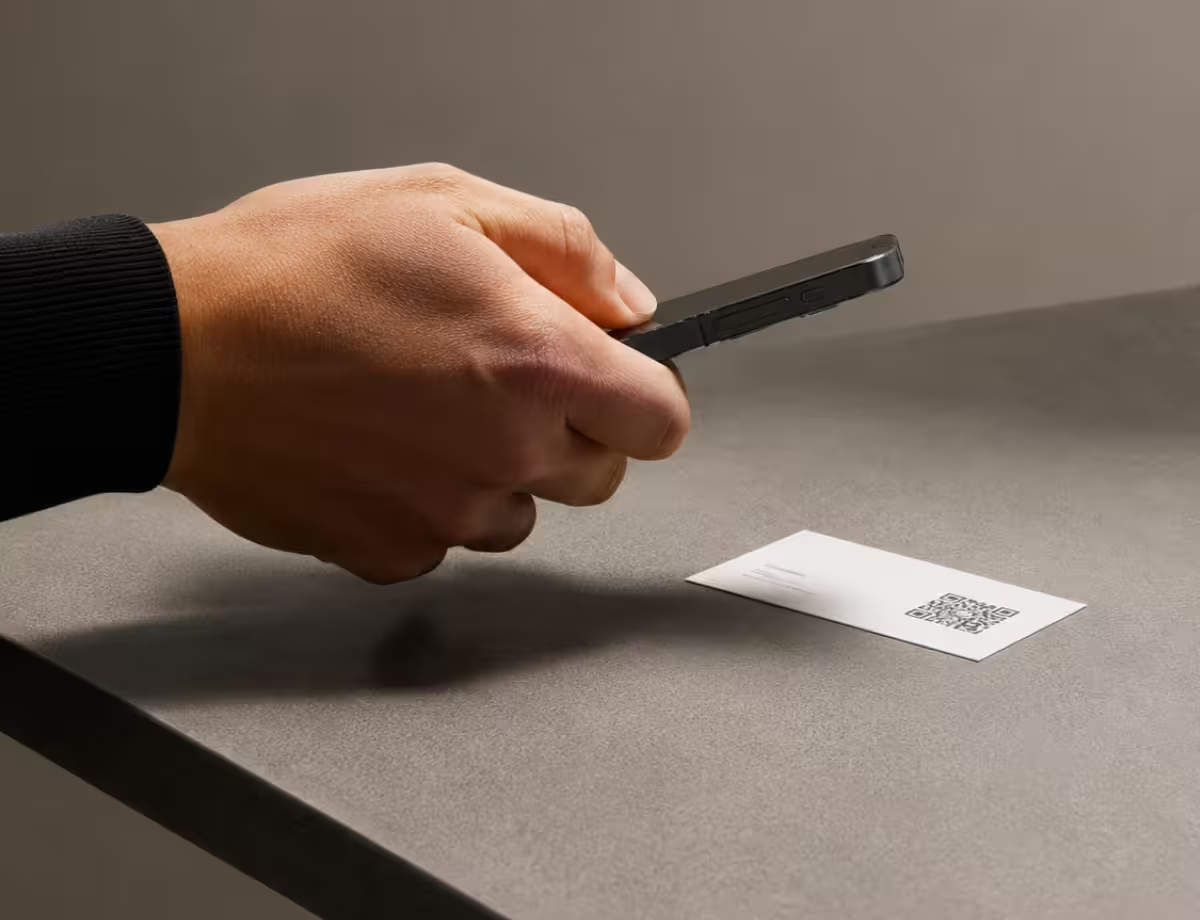
Where Event QR Codes Are Used
The scan replaces the copying-out step - the moment when someone reads a date off paper and types it into a phone, or means to and never does.
- 1
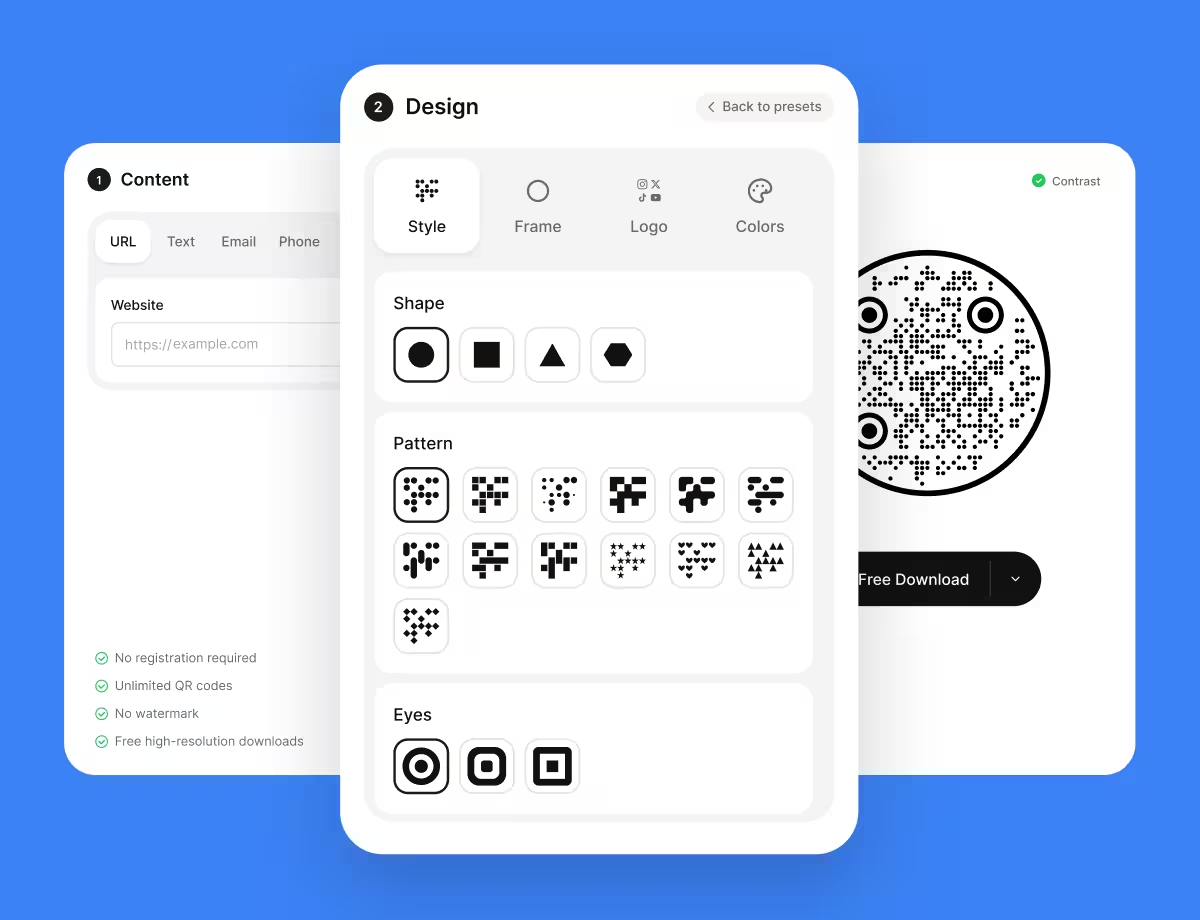
Open the Type Picker and Choose Event
Event sits under More, in the Location & Events group. Picking it swaps the URL field for a name, a location, and start and end times.
- 2
Write the Name as It Should Read in a Calendar
It will sit in a list beside dentist appointments, so name the event, not the campaign: “Anna & Tom's Wedding” rather than “You're Invited!”.
- 3
Give the Location as a Findable Address
Whatever you type here is what the phone hands to its map app when someone taps it. A venue name alone is a gamble; a venue name plus street and town is not.
- 4
Set Both Times, Then Test and Export
Fill in the end as well as the start, so the entry doesn't default to an hour. Scan the exported file on an iPhone and an Android phone before printing, then export SVG or PDF for print.
Which File Format Should You Download?
KoloQR exports your event QR code in three formats. Pick by where it will be seen:
- PNG for emails, social posts, and listings pages, where the code appears at one fixed size.
- SVG for posters, invitations, and programme boards - anything a printer will scale without softening the edges.
- PDF for handing to a print shop or dropping into an invitation artwork file at print-ready quality.
Density matters more here than on any other type. A calendar entry with a long name and a full address can run past 150 characters, where a short link runs to 25 - so the same square holds three or four times as many modules. Export vector and print it a size larger than you would a link code.
Generate QR CodeBest Practices for Event QR Codes
An event code is fixed at print time and read by two operating systems that treat calendar data slightly differently. These habits cover both problems:
Keep the Text Short
Every character in the name and the address becomes modules. A concise name and a compact address are worth more here than anywhere else, because they are the difference between a code that scans from a metre away and one that doesn't.
Always Set an End Time
With no DTEND, phones fall back to their own default - often an hour - and a five-hour event lands in the calendar as a one-hour slot that people schedule over.
Write the Location as an Address
The location line is handed to the map app when tapped. “The Old Corn Exchange” is ambiguous; the same name with a street and town resolves.
Use It for Events That Have a Place
The times are local to whoever scans, which is right for a venue and wrong for a webinar. Print a link instead for anything an international audience joins remotely.
Print the Date in Words Beside the Code
Not everyone scans, and a poster that only carries its date inside a QR code is a poster that fails for half its readers. The code saves typing; it should never be the only source.
Test on Both iOS and Android
Apple's camera surfaces a calendar suggestion directly; several Android camera apps show the raw text first and need one more tap. Both work, but you should know which journey your audience gets.
Regenerate After Any Change
There is no redirect behind an event code. A moved date, a new venue, a corrected time - each one means a new code and, if it is already printed, a reprint.
Add a Link for Anything That Needs Detail
The calendar entry holds a name, a place, and times. Tickets, parking, dress code and running order belong on a page - print a URL QR code beside it and label the two differently.
Keep Contrast and the Quiet Zone
Dark modules on light, four modules of clear margin. A dense event pattern is less forgiving of a borrowed margin than a sparse one.
Size It for the Distance
Roughly a tenth of the reading distance, and then a little more for density: about 3 cm on an invitation held in the hand, 25-30 cm on a poster read from 2-3 metres.
Why Your Event QR Code Isn't Working
An event code fails differently from a link code, because there is no page at the other end to blame. These four are the cases.
The Phone Shows Raw Text Instead of a Calendar Entry
- Cause
- The scanning app is a general QR reader rather than the phone's camera, or an Android camera app that displays the decoded content and leaves the action to the user.
- Fix
- Scan with the native camera on both platforms when testing. If your audience uses in-app scanners - inside a banking or messaging app, say - assume they will see text and print the date in words too.
The Event Is Saved at the Wrong Time
- Cause
- The times are floating local time, so they land at that clock reading in whatever zone the phone is in. A guest whose phone is set to another zone gets the intended local time; a remote attendee does not.
- Fix
- This is correct behaviour for a venue event. For anything remote, drop the event code and print a link to a page that states the time zone explicitly.
The Calendar Entry Is Only an Hour Long
- Cause
- No end time was set, so the phone applied its own default duration rather than the length of your event.
- Fix
- Regenerate with the Ends field filled in. For an all-day or multi-day event, set the end to the real finish rather than leaving it to the handset.
The Code Won't Scan From a Poster
- Cause
- The payload is long. A calendar entry with a full name and address needs a higher symbol version, which means more, smaller modules in the same printed square.
- Fix
- Shorten the name and the address, then print larger and from SVG or PDF rather than an upscaled PNG. Density and print size are the two levers, and long copy costs you both.
Still not sure whether the fault is the file or the print? Drop the exported image into the QR code scanner - if it decodes on a desktop and not on paper, the fault entered after the file.
Questions? Answered
An event QR code stores a calendar entry - name, location, start and end - instead of a web address. Scanning it offers to add that event to the phone's calendar, with nothing fetched from the internet.
Choose Event in KoloQR's type picker, enter the name, location, start and end, then style and download. No account is needed, and guests need no app or login to use it.
Yes. The calendar entry is encoded in the pattern itself, so the phone reads it directly. It works in a field with no signal, and it keeps working after any website about the event has gone.
The phone's own. The times are stored as floating local time, so 19:00 means 19:00 wherever it is scanned. That's right for an event at a venue and wrong for a webinar with an international audience.
No. A static event code holds the date in the pattern, with no redirect behind it. If the date might move, print a link to an event page instead and let people add the entry from there.
Yes, with a difference in journey. Apple's camera surfaces a calendar suggestion directly; some Android camera apps show the decoded text first and need one more tap. Test on both before a print run.
Not reliably. Phones handle a single event well and repeat rules inconsistently. For a series, print one code per date, or link to a calendar page that people can subscribe to.
Because a calendar entry is longer than a link. A name plus a full address can run past 150 characters against a short URL's 25, which pushes the symbol to a higher version. Shorten the text or print larger.
Both, labelled. The event code saves the date without an account; a URL QR code handles anything that needs a page - price, parking, running order. One square cannot do both jobs.
No. Nothing is fetched when the code is scanned, so there is no server anywhere to record it. If you need numbers, use a link code to a page you control and let people add the event from there.
Keep Exploring
Pages that pick up where this one leaves off - the same setting, the same kind of code, or the next thing worth deciding.
Weddings
One code on the invitation, linking guests to your RSVP form, the schedule and directions, and a shared photo album afterwards.
Photographers
Client galleries, print reorders, portfolio links and guest photo uploads, on cards, albums, prints and event signs.
Halloween QR Codes
Pumpkin, purple, slime and bone palettes for invitations, porch signs, scavenger hunts and costumes - with the contrast and size numbers that keep each one scanning in the dark.
Invitations
Weddings, parties and formal invitations - where the code belongs, how small it can go, and which finishes and overlays block it.
Tickets
Entry codes and information codes on the same stub - how to separate them, size them, and stop thermal stock fading before the door opens.
WhatsApp QR Code
Open a WhatsApp chat with your number in one scan, without anyone saving your contact first.
Why KoloQR?
- Create QR codes for websites, menus, Wi-Fi, PDFs, and business cards
- Customize colors, logos, and unique shapes
- Download high-quality PNG and SVG files
- Built for both print and digital