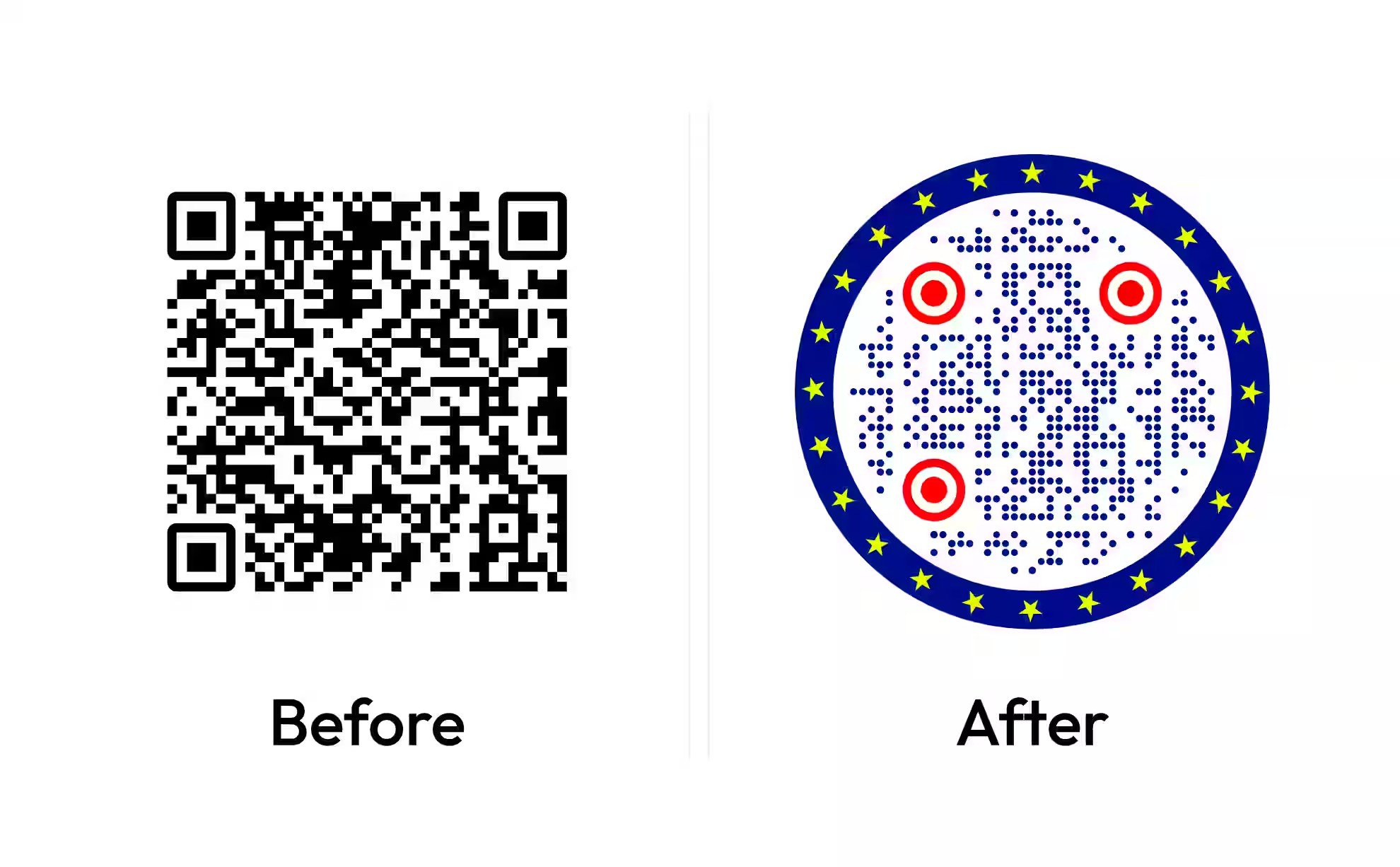
Make a Tripadvisor QR Code
Paste your Tripadvisor review link, style the code, and download it print-ready - so a table card, a receipt, or a room folder opens the review form in one scan.
Opens in Google Maps. Coordinates work too - "37.4224, -122.0841".
The code opens your business's "Write a review" form. Paste the Place ID, or a Google Maps link that carries one.
A UPI link carries no checksum, so a mistyped ID produces a code that scans perfectly and pays somebody else. Paste the ID from your payment app rather than typing it, and send yourself one rupee before printing.
Paste it exactly as copied. KoloQR does not assemble the payload - it encodes the one your bank issued, and checks it before you print it.
SVG, PNG, JPG • Max 2 MB
First month free
then $9/month
Dynamic QR Codes Are Coming
Change your link anytime, even after printing. See who scans, when and where.
- Edit without reprinting
- Scan analytics
- Bulk & custom domains
You're on the List
We'll email you once, when dynamic codes with scan analytics launch.
What Is a Tripadvisor QR Code?
A Tripadvisor QR code is a QR code that stores the web address of a business's Tripadvisor page or review form, so scanning it opens that page in the phone's browser. The code carries only the address - never the reviews - which means the same printed card keeps working as your rating, your photos, and your ranking all change.
Link to the Review Form, Not to Your Listing
Tripadvisor has two addresses that matter, and the difference between them is several taps at the exact moment a guest is deciding whether to bother:
- The listing page - Restaurant_Review or Hotel_Review followed by your -g and -d ids. It opens your reviews, photos and ranking, and hides the write-a-review button below them.
- The review form - a UserReviewEdit address built from the same two ids. It opens the rating and the comment box directly, which is what a table card should do.
- The short review link from the Management Center - Tripadvisor gives claimed businesses their own review link and QR tools. Where it is available it is the shortest and most durable option.
Whichever you use, the durable part of a Tripadvisor URL is the pair of numbers: -g is the geographic id and -d is the location id, and together they identify your business permanently. The readable words between them are decoration, and Tripadvisor rewrites them when a business is renamed or recategorised. So when you copy a link, copy it whole rather than tidying it, and never retype it by hand - a single wrong digit in the -d id sends every guest to a different business.
What Tripadvisor Allows You to Ask For
Tripadvisor's guidelines let a business ask every guest for a review, and a QR code on a table card, a receipt, or a room folder is a normal way to do it. What the guidelines forbid is worth knowing before you print. You may not offer anything in exchange for a review - no discount, no free drink, no prize draw entry - and you may not ask selectively, which includes asking only the guests who seemed happy or screening people with a satisfaction question first. Wording matters too: “Tell us how we did on Tripadvisor” is fine, “Leave us a five-star review” is not, because asking for a specific rating is soliciting a biased one. The safe formula is a neutral invitation, the same one, offered to everybody, with nothing attached to it.
Generate QR Code
Where Tripadvisor QR Codes Are Used
A review code belongs where the visit is ending and the guest still has their phone in their hand:
- 1
Open Your Own Tripadvisor Listing
Find your business on Tripadvisor and open its page. If you have claimed it, check the Management Center first - it may already offer a short review link.
- 2
Take the Write-a-Review Address
Click the review button and copy the whole address from the browser bar, including the -g and -d ids. Never retype it: one wrong digit points at another business.
- 3
Paste the Link and Design the Code
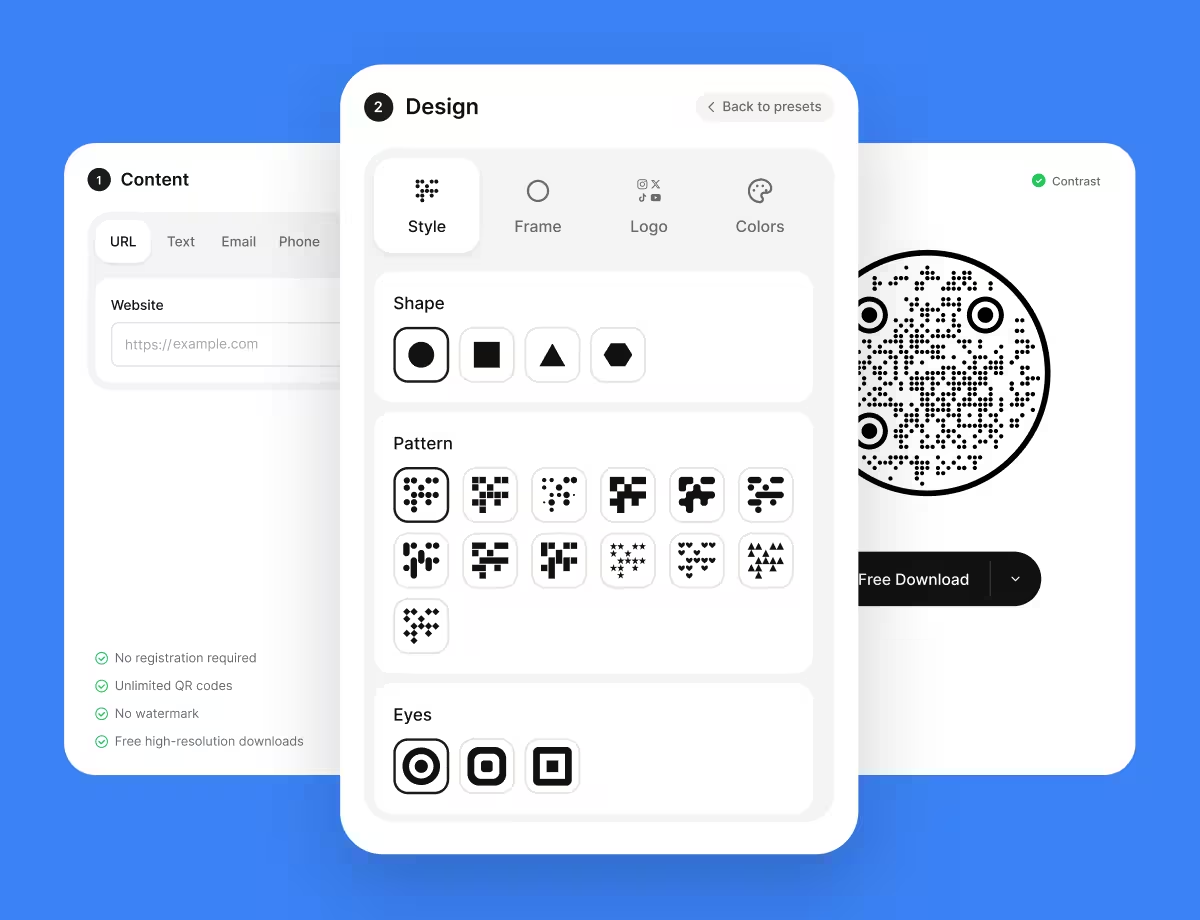
Choose the URL type, paste the link, then pick colours and a shape that match the table card, folder, or receipt the code will sit on.
- 4
Test Signed Out, Then Export
Scan the proof from a phone that is not signed into Tripadvisor, confirm it opens your business and not a neighbour's, then export SVG or PDF for print.
Which File Format Should You Download?
KoloQR exports your Tripadvisor QR code in three formats. Pick by where it will be seen:
- PNG for emails, screens at reception, and social posts - anywhere the code appears at one fixed size on a display.
- SVG for table cards, bill folders, room signage, and stickers - anything a printer scales without softening the edges.
- PDF for handing to a print shop, or for dropping into a receipt template at print-ready quality.
Tripadvisor review URLs are long - the geography id, the location id, and the business name together push a full write-a-review address well past 80 characters - which packs more and smaller modules into the same printed square. On a table card that is fine at 3 cm. On a receipt printed at 203 dpi on thermal roll it is not, so either use the shorter link from the Management Center or point the receipt code at a short link on your own domain that redirects to the review form.
Generate QR CodeBest Practices for Tripadvisor QR Codes
Review codes live or die on the moment they are offered and the wording beside them. These cover both, and the platform's rules:
Ask Everyone, Not Just the Happy Ones
Tripadvisor forbids selective solicitation. One code, offered to every guest, is both the compliant approach and the one that produces a believable rating profile.
Never Offer Anything in Return
Discounts, free drinks, and prize draws in exchange for reviews are against Tripadvisor's guidelines and can cost a listing its ranking or its badge.
Don't Ask for Five Stars
“Leave us a five-star review” solicits a rating rather than a review. A neutral “Tell us how we did” is compliant and reads as more confident.
Open the Review Form, Not the Listing
Landing on your listing costs the guest a scroll and a tap, at the exact moment their attention is worth the most.
Copy the Link, Never Retype It
The -g and -d ids are the address. A single mistyped digit sends every guest to another business, and you will find out from your competitor's review count.
Say How Long It Takes
“Two minutes” beside the code raises response more than a bigger code does. People decline unknown effort, not small effort.
Put It Where the Visit Ends
The bill, the checkout desk, the exit, the coach home. A code by the entrance is read by people who have nothing to review yet.
Protect the Quiet Zone
Four modules of clear margin on every side. On a busy table card, a border or a logo is the usual intruder.
Size It for a Long Payload
A full review URL is dense, so print at 3 cm or more on a table card, and use a shortened link for anything on receipt roll.
Test That It Opens the Right Business
Scan the printed proof from a signed-out phone and read the business name on screen. This is the check that catches a wrong id before ten thousand cards are printed.
Why Your Tripadvisor QR Code Isn't Working
Most Tripadvisor code problems are the wrong link, a broken id, or reviews that arrive and then disappear - each with a different fix.
The Scan Opens Another Business
- Cause
- The -d location id in the address is wrong, almost always because the link was retyped or reconstructed rather than copied.
- Fix
- Open your own listing, copy the address whole, regenerate the code, and confirm the business name on screen before reprinting.
The Scan Opens the Listing Instead of the Review Form
- Cause
- The Restaurant_Review or Hotel_Review page address was encoded rather than the UserReviewEdit one.
- Fix
- Click the write-a-review button on your listing first, then copy the address that page produces and regenerate from it.
Guests Say They Have to Sign In
- Cause
- Tripadvisor requires an account to publish a review. This is the platform's design, not a fault in the code.
- Fix
- Nothing to change in the code. Say “Tripadvisor account needed - takes a minute” beside it so the sign-in is expected rather than a surprise.
Reviews Appear and Then Vanish
- Cause
- Tripadvisor removes reviews it judges to be incentivised, solicited selectively, or submitted from the business's own network.
- Fix
- Remove any incentive, ask every guest with the same neutral wording, and never let staff submit reviews from the venue's own devices or connection.
The Code on the Receipt Won't Scan
- Cause
- A long review URL printed small on 203 dpi thermal roll leaves modules too fine to resolve, and the paper spreads the ink into the gaps.
- Fix
- Use the shorter review link from the Management Center, or a short link on your own domain, and print at 20 mm or larger.
Nobody Scans It
- Cause
- Placement or wording. A code with no explanation, or one sitting where the guest has nothing to review yet, gets looked at and ignored.
- Fix
- Move it to the bill or the exit, and print one line saying what it opens and how long it takes.
Still not sure whether the fault is the file or the print? Drop the exported image into the QR code scanner - if it decodes on a desktop and not on paper, the fault entered after the file.
Questions? Answered
A Tripadvisor QR code stores the web address of a business's Tripadvisor page or review form. Scanning it opens that page on the phone, so a guest can review the visit without searching for the listing.
Open your Tripadvisor listing, click the write-a-review button, copy the whole address from the browser bar, then paste it into a QR generator as a URL. Style the code and export SVG for print. No subscription is needed.
No. Tripadvisor allows a business to invite every guest to review it. What it forbids is offering anything in return, asking only selected guests, and asking for a particular rating - all three can cost a listing its ranking.
No. Incentivising reviews breaches Tripadvisor's guidelines, and reviews obtained that way can be removed along with penalties against the listing. Ask neutrally, with nothing attached, and ask everyone the same way.
The review form. A listing page shows your rating and photos first and buries the write-a-review button below them, which costs a scroll and a tap at the moment the guest's attention is worth the most.
Yes. Tripadvisor requires an account to publish, though signing up takes about a minute on a phone. Saying so beside the code makes the step expected rather than a reason to abandon the review.
Because a full review URL includes a geography id, a location id and the business name, which together run past 80 characters. Use the shorter review link from the Management Center, or a short link on your own domain, for small print.
The -g number is the geographic area and the -d number is your specific business. Together they are the durable part of the address; the readable words between them are rewritten when a listing is renamed. Copy links whole rather than retyping them.
Where the visit ends: the bill folder, the checkout desk, the room's checkout wallet, the exit, or the itinerary card handed out on a tour. Placement changes the response rate far more than the size or colour of the code.
Not for being scanned - a QR code is just a way to reach the form. Tripadvisor removes reviews it judges to be incentivised, selectively solicited, or submitted from the business's own devices or network, however the guest arrived.
Keep Exploring
Pages that pick up where this one leaves off - the same setting, the same kind of code, or the next thing worth deciding.
Coffee Shops
Menu, Wi-Fi, loyalty signup and review links on table tents, takeaway cups and window signs.
Bars & Pubs
Drinks menus, rotating tap lists, Wi-Fi and gig calendars on codes that still scan in a dim room.
Google Review QR Code
Open your business's Google review form in one scan, with the stars ready to tap.
Feedback QR Code
Collect private comments from customers while the experience is still in front of them.
Menus & Table Tents
The code sits 40 cm from a seated guest in dim light on a laminated card - what that costs in size, finish and page speed.
Yelp QR Code
Open your Yelp page - photos, hours, menu and directions - in one scan.
Why KoloQR?
- Create QR codes for websites, menus, Wi-Fi, PDFs, and business cards
- Customize colors, logos, and unique shapes
- Download high-quality PNG and SVG files
- Built for both print and digital