1974–2027
History of the QR Code: From Car Parts to Every Phone
by Alan VargasBasics
The QR code was invented at DENSO WAVE, then a division of the Japanese automotive parts maker DENSO CORPORATION, by a two-person team led by Masahiro Hara. Work began in 1992 and DENSO WAVE announced the code in 1994 to track car parts in production. It became an ISO standard in June 2000, reached Japanese camera phones in 2002 and the iPhone Camera app in 2017, and now carries national payment schemes in India, Singapore, Indonesia and Brazil. Every date below is numbered to the source it comes from.
Key Points
- The QR code was developed from 1992 by Masahiro Hara and one colleague at DENSO WAVE, then a division of DENSO CORPORATION, and announced in 1994.
- DENSO WAVE gives only the year of the announcement, 1994; DENSO's IEEE Milestone nomination dates the completion of development to March 1994.
- DENSO WAVE holds the QR code patents but does not exercise them for codes that follow the JIS or ISO standard, which is why anyone can make and read QR codes without a licence.
- The QR code became an international standard as ISO/IEC 18004 in June 2000; the current edition is ISO/IEC 18004:2024, published in August 2024.
- Phones made QR codes public: Japanese camera phones from 2002, the iPhone Camera app from iOS 11 in September 2017, then national payment schemes and COVID-19 check-ins.
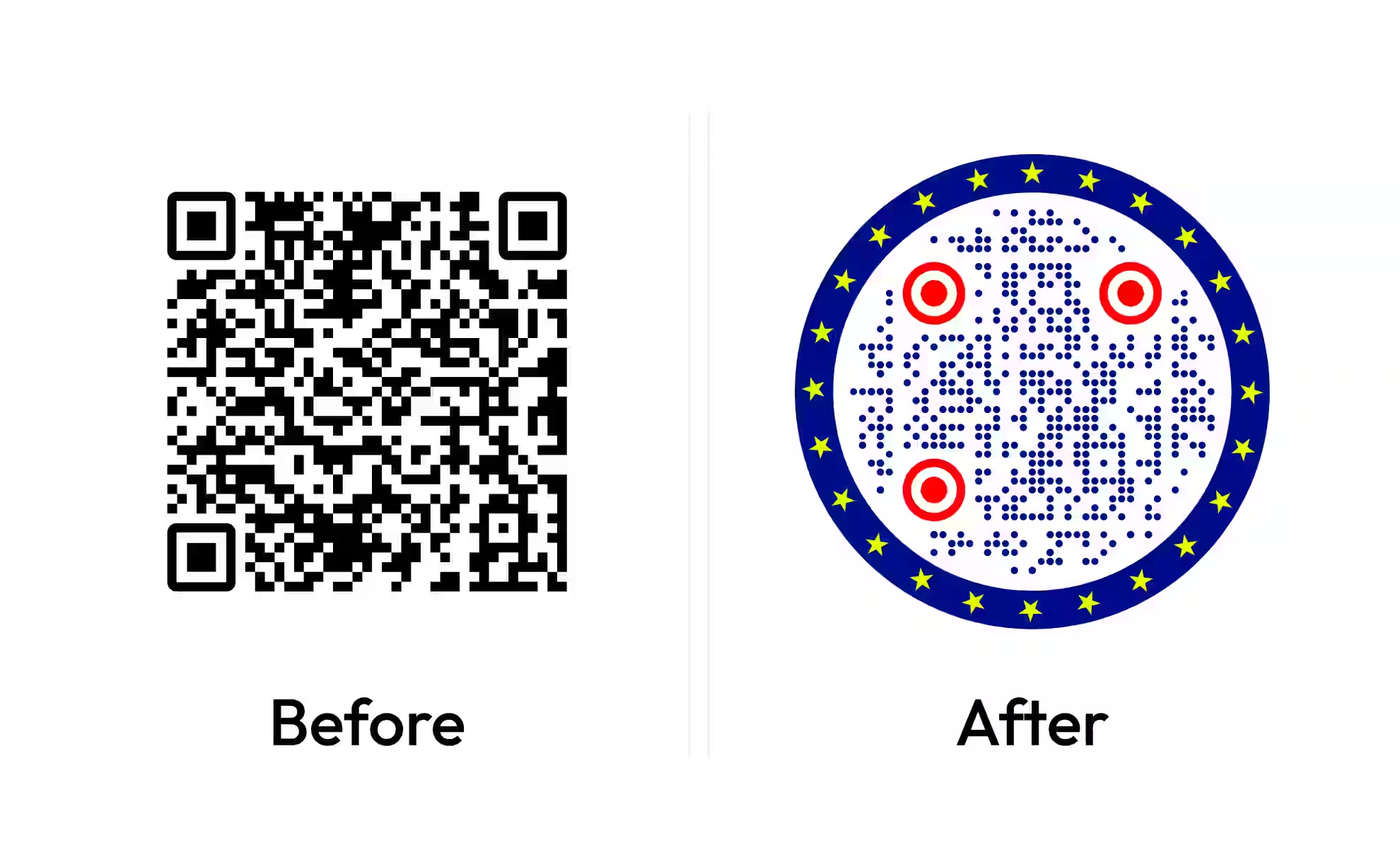
- Round QR codes are standard square QR codes in a circular frame and scan on any phone; Apple's round App Clip Codes, introduced in December 2020, are a separate format that only iPhones and iPads on iOS 14.3 or later can read.
1974
Before the QR Code: The Barcode's Limit
The QR code was built to improve on the one-dimensional barcode, which stores its data in a single row of bars and can only be read across them. By the early 1990s DENSO's own manufacturing sites were asking for labels that could be scanned faster.
The First Barcode Scan at a Checkout
A cashier at a Marsh supermarket in Troy, Ohio, scanned a 10-pack of Wrigley's Juicy Fruit gum, the first retail scan of a UPC barcode. The UPC barcode it started holds 12 digits; the QR code vs barcode guide compares the two in detail.[1][2]
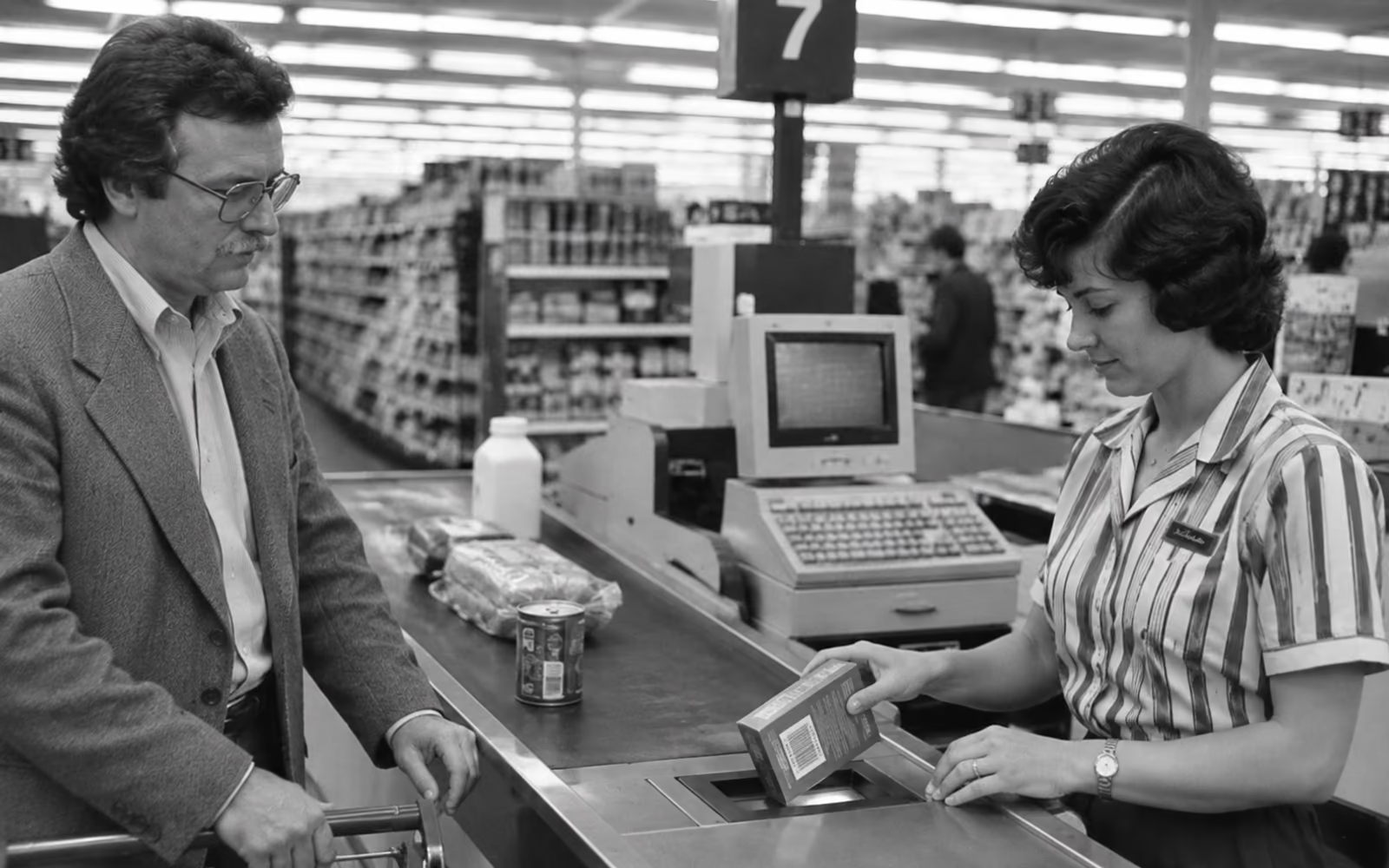
Illustration of an early checkout scan, not a photograph of the 1974 Marsh scan.
1992–1994
The Invention at DENSO WAVE
The QR code was invented to read automotive parts labels faster. DENSO WAVE says its manufacturing sites asked for quicker scanning, and a two-person team designed a 2D code around speed, capacity and kanji support.
Masahiro Hara Is Asked for a Faster Code
In 1992 Masahiro Hara of DENSO WAVE, then a division of DENSO CORPORATION, was asked by manufacturing sites for scanners that read barcodes more quickly. He began developing a new 2D code with a team of two. DENSO WAVE gives the development time as about a year and a half.[3][4]

Masahiro Hara, who led the development of the QR code at DENSO WAVE. Photo: DENSO. DENSO WAVE Announces the QR Code
DENSO WAVE, then a division of DENSO CORPORATION, announced the QR code in 1994 and named it Quick Response for its reading speed, more than 10 times faster than other codes by the company's account. DENSO WAVE gives no day or month. The first use was managing the production of automotive parts, and the auto industry adopted the code for electronic kanban.[4][6]
The three corner squares, called finder patterns, use a black-and-white ratio of 1:1:3:1:1 because the team surveyed fliers, magazines and cardboard boxes and found it was the ratio least used in printed matter. That rarity lets a scanner find a QR code at any angle without confusing it with the print around it, as the finder patterns guide explains.
DENSO WAVE kept the patent rights but declared that it would not exercise them, a policy it says was in place from the very beginning of development. Masahiro Hara put the aim in his own words on DENSO WAVE's history page: "I just want to let a lot of people use the code, come up with new ways of using it with them, and put these ideas into practice."
1997–2000
Standards Make It Free for Anyone to Use
Standardisation is what turned the QR code from a DENSO product into a public format. Each approval below published the specification, so any manufacturer could build generators and readers without asking DENSO WAVE for a licence.
Approved as an AIM International Standard
AIM International, the automatic identification industry body, approved the QR code as a standard (ISS - QR Code) in October 1997, the first recognition outside DENSO.[7]
Approved as a JEIDA Standard
The Japan Electronic Industry Development Association approved the QR code as JEIDA-55 in March 1998.[7]
Approved as Japanese Industrial Standard JIS X 0510
The QR code became Japanese Industrial Standard JIS X 0510 in January 1999, making it the national 2D code standard in the country where it was invented.[7]
Published as ISO/IEC 18004
ISO and IEC published the QR code specification as ISO/IEC 18004 in June 2000. ISO/IEC 18004 is the international standard that defines the QR code's symbol structure, encoding modes, error correction and versions 1 to 40. From this point the format belonged to a public standard rather than to one company's documentation.[8][4]
The patent waiver has a limit that most retellings leave out: DENSO WAVE waives its rights, including Japanese patent No. 2938338, for standardised QR codes only. In a university lecture Masahiro Hara said the company does exercise its patent rights against fake, non-standard QR codes to remove them from the market.
2002–2014
Phones in Japan and a Family of Codes
The QR code reached the public in Japan first, through camera phones that could read it, while DENSO WAVE added smaller, larger and secured variants for industry.
The First Phone That Reads QR Codes
The Sharp J-SH09 on the J-PHONE network, released in August 2002, could read JAN barcodes and QR codes with its built-in camera. DENSO WAVE dates widespread public use of QR codes in Japan to 2002, through phones with a QR reading feature.[9][5][4]
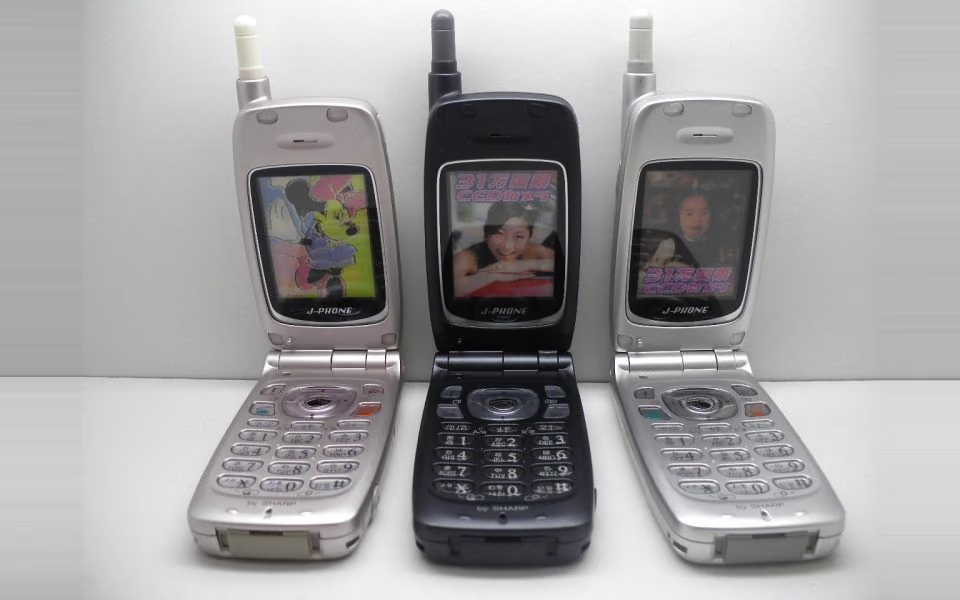
Sharp camera phones on Japan's J-PHONE network, the generation in which phones first read QR codes. Micro QR Code Approved
Micro QR code was approved as part of JIS X 0510 in November 2004. Micro QR is a smaller QR code variant with a single finder pattern, sized from 11 × 11 to 17 × 17 modules, for marking parts too small for a regular code; the Micro QR guide covers its versions and why phones rarely read it.[10]
Second Edition of ISO/IEC 18004
ISO published the second edition, ISO/IEC 18004:2006, titled "QR Code 2005 bar code symbology specification", replacing the 2000 edition.[11]
GS1 Approves QR Code for Mobile Phones
GS1, the organisation behind the retail barcode, approved the QR code as a standard for mobile phones in December 2011.[7]
European Inventor Award for the QR Code Team
The European Patent Office gave the QR code team the Popular Prize of the European Inventor Award, chosen by public vote, at a ceremony in Berlin on 17 June 2014. The five credited inventors were Masahiro Hara, Motoaki Watabe and Tadao Nojiri of DENSO WAVE and Takayuki Nagaya and Yuji Uchiyama of Toyota Central R&D Labs.[16][17]

The European Patent Office presents the European Inventor Award each year.
2017–2019
The Camera Learns to Read and Payments Arrive
Outside Japan, the QR code became an everyday tool in two moves: central banks chose it for national payment schemes, and phone makers built QR reading into the camera so no extra app was needed.
BharatQR Launches in India
The Reserve Bank of India's deputy governor launched BharatQR on 20 February 2017, a common payment QR code developed by NPCI with Mastercard and Visa. The often-quoted September 2016 is the date of the RBI direction it was based on, not of the launch.[18]
The iPhone Camera Reads QR Codes
iOS 11, released on 19 September 2017, added QR code detection to the iPhone and iPad Camera app and to Safari. Scanning without a separate app became normal for iPhone users from this release; the iPhone scanning guide covers every route iOS offers today.[19][20]
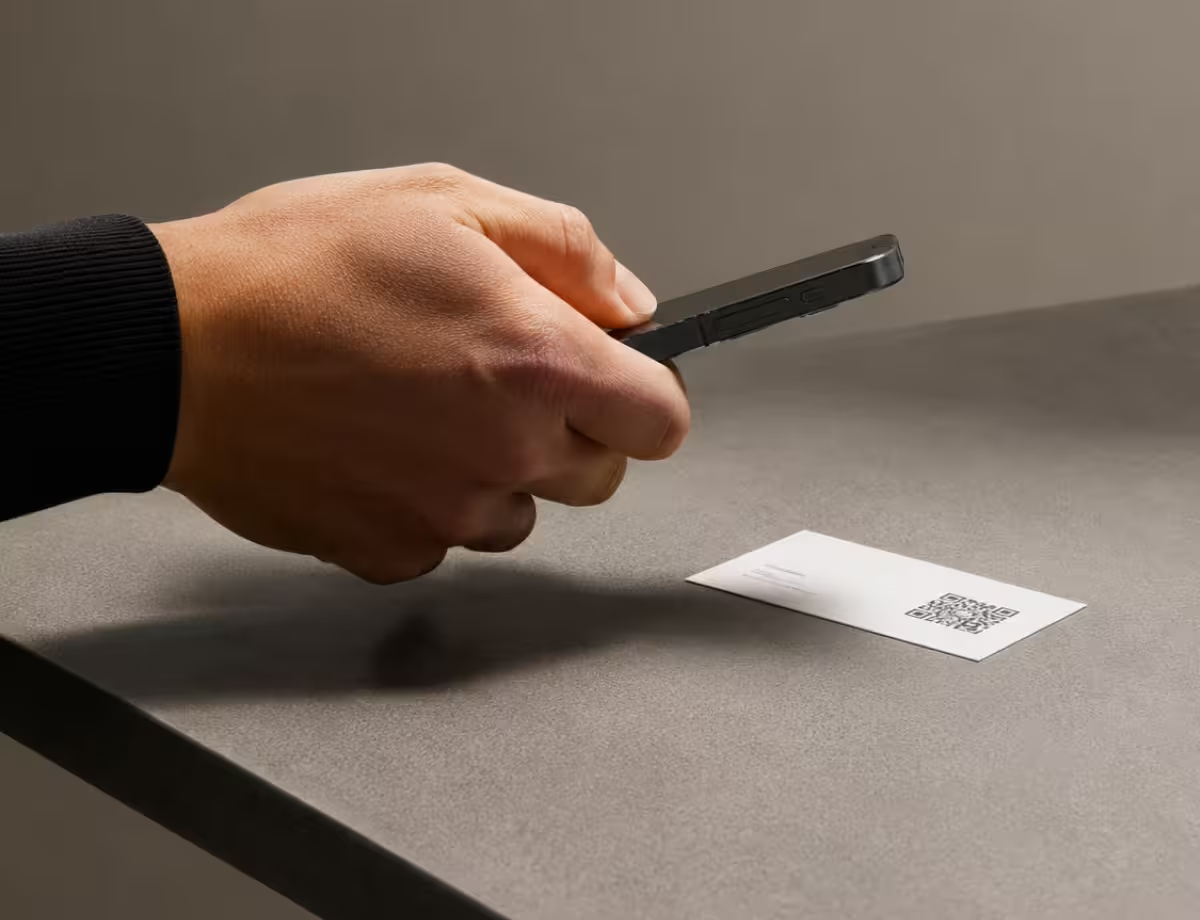
Since iOS 11 the phone's own camera is the scanner - no app in between. Google Lens Scans QR Codes in the Assistant
Google added Lens to the Assistant on Pixel phones on 21 November 2017, including scanning QR codes. Lens moved into the Pixel 3 camera itself on 9 October 2018. Android phone makers added QR reading on their own schedules, and Android 13 later added a system QR scanner on a Quick Settings tile, so there is no single date for Android as a whole; the Android scanning guide covers today's options.[21][22][36]
Singapore Launches SGQR
Singapore launched SGQR on 17 September 2018, which the Monetary Authority of Singapore described as the world's first unified payment QR code: one label at a merchant that accepts many payment schemes, including PayNow. The PayNow QR code page shows how such a code is built.[23]
Indonesia Launches QRIS
Bank Indonesia launched QRIS, a single national QR code standard for payments, on 17 August 2019, and made it effective nationwide from 1 January 2020. The QRIS guide explains how merchants get one today.[24]
2020–2022
The Pandemic Years
COVID-19 put QR codes in front of people who had never scanned one: venue check-in posters, digital vaccination certificates and contactless menus all relied on the phone camera that iOS and Android already had.
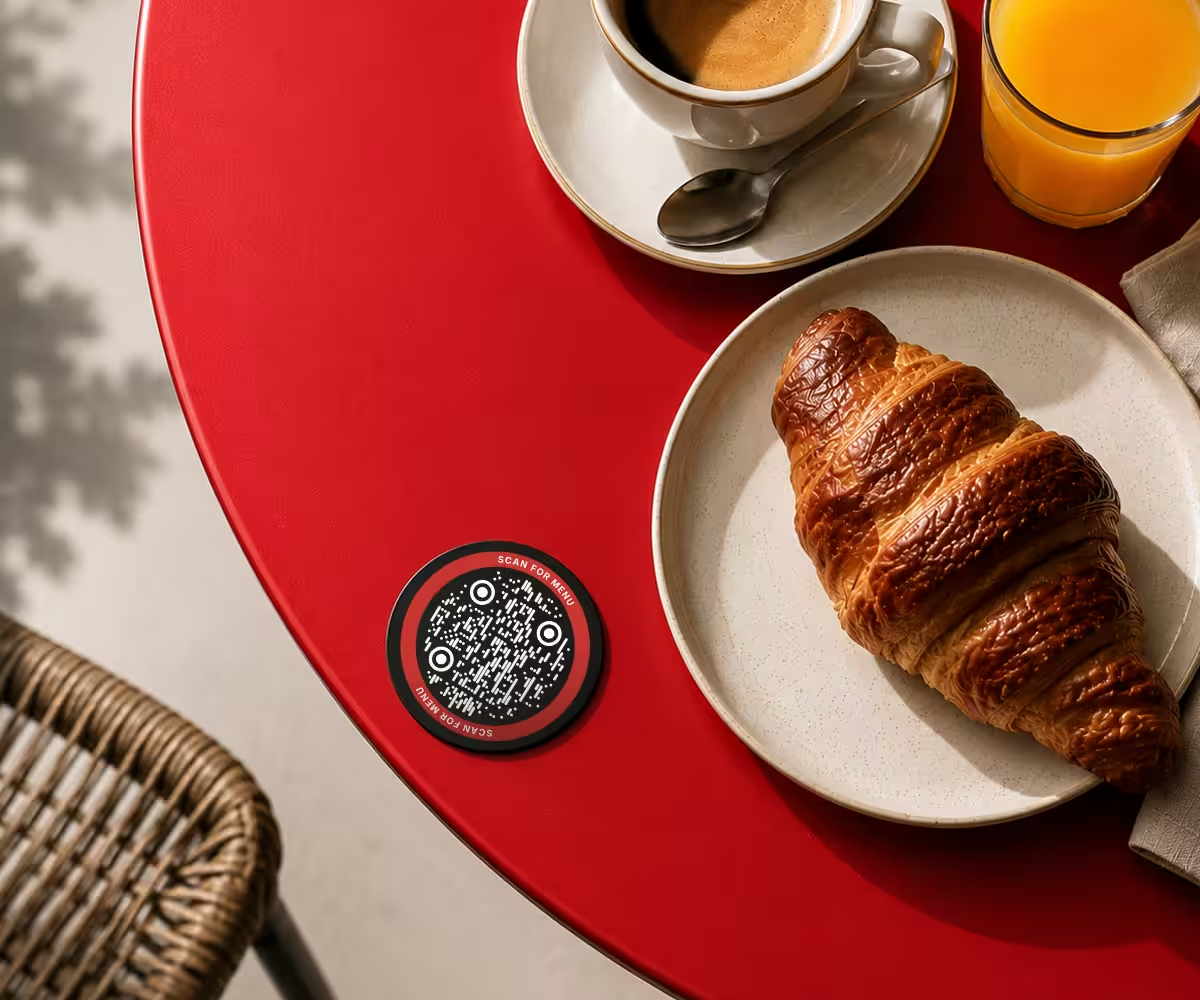
NHS COVID-19 App and QR Check-In Posters
The NHS COVID-19 app launched across England and Wales on 24 September 2020, and businesses were required by law from that day to display official NHS QR code posters so visitors could check in.[25]
QR Code Recognised as an IEEE Milestone
DENSO announced on 7 October 2020 that the QR code had been recognised as an IEEE Milestone, a designation the Institute of Electrical and Electronics Engineers gives to historic achievements in electrical engineering. The plaque was dedicated in Kariya, Japan, on 26 September 2022.[26][5]
Brazil's Pix Goes Into Full Operation
Pix, the instant payment system of the Banco Central do Brasil, entered full operation on 16 November 2020 after a restricted start on 3 November. Its rules define static and dynamic QR codes for payments, described on the Pix QR code page.[29]
Apple's Round App Clip Codes Arrive
With iOS 14.3, released on 14 December 2020, Apple made App Clip Codes available: round codes of dashed rings that open an App Clip, a small part of an iPhone app, without installing it. They look like a circular QR code but are a separate Apple format. Only an iPhone or iPad on iOS 14.3 or later reads them, with the Camera app or the Code Scanner, and an NFC-integrated version also opens with a tap.[27][28]
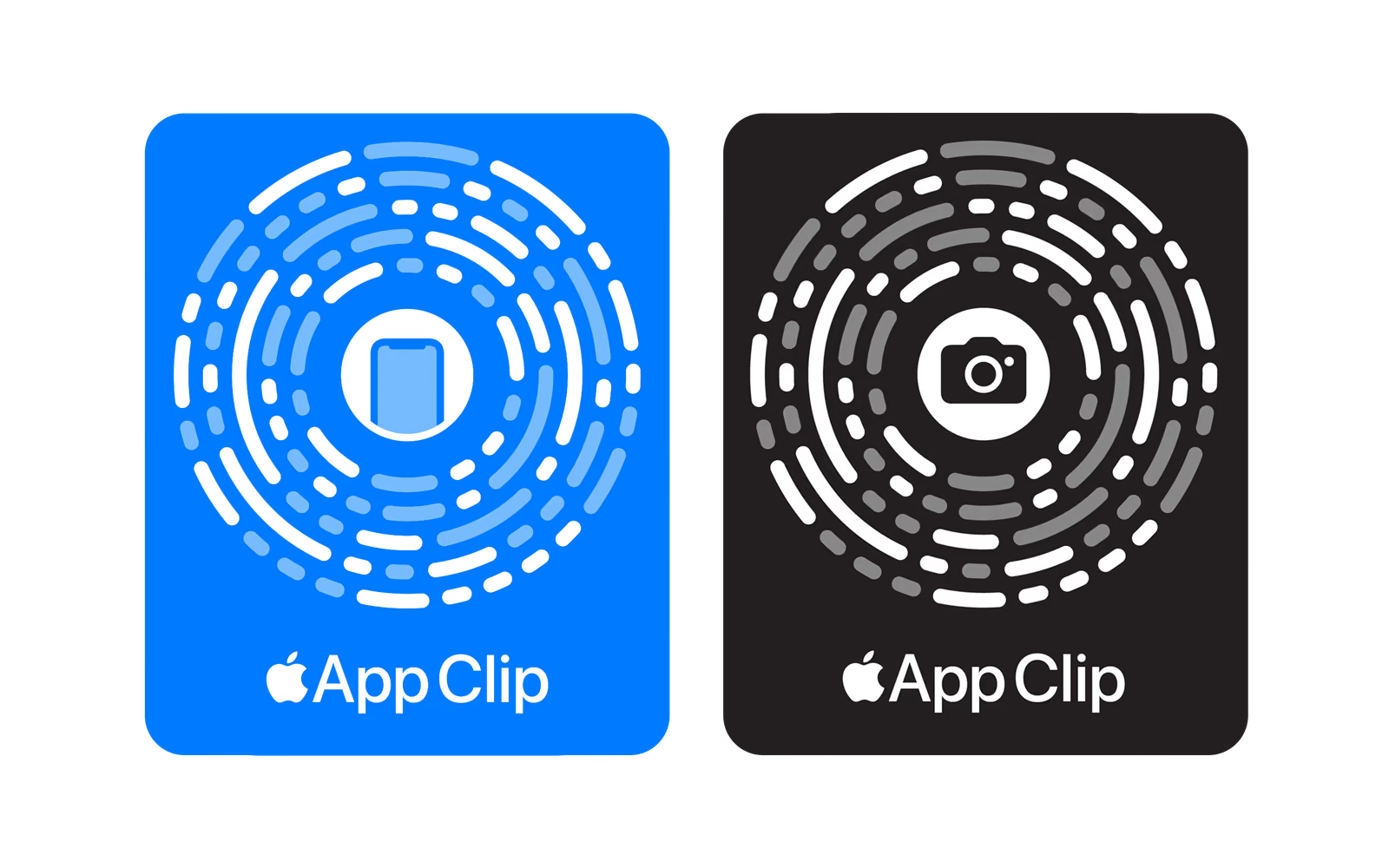
App Clip Codes: NFC-integrated (phone icon) and scan-only (camera icon). Round, but not QR codes. EU Digital COVID Certificate
The EU Digital COVID Certificate entered into application on 1 July 2021. Each certificate included a digitally signed QR code, so a border officer or venue could verify vaccination, test or recovery status by scanning it.[30]
FBI Warns About Tampered QR Codes
The FBI's Internet Crime Complaint Center issued a public service announcement on 18 January 2022 warning that criminals were tampering with QR codes to redirect victims to malicious sites. The fake QR codes guide covers what that warning and later ones advise.[31]
2023–2027
Scams, a 30th Birthday and the End of the Stripe
Since 2023 the QR code's story has been about maturity: consumer protection agencies warn about it, its standard has a fourth edition, and retail plans to move beyond the striped barcode it was designed to improve on.
FTC Consumer Alert on QR Code Scams
The US Federal Trade Commission published a consumer alert on 6 December 2023 warning that scammers hide harmful links in QR codes, advising people to inspect the link before opening it and not to scan unexpected codes in emails or texts.[37]
The QR Code Turns 30
DENSO WAVE marked 30 years since the announcement of the QR code in 2024 with an anniversary page. By then QR codes had national standards in China (2000), Korea (2002), Vietnam (2003) and Singapore (2008), and the first general consumer product to carry one, according to DENSO WAVE, was contact lens packaging.[6]
Fourth Edition of ISO/IEC 18004
ISO published ISO/IEC 18004:2024 in August 2024. It is the current edition of the QR code standard; the 2000, 2006 and 2015 editions are marked withdrawn.[38]
GS1 Sunrise 2027: 2D Codes at the Checkout
GS1 US has set 2027 as the goal for retail point-of-sale systems to read 2D barcodes, such as QR codes carrying GS1 Digital Link or GS1 DataMatrix, on product packaging. It is an industry transition target, not a legal mandate, and UPC barcodes continue to scan.[39]
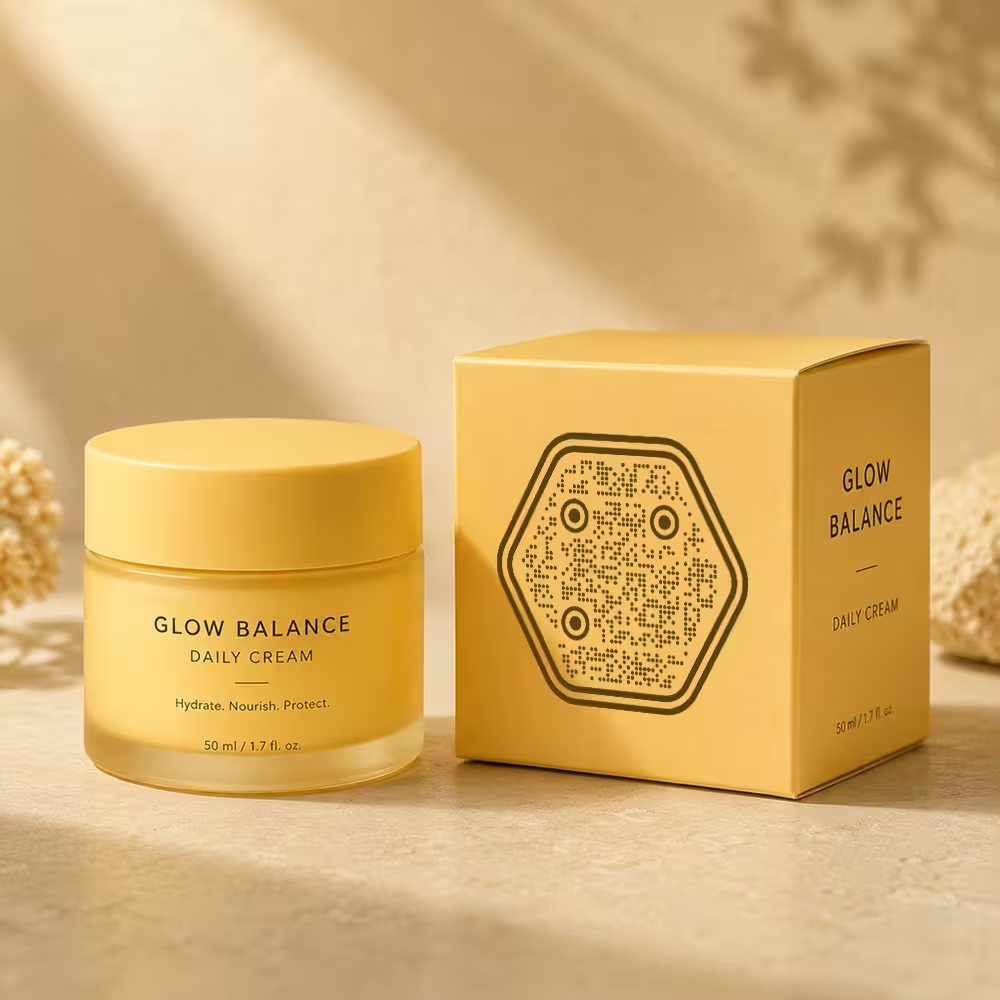
Sunrise 2027 is about packaging like this: a 2D code read at the till.
Facts Worth Quoting
Each figure is one sentence that stands on its own, drawn from the primary sources listed at the end of the page.
QR Code Facts at a Glance
A QR code is a two-dimensional matrix barcode that stores data in both directions and is located by three square finder patterns in its corners. The table below collects the facts most often asked about its origin, each from DENSO WAVE or ISO.
| Question | Answer |
|---|---|
| Who invented it | Masahiro Hara and one other team member at DENSO WAVE |
| Company at the time | DENSO WAVE, then a division of DENSO CORPORATION, Japan |
| Development started | 1992 |
| Announced | 1994 (day and month not documented by DENSO WAVE) |
| Original use | Tracking automotive parts in production (electronic kanban) |
| What QR stands for | Quick Response |
| Reading speed claimed | More than 10 times faster than other codes of the time |
| International standard | ISO/IEC 18004, first published June 2000 |
| Current edition | ISO/IEC 18004:2024 (fourth edition) |
| Largest symbol | Version 40, 177 × 177 modules |
| Maximum capacity | 7,089 digits, 4,296 alphanumeric, 2,953 bytes or 1,817 kanji |
| Licence needed | No, for codes that follow the JIS or ISO standard |
Myths About QR Code History
Five claims recur in QR code histories without a source behind them. The table sets each against what DENSO WAVE, ISO and other primary sources actually say.
| Common claim | What the record shows | Source |
|---|---|---|
| The QR code was released on 2 August 1994 | DENSO WAVE gives only the year 1994. DENSO's IEEE nomination says development was completed in March 1994. No primary source gives 2 August. | DENSO WAVE; IEEE Milestone |
| Toyota invented the QR code | DENSO WAVE, a DENSO division, invented it for the auto industry. Two of the five inventors credited by the EPO were from Toyota Central R&D Labs, but DENSO sources never name Toyota as the customer. | DENSO WAVE; EPO |
| The design came from the game of Go | DENSO's official histories do not mention Go. In a 2023 university interview, Hara linked Go to solving misreads caused by ink blotches, not to the code's grid or finder patterns. | Hosei University interview |
| DENSO gave up its patent | DENSO WAVE holds the patents and waives them only for codes that follow the JIS or ISO standard. Hara has said the rights are used against non-standard fakes. | DENSO WAVE; Hara lecture |
| BharatQR launched in September 2016 | September 2016 is the RBI direction BharatQR was based on. NPCI's press release dates the launch to 20 February 2017. | NPCI |
From Square to Round: How QR Codes Got Their Shape
Every QR code is square underneath. ISO/IEC 18004 defines symbols from 21 × 21 modules at version 1 to 177 × 177 at version 40, and no version is round. What changed over thirty years is everything drawn around and inside that square: DENSO WAVE's own Frame QR of 2014 opened a canvas in the middle of the code, rMQR of 2022 stretched it into a rectangle, and today's generators redraw the modules as dots and put a circle around the whole thing.

A round QR code is a standard square QR code framed by a circle of decorative modules. The scanner finds the three finder patterns, reads the square grid between them and ignores the rest, which is why round, hexagonal and triangular codes scan like any other. The round QR codes page shows where they are used, from coasters to wedding invitations.
The shape costs width, not reliability. Measured in KoloQR's own renderer, the data matrix fills about 55-60% of a circular code's diameter against roughly 70% of a plain square export, so a round code has to print roughly a quarter wider to keep the same module size: a code that fits an 18 mm square sticker needs about 23 mm as a circle. Do round, triangle and hexagon QR codes scan? works through the measurements.
The round codes Apple introduced in December 2020 are the exception, and they are not QR codes at all. An App Clip Code encodes a URL in rings of dashes around a camera or phone icon, and only an iPhone or iPad on iOS 14.3 or later can read it, to open an App Clip. A round QR code made for print works on every phone; an App Clip Code works only on Apple's.
- 1994: the QR code is announced as a black-on-white square, with a 1:1:3:1:1 ratio in its three finder patterns.
- 2014: DENSO WAVE's Frame QR reserves a canvas inside the code for a picture or text.
- 2020: Apple's App Clip Codes bring a truly round code to the iPhone, a separate Apple format that only iOS 14.3 and later can read.
- 2022: rMQR is published as ISO/IEC 23941, a rectangular code for narrow print areas.
- Today: coloured, dotted and circular QR codes are standard QR codes in a decorative outline, readable by any phone camera.
Why the QR Code Became the World's 2D Code
The QR code became the default 2D code on phones because it was free to implement, standardised early and readable fast. Rival 2D codes such as Data Matrix existed, but the QR code combined an open patent policy, an ISO standard from 2000 and a design that phone cameras could decode from any angle.
Free to implement mattered most. Because DENSO WAVE did not exercise its patents for standard QR codes, phone makers, payment schemes and governments could build on the QR code without negotiating a licence, and every QR code generator, including KoloQR, a free QR code generator with circular and custom-shaped QR codes, works on that basis.
Design mattered next. The finder patterns let a camera locate the code at any rotation, and error correction lets a QR code stay readable with part of it damaged or covered, which is what makes logos and custom shapes possible in the first place. A static QR code from 1994 or from today stores its data in the pattern itself and has no expiry date.
Sources (40)
- GS1. Marsh holds place of honor in history of GS1 barcode. 25 June 2014. Accessed 22 Oct 2026.
- Smithsonian National Museum of American History. Collection object nmah_892778. Accessed 22 Oct 2026.
- DENSO WAVE. QR Code development story. Accessed 22 Oct 2026.
- DENSO WAVE. History of QR Code. Accessed 22 Oct 2026.
- Engineering and Technology History Wiki (IEEE). Milestones: QR (Quick Response) Code, 1994. Accessed 22 Oct 2026.
- DENSO WAVE. QR Code 30th anniversary. 2024. Accessed 22 Oct 2026.
- DENSO WAVE. QR Code Standardization. Accessed 22 Oct 2026.
- ISO. ISO/IEC 18004:2000 Information technology - Automatic identification and data capture techniques - Bar code symbology - QR Code. June 2000. Accessed 22 Oct 2026.
- ITmedia Mobile. Report on the Sharp J-SH09's barcode reading (in Japanese). 1 August 2002. Accessed 22 Oct 2026.
- DENSO WAVE. Micro QR Code. Accessed 22 Oct 2026.
- ISO. ISO/IEC 18004:2006 QR Code 2005 bar code symbology specification. September 2006. Accessed 22 Oct 2026.
- Kwansei Gakuin University, Business & Accounting Review vol. 36. Masahiro Hara, QRコードの原点と成長 (The origin and growth of the QR code, in Japanese). Accessed 22 Oct 2026.
- DENSO WAVE. SQRC. Accessed 22 Oct 2026.
- DENSO WAVE. iQR Code. Accessed 22 Oct 2026.
- DENSO WAVE. FrameQR. Accessed 22 Oct 2026.
- DENSO Europe. QR Code development team wins European Inventor Award. 17 June 2014. Accessed 22 Oct 2026.
- European Patent Office. European Inventor Award 2014 finalist: Masahiro Hara and team. 2014. Accessed 22 Oct 2026.
- National Payments Corporation of India. Press release on the launch of BharatQR. 20 February 2017. Accessed 22 Oct 2026.
- Apple Newsroom. iOS 11 is available tomorrow. 18 September 2017. Accessed 22 Oct 2026.
- Apple Developer. QR Code Recognition on iOS 11. Accessed 22 Oct 2026.
- Google. Learn more about the world around you with Google Lens and the Assistant. 21 November 2017. Accessed 22 Oct 2026.
- Google. Google Pixel 3: Make every day more extraordinary. 9 October 2018. Accessed 22 Oct 2026.
- Monetary Authority of Singapore. Singapore Introduces World's First Unified Payment QR Code. 17 September 2018. Accessed 22 Oct 2026.
- Bank Indonesia. QRIS, Satu QR Code untuk Semua Pembayaran (in Indonesian). 17 August 2019. Accessed 22 Oct 2026.
- GOV.UK. NHS COVID-19 app launches across England and Wales. 24 September 2020. Accessed 22 Oct 2026.
- DENSO. QRコードがIEEEマイルストーンに認定 (QR Code recognised as an IEEE Milestone, in Japanese). 7 October 2020. Accessed 22 Oct 2026.
- Apple Developer. Creating App Clip Codes. Accessed 08 Nov 2026.
- 9to5Mac. App Clip Codes are now available for iOS developers and users. 14 December 2020. Accessed 08 Nov 2026.
- Banco Central do Brasil. Resolution BCB No. 1 (Pix Regulation). 12 August 2020, as amended. Accessed 22 Oct 2026.
- European Commission (via EEAS). EU Digital COVID Certificate enters into application in the EU. 1 July 2021. Accessed 22 Oct 2026.
- FBI Internet Crime Complaint Center. Cybercriminals Tampering with QR Codes to Steal Victim Funds (I-011822-PSA). 18 January 2022. Accessed 22 Oct 2026.
- CNN. Coinbase's Super Bowl QR code ad (CNN Business report). 14 February 2022. Accessed 22 Oct 2026.
- Coinbase. Everyone wins at Super Bowl LVI (WAGMI). February 2022. Accessed 22 Oct 2026.
- ISO. ISO/IEC 23941:2022 Rectangular Micro QR Code (rMQR) bar code symbology specification. May 2022. Accessed 22 Oct 2026.
- DENSO WAVE. rMQR Code. Accessed 22 Oct 2026.
- Android Developers. Android QR scanner with UPI support. Accessed 22 Oct 2026.
- US Federal Trade Commission. Scammers hide harmful links in QR codes to steal your information. 6 December 2023. Accessed 22 Oct 2026.
- ISO. ISO/IEC 18004:2024 QR code bar code symbology specification. August 2024. Accessed 22 Oct 2026.
- GS1 US. What is GS1 Sunrise 2027? Accessed 22 Oct 2026.
- Hosei University. The Creator of QR Code! (Mr. Masahiro Hara, Denso Wave Inc.). 8 August 2023. Accessed 22 Oct 2026.
How to Cite This Page
Copy a reference in the style you need. The date in it is the day this page was last revised.
- APA
- Vargas, A. (2026, November 8). History of the QR Code: From Car Parts to Every Phone. KoloQR. https://koloqr.com/guides/qr-code-history
- MLA
- Vargas, Alan. "History of the QR Code: From Car Parts to Every Phone." KoloQR, 8 Nov. 2026, koloqr.com/guides/qr-code-history.
- Wikipedia
- {{cite web |url=https://koloqr.com/guides/qr-code-history |title=History of the QR Code: From Car Parts to Every Phone |last=Vargas |first=Alan |website=KoloQR |date=2026-11-08}}
Corrections and Revisions
Found an error? Email support@koloqr.com and we'll correct it.
Questions? Answered
Masahiro Hara invented the QR code with one colleague at DENSO WAVE, then a division of the Japanese parts maker DENSO CORPORATION. The European Patent Office credits five inventors on the core patent: Hara, Motoaki Watabe and Tadao Nojiri of DENSO WAVE, and Takayuki Nagaya and Yuji Uchiyama of Toyota Central R&D Labs.
Development began in 1992 and DENSO WAVE announced the QR code in 1994. DENSO's IEEE Milestone nomination says development was completed in March 1994. DENSO WAVE does not publish a day or month for the announcement, so any exact day, such as 2 August 1994, should be treated as unsourced.
To read automotive parts labels faster. DENSO WAVE says the request came from its own manufacturing sites in 1992, and the team designed the QR code to be read more than 10 times faster than other codes of the time, hold about 7,000 digits and encode kanji for Japanese labels.
Partly, and not in the way the story is usually told. DENSO WAVE's official histories of the QR code do not mention Go. In a 2023 Hosei University interview, Masahiro Hara said his childhood love of Go gave him the clue to one problem: codes misread because of ink blotches. In Go a stone's place can be read from the stones around it even when one is missing or out of position, so the team let the reader take in the code roughly first and then refine it. Nothing in that account ties Go to the QR code's grid or its corner finder patterns, which DENSO WAVE says came from a survey of printed matter.
No. DENSO WAVE holds QR code patents, including Japanese patent No. 2938338 and European patent EP0672994, but it does not exercise them for codes that follow the JIS or ISO standard. Anyone can make and print standard QR codes without a licence. "QR Code" as a word is a DENSO WAVE trademark.
From iOS 11, released on 19 September 2017. Apple added QR code detection to the Camera app and Safari in that release. Before it, iPhone users needed a separate scanning app. In Japan, camera phones had read QR codes since the Sharp J-SH09 of August 2002.
COVID-19 wrote QR codes into public health rules in Europe. From 24 September 2020 venues in England and Wales were legally required to display NHS QR check-in posters, and from 1 July 2021 the EU Digital COVID Certificate carried a signed QR code. Both relied on phone cameras that had read QR codes since 2017.
Not entirely, and not on a fixed date. GS1 US has set 2027 as the goal for retail checkouts to read 2D codes such as QR codes with GS1 Digital Link, but it is an industry target, not a mandate. UPC barcodes are expected to keep scanning alongside 2D codes.
No. A round QR code is a standard square QR code framed by a circle of decorative modules, and the QR standard itself has no round version. Phones read the square matrix in the middle and ignore the frame. The only cost is size: the matrix fills about 55-60% of the circle's diameter, so a round code prints larger than a square one with the same data. Apple's round App Clip Codes are a different matter: they are a separate format that only iPhones and iPads on iOS 14.3 or later can scan.
Use the How to Cite This Page block at the end of the article, which gives the reference in APA, MLA and Wikipedia format. For a single fact, cite the numbered primary source beside that event as well, since DENSO WAVE, ISO and the central banks are the original records.
Keep Exploring
Pages that pick up where this one leaves off - the same setting, the same kind of code, or the next thing worth deciding.
Fitness & Gyms
Class booking, machine demo videos and paperless waivers, with label sizes and materials that survive daily disinfectant wipes.
PayPal QR Code
Take a payment from a printed code by sending the scan to your PayPal.me link.
Pix QR Code
Encode the Pix Copia e Cola string your bank issued as a code you can style and print.
How to Make QRIS for Your Business - Register, Print and Protect Your Payment Code
How to get a QRIS code in Indonesia: which bank or e-wallet to register with, the documents, the fees from 1 October 2026, static or dynamic QRIS, how to print the sticker, and how to check it has not been swapped.
Retail Stores
Product details, stock and review links on shelf labels, shop windows and checkout signs.
How to Put a QR Code in a Microsoft Word Document
Three ways to put a QR code in a Word document - a pasted picture, an SVG, or the DISPLAYBARCODE field - with the platform limits, the switches, mail merge for label sheets, sizing, compression and the fixes for Error!.
Why KoloQR?
- Create QR codes for websites, menus, Wi-Fi, PDFs, and business cards
- Customize colors, logos, and unique shapes
- Download high-quality PNG and SVG files
- Built for both print and digital