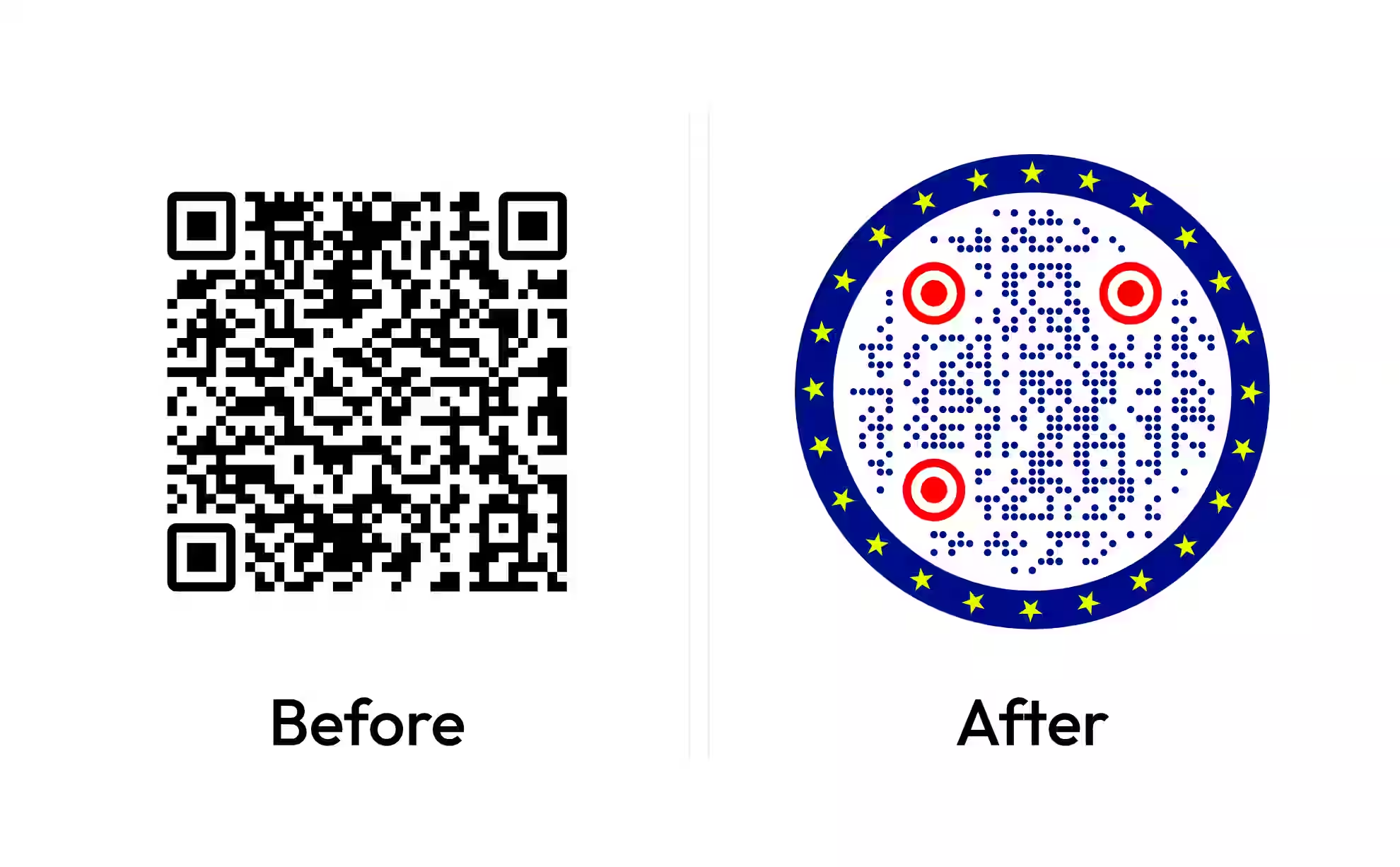
Turn Your Instagram Profile Into a Scannable QR Code
Enter your username, style the code to match your packaging or your window, and download one that opens your Instagram profile in the app or the browser in a single tap.
Opens in Google Maps. Coordinates work too - "37.4224, -122.0841".
The code opens your business's "Write a review" form. Paste the Place ID, or a Google Maps link that carries one.
A UPI link carries no checksum, so a mistyped ID produces a code that scans perfectly and pays somebody else. Paste the ID from your payment app rather than typing it, and send yourself one rupee before printing.
Paste it exactly as copied. KoloQR does not assemble the payload - it encodes the one your bank issued, and checks it before you print it.
SVG, PNG, JPG • Max 2 MB
First month free
then $9/month
Dynamic QR Codes Are Coming
Change your link anytime, even after printing. See who scans, when and where.
- Edit without reprinting
- Scan analytics
- Bulk & custom domains
You're on the List
We'll email you once, when dynamic codes with scan analytics launch.
What Is an Instagram QR Code?
An Instagram QR code is a QR code that stores the web address of an Instagram profile, post, or reel. Scanning it opens that page in the Instagram app if it is installed, or in a mobile browser if it isn't. The address lives in the pattern, so the printed code needs no account and no service behind it to keep working.
Instagram's Own Code Versus a Generated One
Instagram builds you a profile QR code inside the app, under the menu on your profile. It is a real QR code, and any phone camera reads it - so the difference is not whether it works:
- What It Can Point At - your profile, and only your profile. There is no in-app way to make one for a single post, a reel, or a page of your own.
- How It Looks - fixed. You get Instagram's colour presets and your own avatar in the middle; there is no shape, no brand colour, and no vector export.
- How You Get the File - as a screenshot or a shared image, which is a raster at screen resolution. It is fine on a phone and soft the moment a printer scales it up.
So the in-app code is the right tool for a screen shown to someone standing in front of you. A generated code is the one for print: it can point anywhere on Instagram or off it, it exports as vector at any size, and it can be drawn in your own shape and colours - see round QR codes for what that looks like in practice.
On Instagram, Print Is Where the Link Lives
Instagram is the one major platform that gives ordinary posts no clickable link. A caption cannot carry a URL people can tap, comments cannot either, and the single bio link is the whole of what a profile gets. That constraint is what makes a printed Instagram QR code useful rather than decorative: on packaging, a shop window, a menu, or a business card, the code is the only clickable thing the physical object has. It also decides what the code should open. A profile link builds the follow and is permanent while the username holds. A post link - instagram.com/p/ plus an 11-character shortcode - sells one specific thing but dies if the post is deleted or archived. A reel link behaves the same way under /reel/. And a link to a page you own, with your Instagram linked from it, is the only version you can repoint later without reprinting anything. Pick by how long the printed object will exist: a business card outlives a post, a table tent does not.
Generate QR Code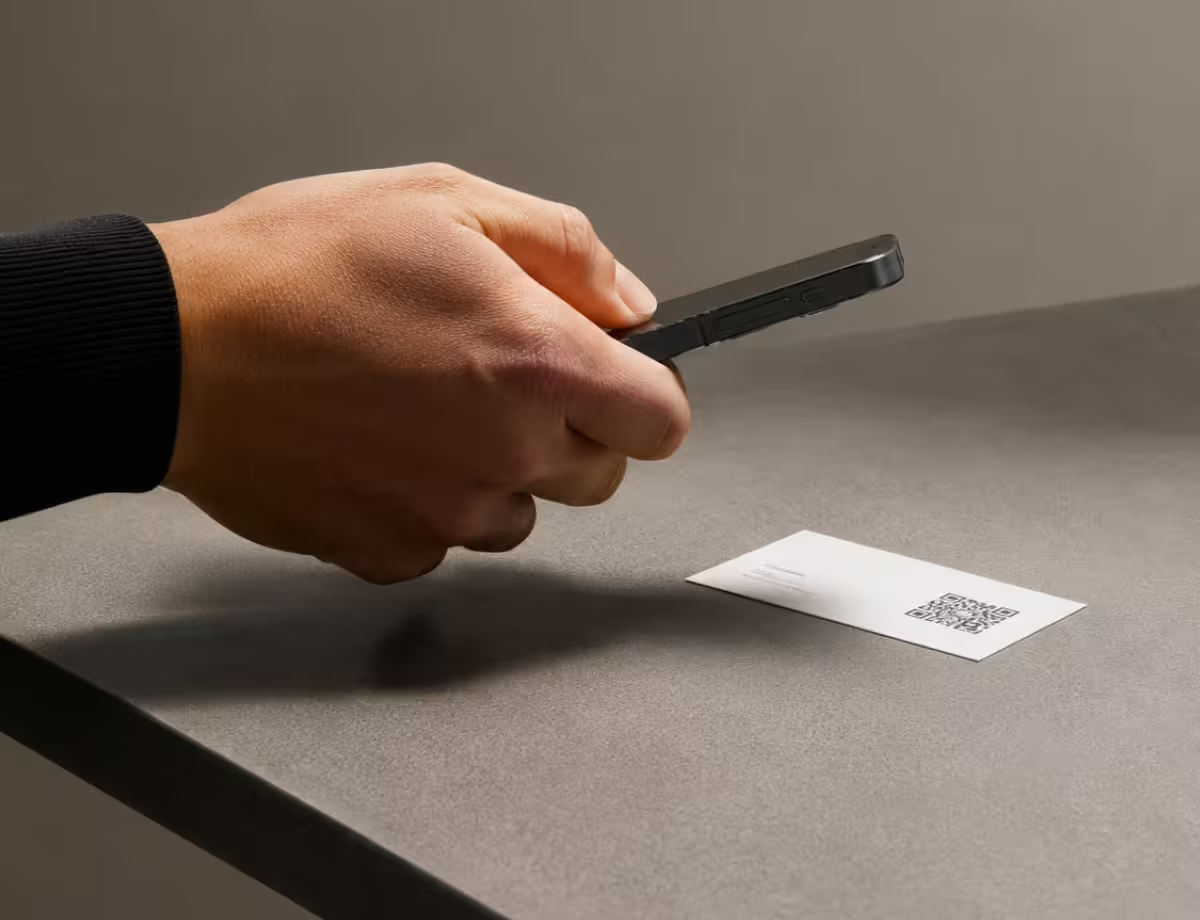
Where Instagram QR Codes Are Used
The useful placements are the ones that catch someone holding a physical thing, at the moment they might want more of it:
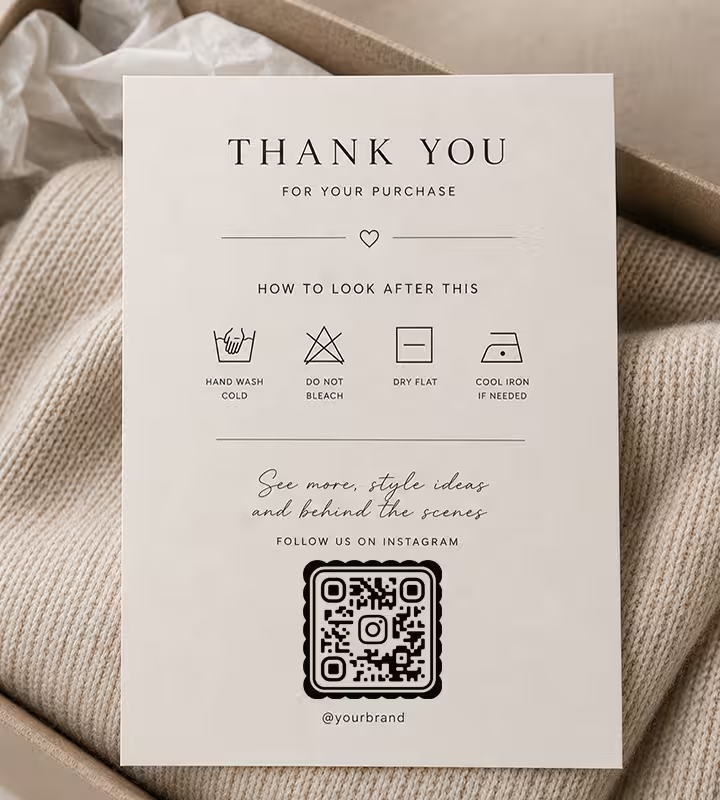
Product Packaging and Care Cards
The insert that says “how to look after this” is the one people keep, and the natural place to link the account that shows them.
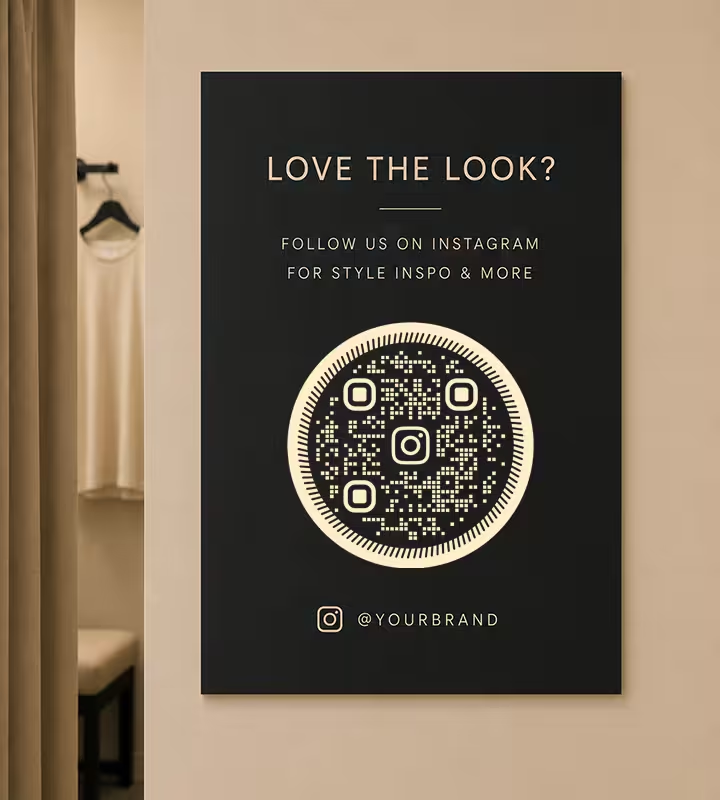
Shop Windows and Fitting Rooms
A window code is read after hours; a fitting-room code catches someone deciding, with the profile as the reassurance.
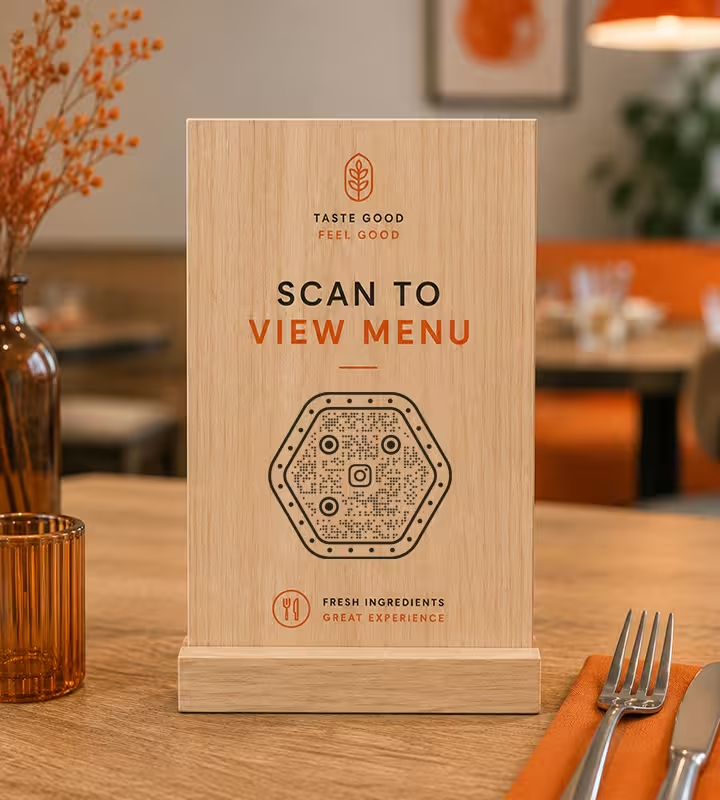
Cafe Tables and Menus
Restaurants live on photographs of their own food. The table is where people are already taking them.
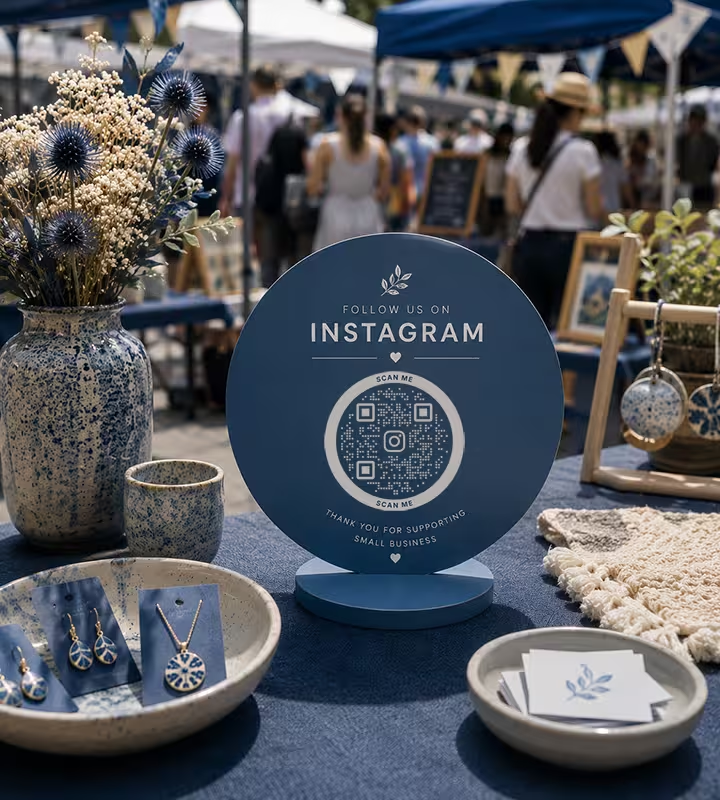
Market Stalls and Craft Fairs
A one-day stall's only permanent asset is the follow it collects, and typing a username at a busy table is what stops people.
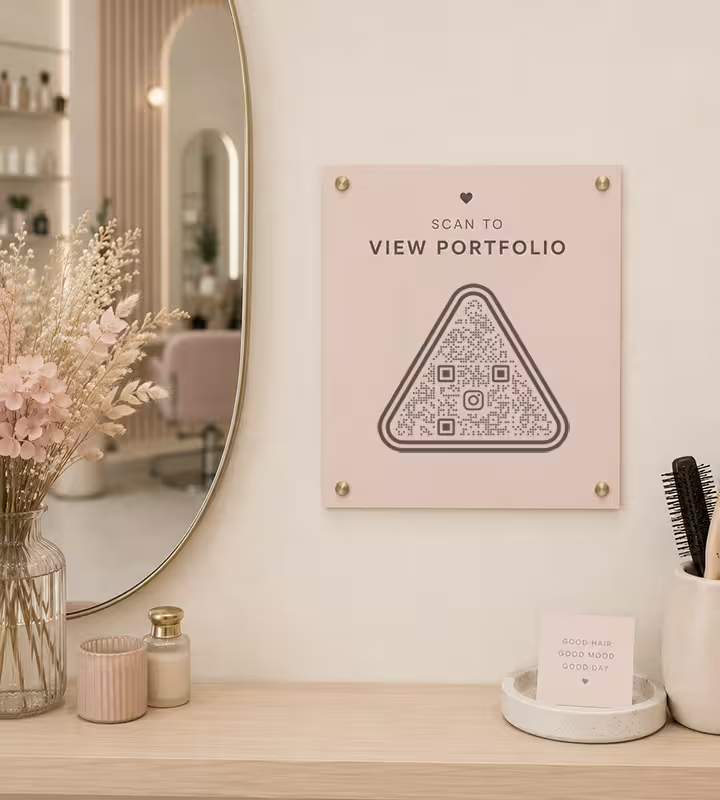
Salon Mirrors and Studio Walls
Somewhere people sit still and look forward turns a service into a portfolio view.
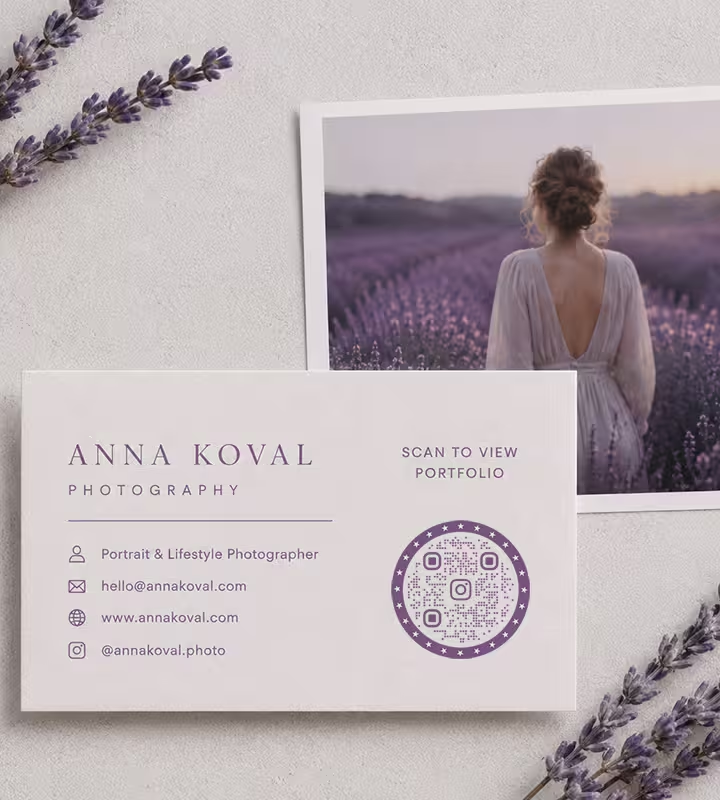
Business Cards and Portfolio Prints
For photographers and makers, the profile is the portfolio, and the code is smaller than the URL printed out.
- 1
Pick Instagram and Enter Your Username
Type the username as it appears on your profile - KoloQR adds the instagram.com/ in front. Paste a full URL instead for a single post or reel.
- 2
Decide What the Scan Should Open
A profile builds followers and never expires. A post sells one thing and dies with it. A page you own is the only one you can repoint after printing.
- 3
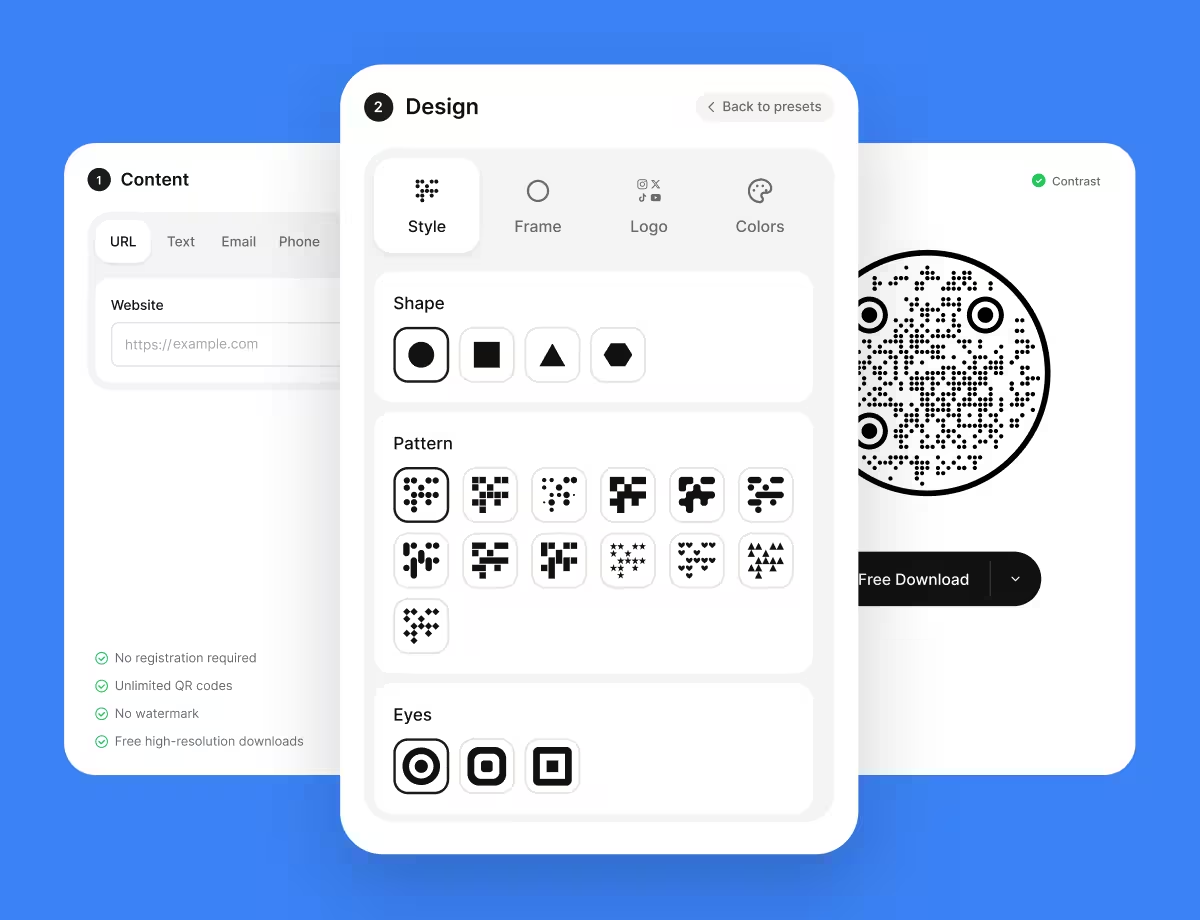
Customize the Design
Choose a shape, set the colors, add a logo. Keep the modules clearly darker than whatever sits behind them - Instagram's gradient is a background, not a pattern colour.
- 4
Test and Export
Scan it on a phone with Instagram installed and one without - the two journeys differ. Then export PNG for screens, SVG or PDF for print.
Which File Format Should You Download?
KoloQR exports your Instagram QR code in three formats. Pick by where it will be seen:
- PNG for stories, email footers, and websites, where the code appears at a single fixed size.
- SVG for window vinyl, packaging, and anything a printer will scale up without softening the edges.
- PDF for handing to a print shop or dropping into a packaging artwork file at print-ready quality.
This is the practical reason to generate a code rather than screenshot the one in the app. Instagram hands you a raster at screen size; a printer asked to put that on a box has to upscale it, and upscaled modules are soft-edged modules. Vector has no size.
Generate QR CodeBest Practices for Instagram QR Codes
Most Instagram codes fail for ordinary printing reasons - and two that are specific to Instagram:
Settle the Username Before You Print
Instagram lets you change a username freely, and the old one is released for anyone to take. Every printed code pointing at it breaks, and may later point at a stranger.
Point at the Profile Unless You Have a Reason Not To
A profile URL is short, permanent while the username holds, and makes a sparse pattern. A post URL adds an 11-character shortcode and disappears if the post does.
Don't Print Your Instagram Gradient Into the Modules
The brand's pinks and purples are too light to carry a pattern on white. Use them in the artwork around the code and keep the modules dark.
Say What the Scan Opens
“Scan to see it made” earns more scans than a bare square. People decide in about a second whether a code is for them.
Consider a Link You Own for Long-Lived Print
On packaging with a two-year shelf life, point the code at your own short URL that redirects to Instagram. You can move it later; a printed instagram.com link you cannot.
Remember the Follow Still Takes a Tap
The scan lands someone on the profile; it does not follow you. Say what you want them to do, because the code cannot do it for them.
Protect the Quiet Zone
Four modules of clear margin on every side. On busy packaging this is the first space a layout borrows and the first reason a scan fails.
Keep Strong Contrast
Dark modules on a light background. A code printed on a photograph - which is the temptation on an Instagram-led design - is a code that reads in the studio and not in the shop.
Size It for the Distance
Roughly a tenth of the reading distance: about 2 cm on a care card, about 20 cm on a window read from 2 metres.
Test on a Phone Without the App
The app-less path is what a new visitor gets, and Instagram's logged-out web view is more restricted than the app. Check what they actually see before you decide it is enough.
Why Your Instagram QR Code Isn't Working
An Instagram code that scans cleanly can still land somewhere useless. These four cover nearly every case.
The Scan Opens a “Page Not Available” Screen
- Cause
- The username changed, the account was set to private, or the post the code points at was deleted or archived. The code is fine; the destination moved.
- Fix
- Regenerate against the current address. For anything already in print, the only recovery is to reclaim the old username if it is still free - which is why long-lived print should point at a URL you own.
It Asks People to Log In Before Showing Anything
- Cause
- Instagram limits what logged-out visitors can browse, and a scan from a phone with no Instagram session often hits that wall after a post or two.
- Fix
- Expect it and design for it: put the essential information on your own page and use the code to link that, with Instagram one tap further on. Test in a private browser window to see the logged-out view.
The Code Scans on Screen but Not Off the Box
- Cause
- The artwork came from a screenshot of Instagram's in-app code, which is a raster at screen resolution, and it was scaled up for print. Upscaling softens module edges until the scanner can't find them.
- Fix
- Generate the code and export SVG or PDF, then place the vector in the artwork. Vector has no native size, so a 2 cm code and a 2 metre one come from the same file.
The Code Is Too Dense to Read at Small Size
- Cause
- The code points at a post or a reel. Those URLs carry an 11-character shortcode on top of the domain, which pushes the symbol to a higher version - more modules in the same square.
- Fix
- Point at the profile and pin the post to the top of it. A pin can be swapped in seconds; a printed code cannot.
Still not sure whether the fault is the file or the print? Drop the exported image into the QR code scanner - if it decodes on a desktop and not on paper, the fault entered after the file.
Questions? Answered
An Instagram QR code stores the web address of an Instagram profile, post, or reel. Scanning it with a phone camera opens that page in the Instagram app if it's installed, or in the browser if it isn't. Running a Facebook Page too? A Facebook QR code opens your Page, group, or Messenger chat.
Choose the Social type in KoloQR, pick Instagram, and enter your username. Adjust the shape, colors, and logo if you like, then download PNG or SVG. No account is needed and no watermark is added.
Instagram's in-app code works, but it points only at your profile, can't be styled beyond its presets, and is only available as a screen-resolution image. A generated code can point anywhere, carry your own design, and export as vector for print.
Yes - paste the full post or reel URL instead of a username. Two caveats: the link carries an 11-character shortcode and makes a denser pattern, and it breaks if the post is deleted or archived.
Every printed code pointing at the old one stops working, and the freed username can be claimed by someone else. Settle the username before a print run, or point the code at a redirect on your own domain.
No. The scan opens the profile and stops there; following is a separate tap. Say what you want people to do next - a bare code beside a logo doesn't ask for anything.
No. Without the app the link opens the mobile web version. But Instagram restricts what logged-out visitors can see, so test that path - it's what most first-time scanners get.
Yes, within one limit: the pattern must stay clearly darker than its background. Instagram's own gradient is too light to carry modules on white, so use it around the code rather than in it.
Not on its own. A static QR code has no server in the middle to count anything. To measure scans, point the code at a link you control with tracking on it, then redirect that to Instagram.
Check the pattern is darker than its background, there's four modules of clear margin around it, it was printed from vector rather than an upscaled screenshot, and it's about a tenth as wide as the reading distance.
Keep Exploring
Pages that pick up where this one leaves off - the same setting, the same kind of code, or the next thing worth deciding.
TikTok QR Code
Send people straight to your TikTok profile, a single video, or a campaign hashtag.
Snapchat QR Code
Open a Snapchat profile from any phone camera - not only from inside the app.
Beauty Salons
Rebooking at the chair, per-service aftercare and a portfolio per stylist, with codes that survive acetone, colour and hairspray.
Marketing Agencies
Produce campaign codes for client print runs: sized per placement, exported as vector, and pointed at a redirect the client keeps.
X (Twitter) QR Code
Send people straight to your X profile, a single post, or a one-tap follow prompt.
Facebook QR Code
Open your Facebook Page, group, or Messenger chat with one scan.
Why KoloQR?
- Create QR codes for websites, menus, Wi-Fi, PDFs, and business cards
- Customize colors, logos, and unique shapes
- Download high-quality PNG and SVG files
- Built for both print and digital