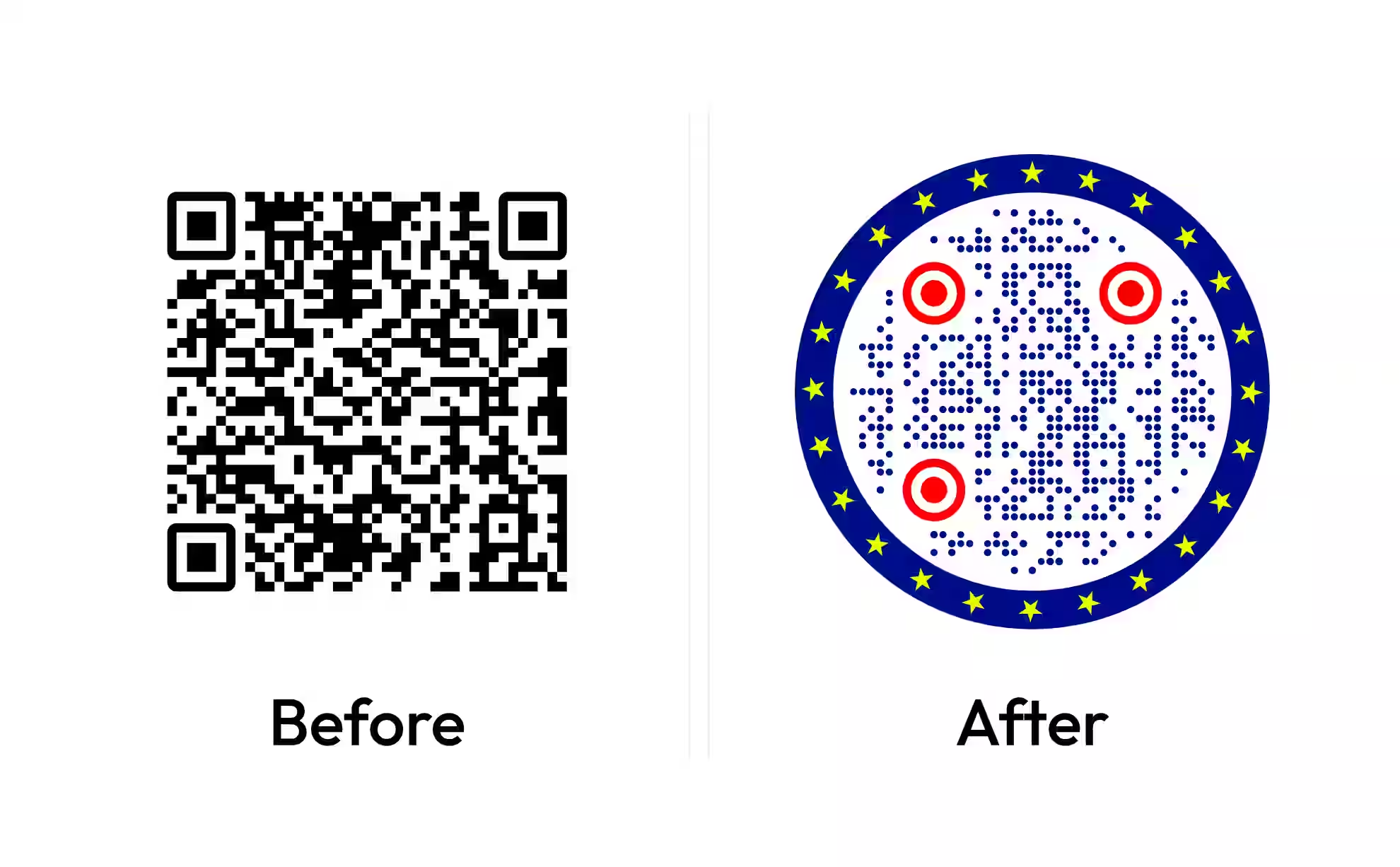
Turn Your Location Into a Scannable Map Link
Enter an address or a pair of coordinates, style the code to match your signage, and download one that opens Google Maps with directions ready on any phone.
Opens in Google Maps. Coordinates work too - "37.4224, -122.0841".
The code opens your business's "Write a review" form. Paste the Place ID, or a Google Maps link that carries one.
A UPI link carries no checksum, so a mistyped ID produces a code that scans perfectly and pays somebody else. Paste the ID from your payment app rather than typing it, and send yourself one rupee before printing.
Paste it exactly as copied. KoloQR does not assemble the payload - it encodes the one your bank issued, and checks it before you print it.
SVG, PNG, JPG • Max 2 MB
First month free
then $9/month
Dynamic QR Codes Are Coming
Change your link anytime, even after printing. See who scans, when and where.
- Edit without reprinting
- Scan analytics
- Bulk & custom domains
You're on the List
We'll email you once, when dynamic codes with scan analytics launch.
What Is a Google Maps QR Code?
A Google Maps QR code is a QR code that stores a map link for one place. Scanning it opens that place in Google Maps - or in the phone's browser if the app is not installed - with the directions button one tap away. The location is encoded in the pattern, so the printed code keeps working with no account and no service behind it.
Why Not the geo: URI
There are two ways to write a place into a QR code, and the standards-compliant one is the one that fails:
- geo:37.4224,-122.0841 - the RFC 5870 URI. Android hands it to a map app; iOS has no handler registered for it, so on an iPhone the scan produces a notification that does nothing useful.
- A Maps Search URL - an ordinary https link to google.com/maps. Every phone treats it as a web address, which every phone knows what to do with, and the Google Maps app claims it if installed.
- What KoloQR Encodes - the search URL. It is longer, and it is the one that works on the roughly half of scanning phones running iOS.
The cost of that choice is density: a maps URL with a full address encoded into it runs long, so the pattern is busier than a short URL QR code and wants a little more printed size. Coordinates are the cheaper input - a lat/long pair is about 20 characters against an address's 60 or more, and it is also the more precise one.
An Address Is a Guess, a Pin Is Not
A Google Maps QR code built from a street address does not store a point on the map - it stores a search, and Google resolves that search fresh at the moment of the scan. Usually it lands correctly. Where it does not, the failures are specific and expensive: a rural address drops the pin at the centre of a long lane rather than at the gate; a business in a retail park is placed at the park's postal address, which is a different entrance; a street name shared by two towns in the same region resolves to the wrong one. None of this shows up when you test the code from the office two kilometres away, because Google biases results toward the searcher. To pin the exact spot, right-click it in Google Maps, copy the coordinates it offers, and encode those instead. For a place with no usable address at all - a festival gate, a trailhead, a delivery yard - a Plus Code from the same menu is the shortest thing you can print that still resolves to a three-metre square.
Generate QR Code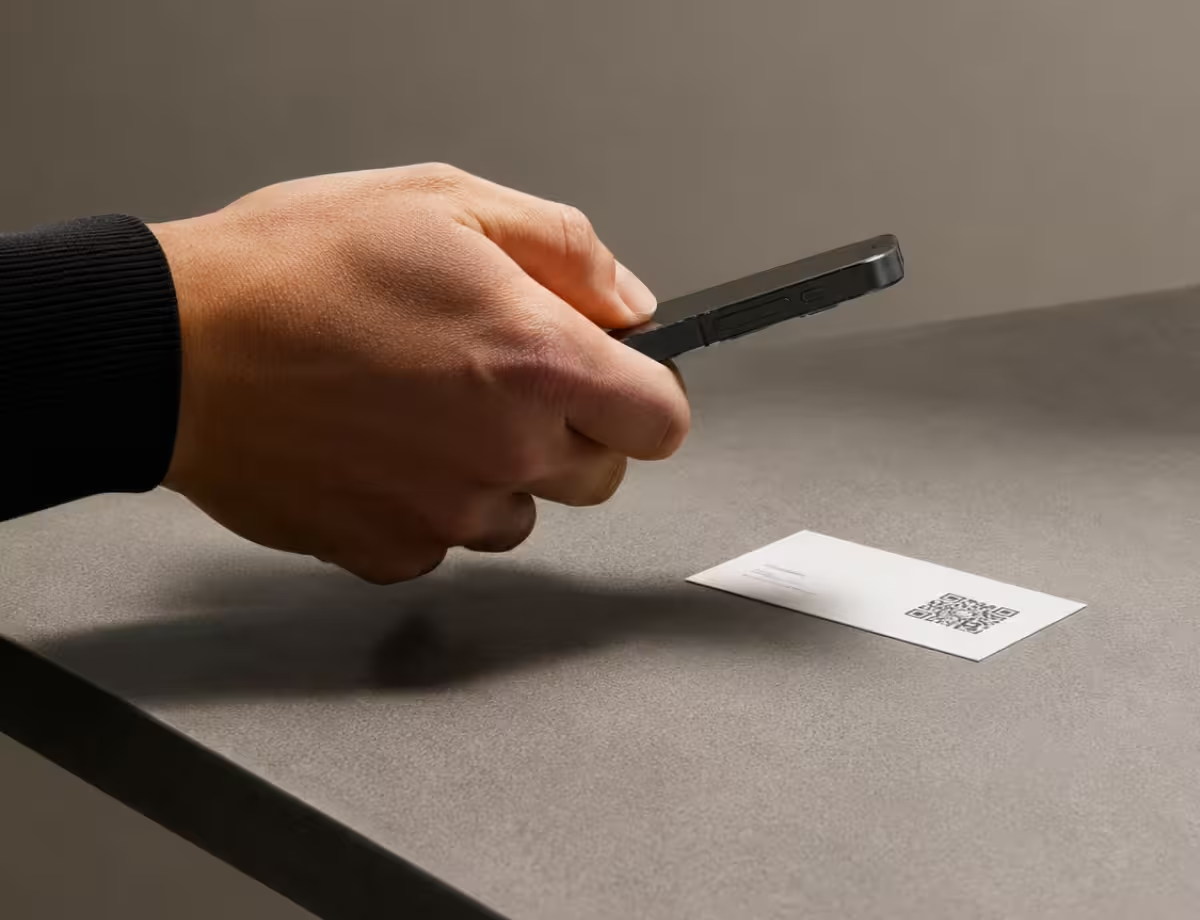
Where Google Maps QR Codes Are Used
A map code earns its place wherever the destination is harder to find than it is to name - which is most places people have to be told about in print.
- 1
Open the Type Picker and Choose Location
Location / Google Maps sits under More, in the Location & Events group. Picking it swaps the URL field for an address box.
- 2
Enter an Address, Coordinates, or a Pasted Map Link
An address is fine for a well-mapped high street. For anything ambiguous, paste a “37.4224, -122.0841” coordinate pair, or paste a Google Maps link you have already checked - a link is used exactly as given.
- 3
Confirm the Pin Before You Style Anything
Scan the preview and look at where it actually lands, including which entrance and which side of the road. This is the step that saves a reprint.
- 4
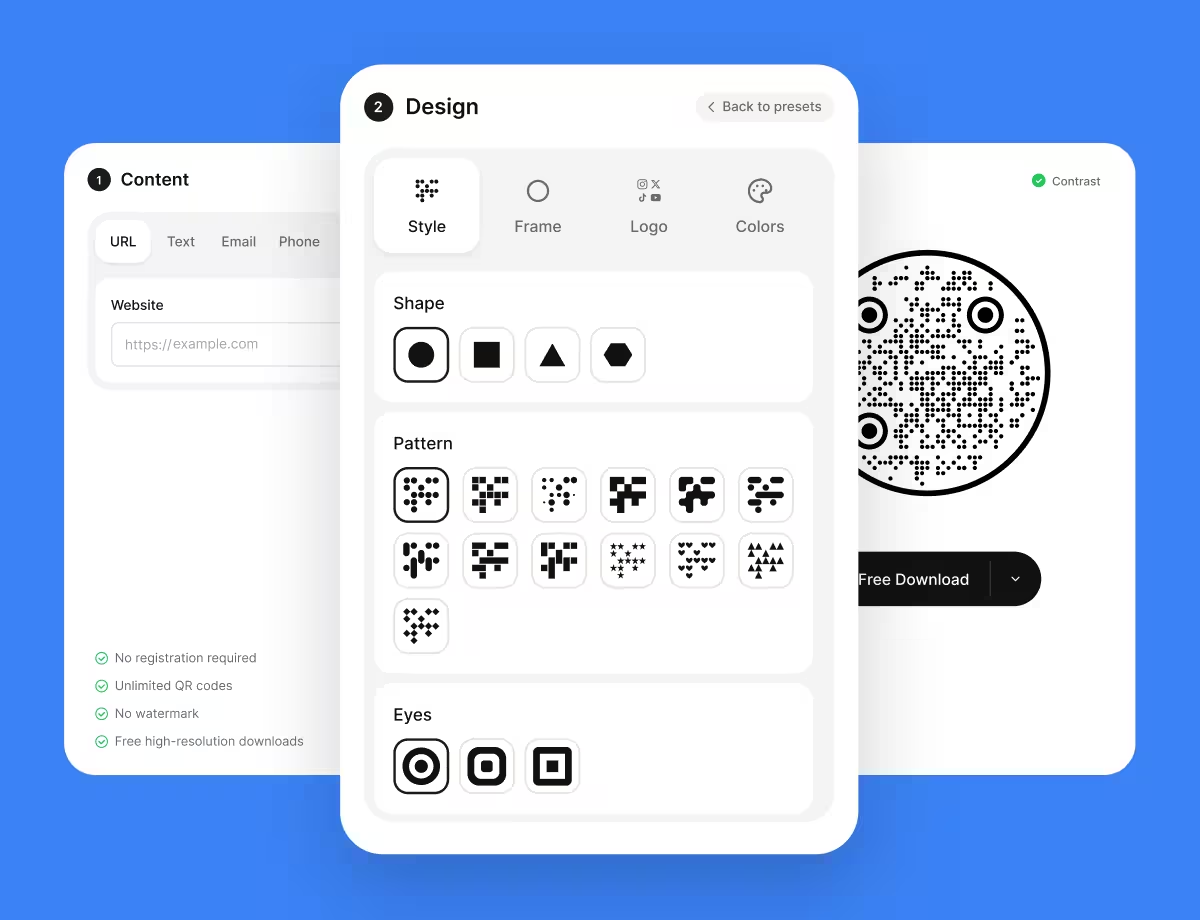
Customize and Export
Choose a shape, set the colors, add a logo. Then export SVG or PDF for signage, PNG for screens, and test on a phone that is nowhere near the destination.
Which File Format Should You Download?
KoloQR exports your Google Maps QR code in three formats. Pick by where it will be seen:
- PNG for confirmation emails, booking pages, and anywhere the code appears at one fixed size.
- SVG for estate agent boards, site signage, and anything a printer scales up without softening the edges.
- PDF for handing to a sign shop, or dropping into an invitation artwork file at print-ready quality.
Map codes are outdoor codes more often than most, and outdoors is where density and weather compound. A maps URL already makes a busier pattern than a short link, so print it from vector at a size that survives rain on the sign and a phone held at arm's length.
Generate QR CodeBest Practices for Google Maps QR Codes
Most map codes scan fine and still send people to the wrong place. These are the habits that prevent that:
Prefer Coordinates for Anything Ambiguous
A lat/long pair resolves to one point, always. Use it for rural addresses, large sites, back entrances, and any street name that exists twice in the region.
Test From Somewhere Else Entirely
Google biases search results toward the searcher, so an address tested on site almost always resolves correctly. Ask someone in another city to scan it before you print.
Use a Plus Code Where There Is No Address
A Plus Code names a three-by-three-metre square anywhere on earth in about eleven characters, and Google Maps accepts it as a search. It is the shortest reliable thing to print for a gate or a field.
Point at the Entrance People Use
The pin should be the door, not the building's postal centroid. For venues with separate visitor and delivery entrances, print two codes and label them.
Keep the URL as Short as the Place Allows
Coordinates make a sparser, more forgiving pattern than a long address, and a sparser pattern is what scans from a car window or across a car park.
Say Where It Goes
“Scan for directions” earns more scans than a bare square, and it tells people the scan will hand them off to a map rather than a web page.
Expect the Phone's Default Map App
A google.com/maps link opens the Google Maps app when it is installed and the mobile web version when it is not. Both give directions; the web version just does it in the browser.
Keep Contrast and the Quiet Zone
Dark modules on light, and four modules of clear margin. On an estate board the margin is the first space a layout borrows and the first reason a scan from three metres fails.
Size It for the Distance
Roughly a tenth of the reading distance: about 3 cm on an invitation, about 30 cm on a board read from 3 metres.
Recheck It After a Rebuild or a Rename
New estates, renamed streets and re-plotted units all move what an address resolves to. A coordinate code is immune to this; an address code is not.
Why Your Google Maps QR Code Isn't Working
A map code that scans cleanly can still put someone in the wrong place. These four cover nearly every case.
The Scan Lands Near the Place but Not at It
- Cause
- The code carries an address, and Google resolved it to the street's midpoint or the property's postal centroid rather than to the entrance. This is normal geocoding behaviour, not a fault in the code.
- Fix
- Right-click the exact spot in Google Maps, copy the coordinates it shows, and generate the code from those instead. A coordinate pair cannot be re-interpreted.
Nothing Happens on an iPhone
- Cause
- The code carries a geo: URI. Android registers a handler for it; iOS does not, so the scan surfaces a link the phone will not open.
- Fix
- Re-encode as a Google Maps URL, which every phone treats as an ordinary web link. KoloQR's Location form builds that form for you from an address or coordinates.
It Works for You and Sends Others to Another Town
- Cause
- The address is ambiguous and Google is resolving it relative to whoever is searching. Your test succeeded because you were standing nearby.
- Fix
- Add the town and postal code, or switch to coordinates, then have someone in a different region scan the exported file and tell you what they see.
The Code Is Too Dense to Scan From a Distance
- Cause
- A full address encoded into a Maps search URL can run past 100 characters, which pushes the symbol to a higher version - more modules in the same square, each one smaller.
- Fix
- Encode coordinates instead, which cuts the payload to about 20 characters, or print the code larger. On signage read from several metres, do both.
Still not sure whether the fault is the file or the print? Drop the exported image into the QR code scanner - if it decodes on a desktop and not on paper, the fault entered after the file.
Questions? Answered
A Google Maps QR code stores a map link for one place. Scanning it opens that place in Google Maps, or in the phone's browser if the app isn't installed, with directions one tap away.
Choose Location in KoloQR's type picker and enter the address or a coordinate pair. Style the code if you like, then download PNG or SVG. No account is needed and no watermark is added.
Coordinates, whenever the location is ambiguous. An address is a search that Google resolves fresh on every scan, so it can land at a street midpoint or the wrong town. A lat/long pair always resolves to the same point.
iOS registers no handler for the geo: URI, so the scan produces a link the phone won't open. Android does handle it. A Google Maps https link works on both, which is why KoloQR encodes that instead.
No. With the app installed the link deep-links straight into it; without it, the same address opens the mobile web version of Google Maps in the browser. Directions work either way.
Yes, and it's the best option for a place with no street address. A Plus Code identifies a three-by-three-metre square in about eleven characters, Google Maps accepts it as a search, and it makes a much sparser pattern than an address.
Yes - a static code holds one location and cannot be repointed. If a move is possible, encode a short URL on your own domain that redirects to the map, so you can change the destination without reprinting.
Not reliably. Google Maps opens on the place with the directions button ready, and turn-by-turn starts when the person taps it. Phones deliberately don't let a scanned code begin navigation on its own.
Not on its own - a static code has no server in the middle to count anything. To measure scans, point the code at a link you control with tracking on it, then redirect that to the map.
Check the pattern is darker than its background, there's four modules of clear margin around it, and it's printed about a tenth as wide as the reading distance. If it scans but lands wrong, the problem is the address, not the code.
Keep Exploring
Pages that pick up where this one leaves off - the same setting, the same kind of code, or the next thing worth deciding.
Real Estate
Send passers-by straight to the photo gallery, floor plan and video tour from a for-sale board, window card or brochure.
Event QR Codes
One scan connects guests to tickets, schedules, directions and RSVPs - on invites, posters and signage.
Colored QR Codes
Put your palette on a QR code without breaking it: which color goes on the pattern, and which belongs on the frame.
Transparent QR Codes
Codes with no background of their own - which surfaces they scan on, which ones break them, and how to place one on photos, video, glass and clear labels.
URL QR Code
Send anyone straight to a web page, landing page, or link with a single scan.
Event QR Code
Put the date, time, and venue straight into someone's calendar in one scan.
Why KoloQR?
- Create QR codes for websites, menus, Wi-Fi, PDFs, and business cards
- Customize colors, logos, and unique shapes
- Download high-quality PNG and SVG files
- Built for both print and digital