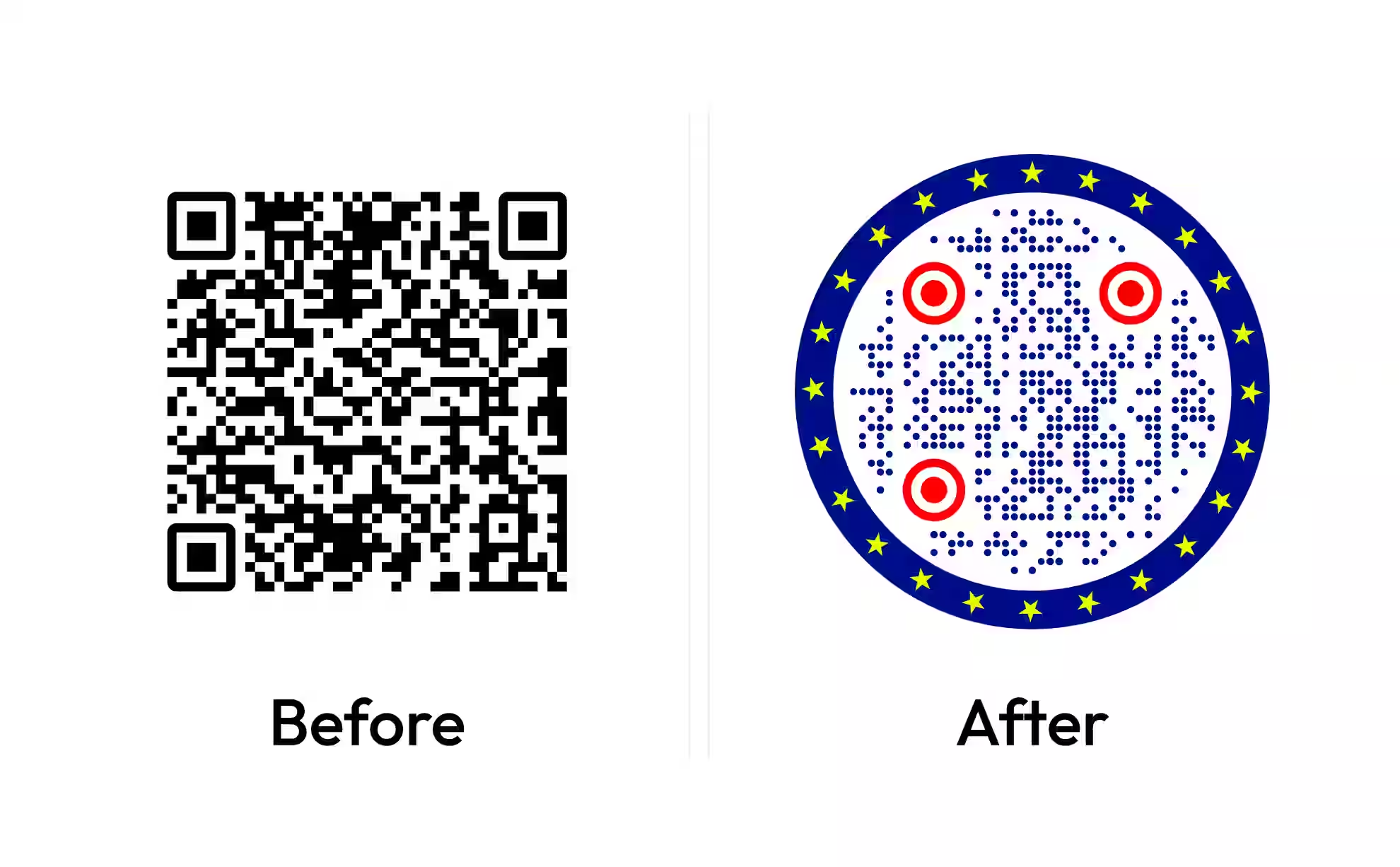
Dynamic QR Code Generator With Editable Links and Scan Analytics
A dynamic QR code is a QR code that encodes a short redirect link instead of the final address, so the destination can be changed after printing and every scan can be counted. KoloQR, a free QR code generator with circular and custom-shaped QR codes, is adding dynamic codes: edit the link at any time, see scan analytics, and keep every code working after you cancel. Join the waitlist and your first month is free.
First month free
then $9/month
Dynamic QR Codes Are Coming
Change your link anytime, even after printing. See who scans, when and where.
- Edit without reprinting
- Scan analytics
- Bulk & custom domains
Need a code today? Static QR codes are free, with no account, and never expire. Open the generator
Dynamic QR Codes at a Glance
What a KoloQR dynamic code does, what it costs, and the one policy that sets it apart from most dynamic QR platforms: a code is never switched off because a subscription ended.
Editable After Printing
A dynamic QR code holds a short KoloQR link, and that link redirects to the destination you set. Change the destination in the dashboard and every printed copy follows, because the pattern itself never changes.
Scan Analytics
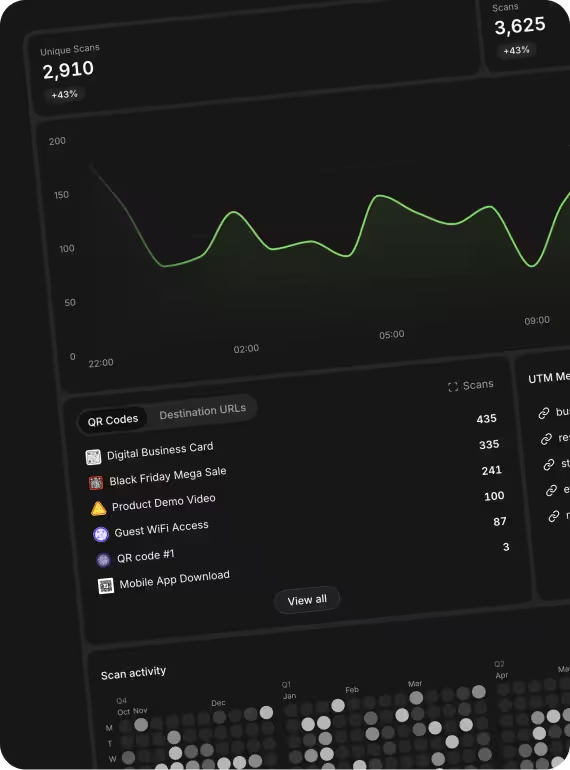
Each scan is counted when the redirect is followed: total and unique scans, the time of day, the device type and operating system, and the country and city read from the IP address. No GPS and no personal identity.
Codes Keep Working After You Cancel
When a subscription ends, every dynamic code keeps redirecting to the last destination you set. Cancelling pauses editing and analytics; it does not switch off a code that is already printed.
No Scan Caps and No Ads
A dynamic code is scanned as many times as people scan it. There is no monthly allowance that pauses a busy code, and nothing is shown to the person scanning between the code and your page.
First Month Free, Then $9 a Month
One plan, billed monthly, cancelled at any time. Waitlist members get the first month free when dynamic codes launch.
Static Codes Stay Free
The KoloQR generator keeps making static QR codes free, with no account and no expiry. A dynamic code is an addition for links that will change or need counting, not a replacement.
How a Dynamic QR Code Works
Three things happen between the camera and your page. The first is fixed in ink; the other two run on KoloQR's servers and are the parts you can change.
The Pattern Holds a Short Link
A KoloQR dynamic code encodes a short address on a KoloQR domain rather than your full URL. A short address needs fewer modules, so the code can be printed smaller than a static code carrying a long link and still scan.
The Short Link Redirects
When a phone opens the short link, KoloQR answers with a redirect to the destination currently set for that code. Changing the destination in the dashboard changes the answer for every copy, printed or on screen.
The Redirect Is Counted
Each redirect is logged with the time, the device type, the operating system, and the country and city derived from the IP address. That log is the scan analytics. Nothing is stored on the phone and nothing identifies the person.
What QR Code Scan Analytics Show
A dynamic code counts scans at the redirect, so the numbers describe what phones asked for, not who was holding them. These are the fields the dashboard reports, and the ones it deliberately does not.
Scans and Unique Scans
Every redirect is one scan. Unique scans count the devices that scanned, so ten people who scanned a table card once and one person who scanned it ten times are told apart.
When People Scan
Scans by hour and by day show when a poster, a menu or a mailer is actually being read, which is the signal a print run's timing is usually missing.
Device and Operating System
iPhone or Android, and the operating system version. Useful when a destination page behaves differently on one platform than on the other.
Country and City
Derived from the IP address of the scanning phone at the moment of the redirect, to city level at best. Not GPS, and not a street address.
What Is Not Collected
No name, no phone number, no email address and no precise location. A QR code cannot read anything from a phone; it can only count the request the phone made.
Static Codes Are Not Counted
A static code sends the phone straight to the destination, so there is no redirect to count. Scan counts for a static code come from the destination page's own analytics, with UTM parameters on the link.
How to Change a QR Code After Printing
A dynamic code is changed in the dashboard, not on the paper. These four steps are the whole process once dynamic codes launch; the pattern you printed is never touched.
Make a Static Code Now- 1
Create the Code as Dynamic
In the generator, switch the code to dynamic before downloading. KoloQR assigns the short link and you set the first destination. Shapes, colours, frames and the logo work exactly as they do for a static code.
- 2
Print It Once
Download the SVG or PNG and print it as you would any QR code: at least 2 × 2 cm, dark modules on a light background, with the quiet zone kept clear. Scan a proof copy before the full run.
- 3
Change the Destination in the Dashboard
Open the code in your KoloQR dashboard, paste the new address and save. The redirect answers with the new destination from that moment, for every copy already printed.
- 4
Scan a Printed Copy to Confirm
Scan one of the printed copies with a phone and check that the new page opens. The pattern has not changed, so a copy that scanned before scans now; only the page at the end differs.
Static vs Dynamic QR Codes at KoloQR
Both kinds come out of the same generator with the same shapes, colours and logos. The difference is where the destination lives: inside the pattern, or behind a redirect that KoloQR runs.
Free, With No Account
StaticYesDynamicFirst month free, then $9/monthAvailable Today
StaticYesDynamicWaitlistWorks With No KoloQR Server Involved
The pattern holds the destination itself, so a static code scans even if KoloQR disappeared.
StaticYesDynamicNoDestination Editable After Printing
StaticNoDynamicYesScan Counts and Analytics
StaticNoDynamicYesKeeps Working If You Cancel
A static code has nothing to cancel. A dynamic code keeps redirecting to its last destination after the subscription ends.
StaticAlwaysDynamicYesScan Limits or Ads
StaticNoneDynamicNoneShapes, Colours, Logo and Frames
StaticYesDynamicYesShort Pattern for Small Prints
A dynamic code encodes a short link, so it has fewer modules than a static code holding a long URL.
StaticNoDynamicYesBulk Creation and Custom Domains
StaticNoDynamicYes
What Happens When You Cancel
Most dynamic QR platforms switch codes off when a plan ends, which turns printed material into waste. KoloQR's dynamic codes are built the other way round.
Every Code Keeps Redirecting
A code keeps sending scans to the last destination you set, for as long as KoloQR exists. Nothing that is printed is switched off because an invoice stopped.
Editing and Analytics Pause
Without a subscription the destination is frozen and new scans are no longer reported. The code is not deleted and the short link is not reassigned to anyone else.
Resubscribe to Edit Again
Starting the subscription again reopens the dashboard for the same codes with the same short links, so nothing has to be reprinted to pick up where you left off.
Where a Dynamic QR Code Earns Its Fee
A dynamic code pays off when the printed object outlives the link behind it, or when you need to know whether anyone scanned at all. These are the pages where that is the usual case.
Restaurant Menus
Menus change seasonally; a laminated table card does not. One dynamic code per table survives every menu update.
Product Packaging
Packaging is printed in runs of thousands and stays in circulation for a year or more. A dynamic code lets the manual, the recall notice or the promotion behind it change.
Real Estate Signs
The same sign goes from listing to listing. Re-point the code to the current property instead of printing a new board.
Events
Posters go up weeks before the schedule is final. Scan counts by day show which placements brought people to the registration page.
Business Cards
A card lasts years and a job title does not. A dynamic code keeps a printed card pointing at your current contact page.
Billboards and Vehicles
The most expensive prints to redo. Scan analytics by hour and city answer whether a placement works before the next campaign is booked.
Questions? Answered
Static QR codes are free today, with no account and no limit. Dynamic codes will be a paid subscription at $9 a month, billed monthly and cancelled at any time, and everyone on the waitlist gets the first month free at launch. There is no annual commitment, no scan allowance, and no advertising shown to the people who scan.
The dashboard, sign-up and billing are in development. KoloQR sends one email to the waitlist on launch day, with the free month attached, and uses the list for nothing else. Until then the generator makes static codes, which do not depend on the launch at all.
A static QR code stores its destination in the pattern itself, so no server sits between the scan and the page. A dynamic QR code encodes a short link that redirects to the destination, so the destination can be edited and each scan can be counted. The guide on static vs dynamic QR codes covers how to choose.
No. A static code's pattern contains the destination itself, and a pattern cannot be edited once it is printed. To get an editable code, create a new one as dynamic and print it in place of the old one. Codes you make as dynamic from the start never need that reprint.
They keep working. Every KoloQR dynamic code goes on redirecting to the last destination you set after the subscription ends. What stops is editing and new analytics: the destination is frozen until you subscribe again. The code is not deleted and the short link is not reassigned.
No. KoloQR does not cap scans per code or per month, on any plan, so a code on a busy counter is never paused for being popular. Several other platforms do cap scans, and when dynamic QR codes stop working lists which ones and at what number.
No. A scan reports the time, the device type and operating system, and a country and city derived from the IP address. It cannot read a name, a phone number or a precise GPS location, because a QR code only makes the phone open a link. If the person then fills in a form on your page, that is your page's data, not the code's.
They look the same: every shape, colour, frame and logo in the generator works for both kinds. A dynamic code is often easier to scan, because a short link needs fewer modules than a long URL, so each module is larger at the same print size. The camera prompt shows the KoloQR short link before the redirect, rather than your own domain.
Custom domains are part of the planned feature set, alongside bulk creation. Which plan includes them, and how the domain is connected, is stated on the pricing page at launch. Until then every dynamic code uses a KoloQR domain.
Partly. A static code has no redirect to count, but if its link carries UTM parameters, the destination page's analytics report visits that arrived through the code. That counts people who opened the page, not people who scanned and left, and it reports nothing about device or city that the page did not already collect. The guide to tracking QR code scans shows how to set up UTM tags and a redirect.
At KoloQR, no: a dynamic code keeps redirecting after a subscription ends, and a static code has nothing to expire. On other platforms a dynamic code can stop at the end of a trial, at a scan cap, or when a plan lapses. Do QR codes expire separates the four things people mean by an expired code.
Why KoloQR?
- Create QR codes for websites, menus, Wi-Fi, PDFs, and business cards
- Customize colors, logos, and unique shapes
- Download high-quality PNG and SVG files
- Built for both print and digital